
US Labor Market Shifts: Adapting to a 3-Month Trend of Increased Automation and Its Economic Impact by 2026 (PRACTICAL SOLUTIONS)
The United States labor market stands at a pivotal juncture, experiencing transformative shifts driven by rapid technological advancements, most notably in automation. Over the past three months, a discernible trend of increased automation adoption has emerged across various sectors, signaling a profound recalibration of workforce dynamics. This article delves into the intricacies of these changes, examining the underlying factors, projecting their economic impact by 2026, and offering practical, actionable solutions for businesses, policymakers, and individual workers to navigate this evolving landscape successfully. Understanding the implications of this surge in US Labor Automation is not merely an academic exercise; it is a critical imperative for fostering resilience and ensuring prosperity in the digital age.
The narrative surrounding automation often oscillates between dystopian fears of widespread job displacement and utopian visions of enhanced productivity and new job creation. The reality, as always, lies somewhere in the middle, characterized by a complex interplay of challenges and opportunities. Our focus here is to provide a balanced perspective, grounded in recent data and forward-looking analysis, to equip stakeholders with the knowledge needed to adapt proactively rather than reactively. The three-month trend we observe is not an anomaly but rather an acceleration of a long-term trajectory, making immediate and strategic responses all the more crucial.
Understanding the Recent Surge in US Labor Automation
The recent three-month period has seen an intensified rate of automation adoption across key industries within the US. This acceleration can be attributed to several factors, including:
- Post-Pandemic Economic Realignments: The COVID-19 pandemic exposed vulnerabilities in global supply chains and highlighted the need for greater operational resilience. Many businesses turned to automation to reduce reliance on human labor in tasks susceptible to disruption, ensuring continuity and efficiency. This strategic pivot has continued to gain momentum as companies seek to future-proof their operations.
- Technological Maturity and Affordability: Advancements in artificial intelligence (AI), machine learning (ML), robotics, and sensor technologies have made automation solutions more sophisticated, versatile, and, crucially, more affordable. The cost-benefit analysis for implementing automation has shifted significantly, making it an attractive investment for a broader range of businesses, from large corporations to small and medium-sized enterprises (SMEs).
- Labor Shortages and Wage Pressures: Persistent labor shortages in certain sectors, coupled with rising wage demands, have incentivized businesses to explore automation as a means to maintain productivity and manage operational costs. Automation can fill critical gaps where human labor is scarce or where tasks are repetitive, dangerous, or require extreme precision.
- Increased Competition and Demand for Efficiency: In an increasingly competitive global marketplace, businesses are under constant pressure to optimize processes, reduce errors, and accelerate production cycles. Automation offers a powerful tool to achieve these objectives, driving efficiency gains that are difficult to match with traditional labor models alone.
This surge is not uniform; it manifests differently across sectors. Manufacturing, logistics, and warehousing have long been at the forefront of automation, but we are now seeing significant inroads in areas like customer service (chatbots, AI-powered support), administrative tasks (robotic process automation – RPA), healthcare (diagnostic tools, surgical robots), and even creative industries (AI-generated content, design automation). The breadth of this adoption underscores its transformative potential for the entire US Labor Automation landscape.
Projected Economic Impact by 2026: A Multifaceted Outlook
Forecasting the economic impact of automation is complex, involving various variables and potential scenarios. However, by 2026, several key trends are likely to shape the US economy:
Job Displacement and Creation
One of the most discussed aspects of automation is its effect on employment. While some jobs, particularly those involving repetitive, routine tasks, are likely to be displaced, automation is also expected to create new roles and transform existing ones. Roles requiring creativity, critical thinking, complex problem-solving, emotional intelligence, and human-to-human interaction are less susceptible to automation and may even see increased demand.
- Displacement: Estimates vary, but a significant percentage of current job tasks could be automated. This primarily impacts entry-level positions, manufacturing assembly lines, data entry, and certain administrative functions.
- Creation: New jobs will emerge in areas such as AI development, robotics engineering, data science, automation maintenance and repair, cybersecurity, and roles focused on managing human-AI collaboration. There will also be an increased demand for jobs in sectors that complement automation, such as education, training, and healthcare, as society adapts to these changes.
Productivity Growth and Economic Expansion
Automation is a powerful engine for productivity growth. By automating mundane or inefficient processes, businesses can produce more goods and services with fewer resources, leading to lower costs, higher profits, and potentially lower prices for consumers. This increased efficiency can fuel overall economic expansion, boosting GDP and improving living standards.
- Increased Output: Automated systems can operate 24/7, without breaks, leading to significantly higher output capacities.
- Innovation: Freed from routine tasks, human workers can dedicate more time to innovation, research, and development, further accelerating technological progress and economic growth.
Wage Restructuring and Income Inequality
The impact on wages is a critical concern. As automation reshapes the demand for certain skills, it could lead to a widening gap between highly skilled workers (who can leverage automation) and those whose skills are easily automated. This could exacerbate income inequality if not addressed through proactive policies and educational initiatives.
- Premium on High-Skill Labor: Workers with advanced technical skills, especially in AI and data, will likely command higher wages.
- Downward Pressure on Low-Skill Wages: Wages for tasks that are easily automated might stagnate or decline, unless workers in these roles can reskill.
Geographic and Sectoral Disparities
The impact of automation will not be evenly distributed across the US. Regions heavily reliant on industries prone to automation (e.g., traditional manufacturing hubs) may face greater challenges, while areas with strong tech sectors or educational institutions capable of fostering new skills may thrive. Similarly, some sectors will experience more profound transformations than others.

Practical Solutions for Adapting to US Labor Automation
Given the inevitable march of automation, proactive adaptation is paramount. Here are practical solutions for various stakeholders:
For Businesses: Embracing Automation Strategically
Businesses must view automation not just as a cost-cutting measure but as a strategic tool for growth and innovation.
- Invest in Workforce Reskilling and Upskilling: Instead of solely focusing on displacement, businesses should invest in training their existing workforce for new roles that emerge from automation. This includes technical skills (e.g., robotics maintenance, data analytics) and soft skills (e.g., critical thinking, creativity, emotional intelligence). Creating internal training programs or partnering with educational institutions can be highly effective.
- Foster a Culture of Continuous Learning: Encourage employees to embrace lifelong learning. Offer incentives for skill development and provide access to online courses, workshops, and certifications relevant to future job requirements.
- Implement Human-AI Collaboration Models: Design workflows where humans and AI systems work synergistically. This involves identifying tasks where AI excels (e.g., data processing, repetitive actions) and tasks where humans add unique value (e.g., complex decision-making, creative problem-solving, customer empathy).
- Strategic Automation Roadmapping: Develop a clear strategy for automation implementation that aligns with business goals. This involves identifying which processes to automate, evaluating ROI, and planning for the human impact, including communication and support for affected employees.
- Prioritize Ethical AI Development and Deployment: Ensure that automation technologies are developed and deployed ethically, with considerations for fairness, transparency, and accountability. This builds trust and minimizes potential negative societal impacts.
For Workers: Future-Proofing Your Career
Individuals must take ownership of their career development in an automated world.
- Embrace Lifelong Learning: The days of a single career path are over. Continuously seek new knowledge and skills. Online platforms (Coursera, edX, LinkedIn Learning), community colleges, and vocational training centers offer numerous opportunities for acquiring in-demand skills.
- Focus on ‘Human’ Skills: Cultivate skills that are difficult for machines to replicate, such as creativity, critical thinking, complex communication, collaboration, emotional intelligence, and adaptability. These are becoming increasingly valuable.
- Develop Digital Literacy: Regardless of your field, a foundational understanding of digital tools, data analysis, and basic programming concepts will be crucial.
- Network and Seek Mentorship: Connect with professionals in emerging fields and seek guidance from mentors who can help you navigate career transitions and identify new opportunities.
- Consider Entrepreneurship: Automation can lower barriers to entry for new businesses. Workers with innovative ideas and entrepreneurial spirit may find new avenues to create value and employment.
For Policymakers and Educators: Building a Resilient Future
Government and educational institutions have a critical role in shaping the future of work.
- Reform Education Systems: Modernize curricula from K-12 through higher education to emphasize critical thinking, problem-solving, digital literacy, and STEM (Science, Technology, Engineering, Mathematics) skills. Promote vocational training that aligns with the needs of an automated economy.
- Invest in Reskilling and Retraining Programs: Fund and expand accessible, affordable, and effective government-sponsored retraining programs for workers displaced by automation. These programs should be agile, responding to real-time labor market demands.
- Support Social Safety Nets: Explore and strengthen social safety nets, such as unemployment benefits, wage insurance, and potentially universal basic income (UBI) models, to support workers during transitions and mitigate the economic shocks of automation-driven displacement.
- Incentivize Responsible Automation: Implement policies that encourage businesses to invest in automation responsibly, considering its societal impact. This could include tax incentives for companies that reskill their workforce or invest in human-centric AI development.
- Foster Public-Private Partnerships: Facilitate collaboration between government, industry, and academia to anticipate future skill needs, develop relevant training programs, and create pathways for workers into new jobs.
- Research and Data Collection: Continuously monitor the pace and nature of US Labor Automation to inform policy decisions. Robust data collection on job displacement, creation, and skill gaps is essential.
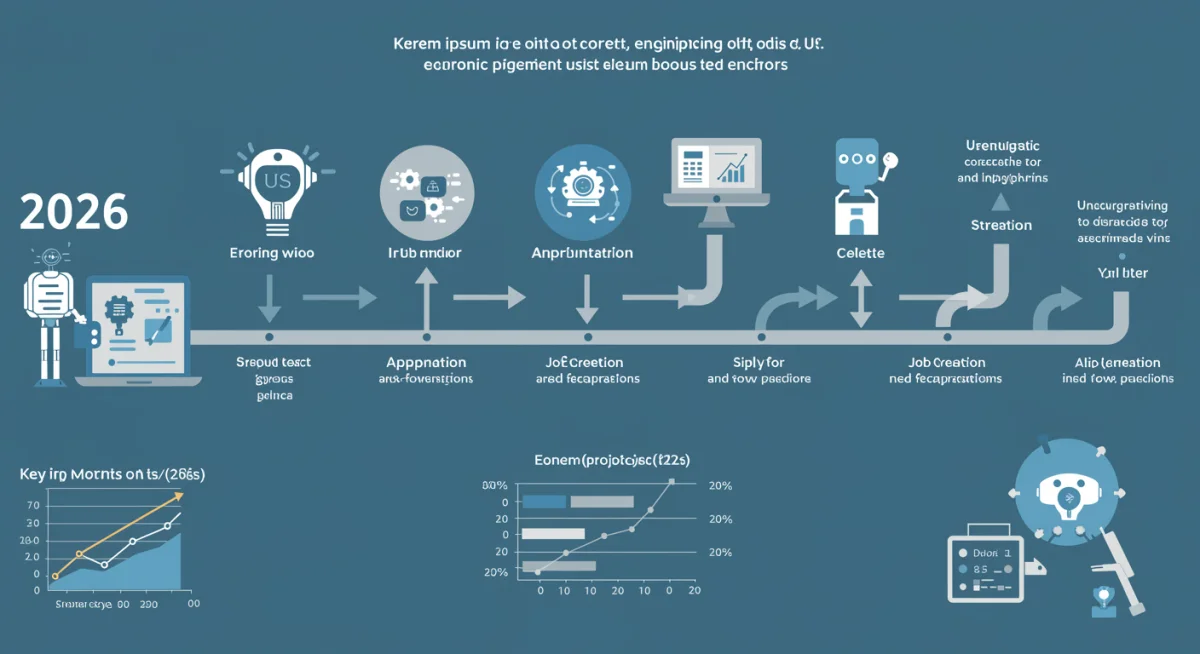
Case Studies and Emerging Trends in US Labor Automation
To illustrate the tangible impacts and solutions, let’s look at some examples:
Manufacturing Sector: From Assembly Lines to Advanced Robotics
The manufacturing sector has been a pioneer in automation. Companies are increasingly deploying collaborative robots (cobots) that work alongside humans, enhancing efficiency without fully replacing workers. For example, a cobot might handle heavy lifting or repetitive welding tasks, while a human worker focuses on quality control, programming, or complex assembly. This shift necessitates retraining for factory workers, moving them from manual labor to roles involving robot supervision, maintenance, and data analysis.
Retail and Logistics: The Rise of Automated Warehouses
E-commerce growth has dramatically accelerated automation in retail and logistics. Automated warehouses, equipped with robotic picking systems and autonomous vehicles, are becoming standard. While this reduces the need for human pickers and packers, it creates demand for technicians to maintain these complex systems, software engineers to optimize their operations, and data analysts to interpret performance metrics. Traditional retail workers might need to transition to roles focused on customer experience, digital merchandising, or last-mile delivery management.
Healthcare: AI-Powered Diagnostics and Robotic Surgery
In healthcare, AI is transforming diagnostics, helping doctors analyze medical images more accurately and quickly. Robotic surgery systems enhance precision and reduce recovery times. These advancements don’t replace doctors or nurses but augment their capabilities. The new roles emerging include AI specialists in medicine, biomedical engineers, and healthcare professionals trained to operate and interpret data from advanced automated systems. Ethical considerations around data privacy and diagnostic accuracy are also paramount in this sector.
Administrative Services: RPA and the Future of Office Work
Robotic Process Automation (RPA) is automating routine administrative tasks like data entry, invoice processing, and report generation. This frees up human employees from mundane work, allowing them to focus on more strategic, analytical, and client-facing activities. The challenge here is to reskill administrative staff into roles that involve managing RPA bots, analyzing data, or improving customer service, rather than simply processing paperwork.
Challenges and Considerations for the Path Ahead
While the benefits of US Labor Automation are clear, several challenges must be actively managed:
- Ethical Implications: Beyond job displacement, ethical questions arise regarding data privacy, algorithmic bias, and the potential for autonomous systems to make decisions with significant human impact. Robust ethical frameworks and regulations are critical.
- Investment Barriers: For smaller businesses, the initial capital investment in automation can be prohibitive. Government incentives or shared infrastructure models might be necessary to ensure widespread adoption and prevent a widening gap between large and small enterprises.
- Pace of Change: The speed at which automation is advancing can outstrip the rate at which education and training systems can adapt, creating potential skill mismatches and unemployment.
- Social Acceptance: Public perception and acceptance of automation are crucial. Addressing fears and communicating the benefits and strategies for human adaptation will be key to a smooth transition.
- Cybersecurity Risks: Increased reliance on interconnected automated systems also expands the attack surface for cyber threats, necessitating robust cybersecurity measures.
The Role of Government in Shaping the Future of US Labor Automation
The government plays a crucial role not only in setting policies but also in fostering an environment conducive to innovation and equitable growth. This includes:
- Funding Research and Development: Investing in foundational AI and robotics research, as well as ethical AI development, can keep the US at the forefront of technological advancement.
- Infrastructure Development: Ensuring that the digital infrastructure (broadband access, 5G networks) is robust and widespread is essential for the effective deployment of automation technologies across the nation.
- International Cooperation: Collaborating with other nations on standards, regulations, and best practices for automation can help create a more stable and predictable global environment for technological integration.
- Data Governance: Establishing clear and effective data governance policies will be vital to harness the power of AI and automation while protecting individual privacy and preventing misuse.
- Promoting Entrepreneurship: Creating programs that support startups and small businesses in developing and adopting automation technologies can stimulate job creation and economic diversification.
Conclusion: A Call to Action for a Resilient Workforce
The 3-month trend of increased US Labor Automation is a clear indicator that the future of work is not a distant concept but a present reality. The economic impact by 2026 will be profound, characterized by both disruptive challenges and unprecedented opportunities. While job displacement in some sectors is inevitable, the potential for increased productivity, economic growth, and the creation of new, higher-value roles is immense.
Navigating this transformation successfully requires a concerted, collaborative effort from all stakeholders. Businesses must strategically integrate automation while investing heavily in their human capital. Workers must embrace a mindset of continuous learning and adapt their skill sets to complement intelligent machines. Policymakers and educators must create supportive ecosystems, reforming educational institutions, strengthening social safety nets, and incentivizing responsible technological adoption. By working together, the United States can harness the power of automation to build a more productive, innovative, and equitable future for its workforce and economy.
The future is not about humans versus machines; it is about humans with machines. The nations and workforces that master this collaboration will be the ones that thrive in the decades to come. The time to act and adapt is now.