Geopolitical Chessboard: 5 Power Plays Affecting US Foreign Policy This Quarter
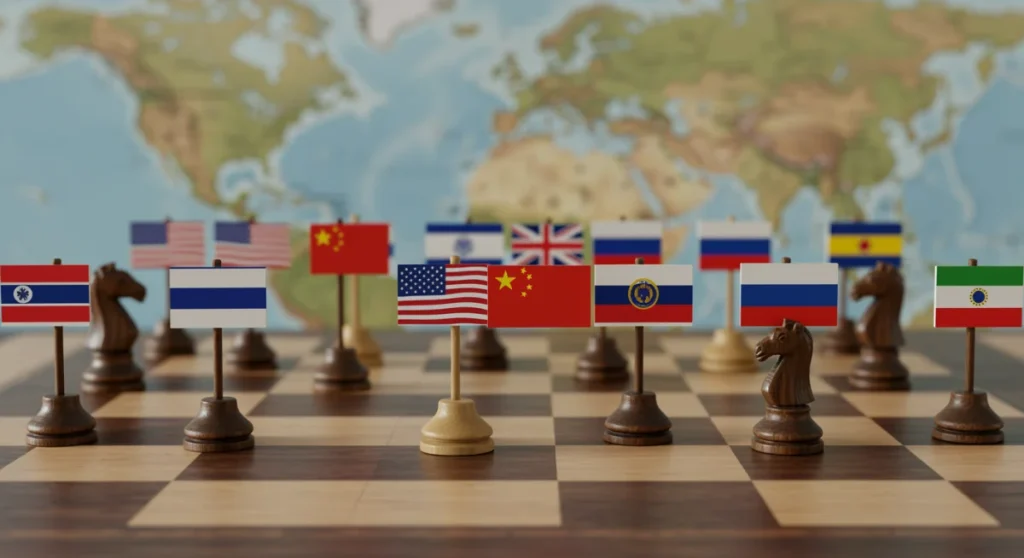
U.S. foreign policy this quarter is significantly influenced by five major geopolitical power plays: strategic competition with China, the Russia-Ukraine war, evolving dynamics in the Middle East, global climate change diplomacy, and the race for technological supremacy.
Understanding US foreign policy requires a keen eye on the global chessboard, where major power plays are constantly unfolding. This quarter, several critical geopolitical shifts are directly impacting how the United States engages with the world. From economic competition to security challenges, these dynamics shape alliances, influence trade, and ultimately define America’s role on the international stage.
The Reshaping of Great Power Competition: US vs. China
The strategic competition between the United States and China remains arguably the most significant geopolitical dynamic of our time. This rivalry extends across economic, technological, and military domains, shaping global trade routes, diplomatic efforts, and regional stability, particularly in the Indo-Pacific. Both nations are vying for influence, leading to a complex web of alliances and counter-alliances.
Economically, the U.S. is focused on decoupling critical supply chains from China and strengthening economic ties with allies to reduce dependency. This involves incentivizing domestic production and diversifying sources for essential goods, from semiconductors to rare earth minerals. The aim is to mitigate risks associated with over-reliance on a single, potentially adversarial, economic power.
Technological Supremacy and Supply Chains
The race for technological supremacy is central to this competition. Control over advanced technologies, such as artificial intelligence, quantum computing, and biotechnology, is seen as crucial for future economic and military power. The U.S. has imposed export controls on certain technologies to China, aiming to slow its technological advancement in key sectors.
- Semiconductor Sanctions: Restrictions on advanced chip technology exports to China.
- 5G Network Security: Efforts to limit Huawei’s global reach and promote trusted vendors.
- AI Development: Investments in domestic AI research and ethical guidelines.
- Quantum Computing: Strategic funding for quantum research to maintain a competitive edge.
Militarily, tensions in the South China Sea and around Taiwan continue to be flashpoints. The U.S. maintains its commitment to a free and open Indo-Pacific, conducting freedom of navigation operations and strengthening security partnerships with countries like Japan, South Korea, and Australia. These efforts are designed to deter aggression and maintain regional stability.
The competition between the U.S. and China is not merely a bilateral issue; it reverberates globally. Developing nations often find themselves caught between these two giants, navigating economic opportunities and political pressures. Understanding this intricate dance is fundamental to grasping current US foreign policy.
The Enduring Impact of the Russia-Ukraine War
The conflict in Ukraine continues to exert a profound and multifaceted impact on global affairs, profoundly influencing US foreign policy. The war has not only reshaped European security architecture but has also triggered significant shifts in energy markets, food security, and international alliances. The United States, as a leading proponent of democratic values and international law, has played a pivotal role in organizing the international response.
The U.S. has provided substantial military, financial, and humanitarian aid to Ukraine, demonstrating a firm commitment to supporting its sovereignty and territorial integrity. This aid package is designed to help Ukraine defend itself against Russian aggression and to rebuild its infrastructure. The sustained support underscores a broader strategy to deter future acts of aggression by revisionist powers.
NATO’s Resurgence and European Security
One of the most significant consequences of the war has been the revitalization of NATO. The alliance, which some had previously questioned, has found renewed purpose and unity in the face of Russian aggression. New members, like Finland, and prospective members, like Sweden, signal a clear shift in European security perceptions. The U.S. has reinforced its military presence in Eastern Europe, strengthening NATO’s eastern flank.
- Increased Defense Spending: Many NATO members are boosting their military budgets.
- Enhanced Military Exercises: More frequent and larger joint military drills.
- New NATO Members: Finland’s accession and Sweden’s pending membership.
- Strengthened Eastern Flank: Deployment of additional U.S. and allied troops.
The conflict has also highlighted the weaponization of energy and food supplies. Russia’s actions have disrupted global energy markets, leading to increased fuel prices and a push for energy independence in Europe. Similarly, disruptions to grain exports from Ukraine have exacerbated food insecurity in many parts of the world, particularly in Africa and the Middle East, prompting concerted international efforts to mitigate the crisis.
Diplomatically, the U.S. has led efforts to isolate Russia on the international stage, imposing wide-ranging sanctions and rallying international condemnation. This diplomatic pressure aims to debilitate Russia’s economy and reduce its capacity to wage war. The long-term implications of this conflict for global power dynamics and international institutions are still unfolding, making it a central focus of US foreign policy.
Evolving Dynamics in the Middle East
The Middle East remains a region of paramount importance for US foreign policy, characterized by complex and often volatile dynamics. This quarter, shifts in regional alliances, ongoing conflicts, and the persistent challenge of terrorism continue to demand significant diplomatic attention. The U.S. is navigating a delicate balance between supporting allies, promoting stability, and addressing humanitarian concerns.
Recent developments include intensified diplomatic efforts to de-escalate tensions and foster regional cooperation. The Abraham Accords, while not directly involving all regional players, have set a precedent for normalization, encouraging other nations to consider similar paths. The U.S. is actively engaging with partners to build a more integrated and secure region, moving away from a sole focus on conflict resolution.
Iran’s Nuclear Program and Regional Influence
Iran’s nuclear program and its regional activities continue to be a primary concern. The U.S. is working with allies to prevent Iran from acquiring nuclear weapons, utilizing a combination of sanctions, diplomatic pressure, and deterrence. Iran’s support for proxy groups across the region also fuels instability, requiring a coordinated response.
- Nuclear Deal Negotiations: Ongoing efforts to revive or create a new agreement.
- Sanctions Enforcement: Economic pressures to curb Iran’s nuclear ambitions.
- Regional Proxy Conflicts: Countering Iranian influence in Yemen, Syria, and Lebanon.
- Maritime Security: Protecting international shipping lanes in the Gulf.
The humanitarian crises in countries like Yemen and Syria also remain critical issues. The U.S. provides substantial humanitarian aid and advocates for political solutions to these protracted conflicts. These efforts are often complicated by the involvement of multiple state and non-state actors, each with their own agendas.
Energy security is another key driver of U.S. engagement in the Middle East. While the U.S. has reduced its reliance on Middle Eastern oil, the region’s role in global energy markets remains significant. Ensuring the free flow of oil and gas is crucial for global economic stability, influencing U.S. strategic partnerships and military presence. The evolving dynamics in this region necessitate a flexible and adaptive US foreign policy approach.
Global Climate Change Diplomacy
Climate change has firmly established itself as a central pillar of US foreign policy, recognizing its undeniable impact on global security, economic stability, and public health. This quarter, the U.S. is intensifying efforts to lead international climate action, both through multilateral agreements and bilateral partnerships. The focus is on reducing greenhouse gas emissions, promoting renewable energy, and building resilience to climate impacts.
The Biden administration has re-engaged with international climate frameworks, notably the Paris Agreement, and is actively pushing for more ambitious commitments from other nations. This involves diplomatic initiatives to encourage major emitters to set and meet more stringent climate targets. The U.S. views climate action not just as an environmental imperative but also as an economic opportunity, fostering innovation in green technologies.
Investing in Green Technology and Resilience
A significant aspect of U.S. climate diplomacy involves promoting investments in green technology and infrastructure globally. This includes sharing expertise and providing financial support to developing nations to transition to cleaner energy sources and adapt to the effects of climate change. The aim is to create a global green economy that benefits all.
- Renewable Energy Partnerships: Collaborating on solar, wind, and geothermal projects.
- Climate Adaptation Funding: Supporting nations vulnerable to extreme weather events.
- Carbon Capture Technologies: Investing in research and deployment of innovative solutions.
- International Climate Funds: Contributing to global initiatives to combat climate change.
Climate change is increasingly recognized as a threat multiplier, exacerbating existing vulnerabilities and potentially leading to new conflicts. Issues like water scarcity, forced migration, and resource competition are often linked to climate impacts. Therefore, addressing climate change is seen as integral to preventing future humanitarian crises and promoting long-term global stability, directly influencing US foreign policy decisions.
The U.S. is also working to integrate climate considerations into its broader security and development agendas. This means recognizing how climate impacts affect military readiness, humanitarian assistance, and economic development programs. The global nature of climate change necessitates a collaborative and sustained international response, with the U.S. aiming to be at the forefront of these efforts.
The Race for Technological Dominance and Cyber Security
The race for technological dominance and the imperative of cybersecurity are increasingly critical components of US foreign policy in the 21st century. As digital infrastructure becomes more pervasive and interconnected, the stakes for securing these systems and leading in technological innovation have never been higher. This quarter, the U.S. is prioritizing both defensive and offensive strategies in the cyber domain, alongside fostering innovation in emerging technologies.
The U.S. government is actively working to protect its critical infrastructure from cyberattacks, which originate from both state-sponsored actors and criminal organizations. This involves strengthening federal networks, collaborating with the private sector on cybersecurity best practices, and sharing threat intelligence with international partners. The goal is to build a resilient and secure digital ecosystem capable of withstanding sophisticated attacks.
Securing Digital Infrastructure and Data Privacy
Beyond defense, the U.S. is investing heavily in emerging technologies such as artificial intelligence, quantum computing, and advanced biotechnologies. The strategic intent is to maintain a competitive edge and ensure that these transformative technologies are developed and used in alignment with democratic values and ethical principles. This often involves fostering domestic innovation through funding and research initiatives.
- AI Ethics and Governance: Developing frameworks for responsible AI use.
- Quantum Computing Research: Investing in next-generation computing capabilities.
- Biotechnology Advancement: Funding for medical and agricultural innovations.
- Data Privacy Regulations: Advocating for global standards to protect personal data.
International cooperation in cybersecurity is also a key focus. The U.S. is forging alliances with like-minded nations to counter cyber threats, share information, and develop common norms of responsible state behavior in cyberspace. This collective approach is essential given the transnational nature of cyberattacks and the need for a unified front against malicious actors.
The implications of technological dominance extend beyond national security; they also touch upon economic prosperity and societal well-being. Nations that lead in key technologies are better positioned to shape global standards, drive economic growth, and address complex challenges. Therefore, the race for technological supremacy and robust cybersecurity measures are integral to shaping modern US foreign policy.
| Key Power Play | Brief Description |
|---|---|
| US-China Competition | Intense rivalry across economic, technological, and military domains, shaping global influence. |
| Russia-Ukraine War | Ongoing conflict impacting European security, energy markets, and global alliances, with significant U.S. support. |
| Middle East Dynamics | Evolving alliances, conflicts, and Iran’s influence continue to be a focal point for U.S. diplomacy. |
| Climate Change Diplomacy | U.S. leading international efforts to reduce emissions, promote green tech, and build climate resilience. |
Frequently Asked Questions About US Foreign Policy
The primary focus is strategic competition across economic, technological, and military spheres. This involves decoupling critical supply chains, imposing tech export controls, and strengthening alliances in the Indo-Pacific to counter China’s growing influence and ensure a free and open region.
The Russia-Ukraine war has revitalized NATO, leading to increased unity, defense spending among members, and the accession of new countries like Finland. It has reinforced the alliance’s purpose in deterring Russian aggression and strengthening European collective security.
Key concerns include Iran’s nuclear program and regional influence, ongoing conflicts like those in Yemen and Syria, and fostering regional stability through diplomatic efforts. The U.S. aims to balance supporting allies with addressing humanitarian crises and ensuring energy security.
Climate change is seen as a threat multiplier, impacting global security, economic stability, and public health. U.S. foreign policy addresses it by leading international climate action, promoting green technology, and building resilience to mitigate its far-reaching consequences and prevent future crises.
Technological dominance is crucial for national security and economic prosperity. U.S. foreign policy focuses on securing critical digital infrastructure, fostering innovation in AI and quantum computing, and collaborating internationally on cybersecurity to maintain a competitive edge and align tech development with democratic values.
Conclusion
The geopolitical chessboard is in constant flux, and understanding these five major power plays is essential for comprehending the direction of US foreign policy this quarter. From the intricate dance of competition with China to the enduring implications of the Russia-Ukraine war, the evolving dynamics in the Middle East, the imperative of climate change diplomacy, and the critical race for technological dominance, each factor weaves into a complex tapestry of international relations. The United States continues to navigate these challenges with a multifaceted approach, aiming to safeguard its interests, promote global stability, and uphold democratic values. The decisions made today on these fronts will undoubtedly shape the international landscape for years to come, underscoring the vital importance of informed engagement and strategic foresight.