US Cybersecurity Threats 2026: Top 7 Risks & Mitigation
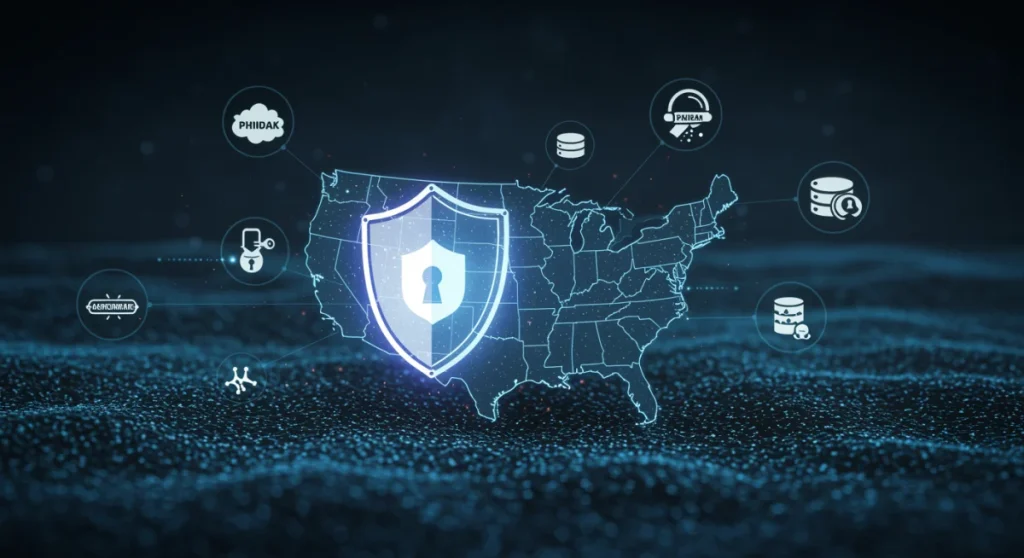
The 2026 landscape of US cybersecurity threats reveals a complex array of challenges, from advanced persistent threats to supply chain vulnerabilities, necessitating proactive and adaptive mitigation strategies to safeguard national data.
As we approach 2026, the digital battleground intensifies, presenting unprecedented challenges to national security and data integrity. Understanding the evolving landscape of US cybersecurity threats 2026 is not merely an academic exercise; it’s a critical imperative for safeguarding the nation’s infrastructure, economy, and citizens’ privacy. This report delves into the seven most significant risks facing national data and outlines comprehensive strategies to mitigate them effectively.
The rise of sophisticated ransomware attacks
Ransomware continues its relentless evolution, transforming from opportunistic attacks into highly targeted, destructive campaigns. By 2026, these attacks are expected to be more sophisticated, leveraging artificial intelligence and machine learning to evade traditional defenses and maximize impact on critical infrastructure and government agencies.
AI-powered evasion techniques
Cybercriminals are increasingly integrating AI into their ransomware operations, allowing malware to adapt its behavior, identify vulnerabilities dynamically, and spread more efficiently across networks. This makes detection and containment significantly more challenging for conventional security systems.
- Adaptive encryption algorithms that change patterns to avoid signature-based detection.
- Autonomous reconnaissance capabilities to map networks and identify high-value targets.
- Self-propagating modules that leverage zero-day exploits for rapid infection.
- Polymorphic code generation to constantly alter malware signatures.
Impact on critical infrastructure
The targeting of critical infrastructure, such as energy grids, water treatment facilities, and healthcare systems, poses a severe threat to national security and public safety. A successful ransomware attack on these sectors can disrupt essential services, leading to economic paralysis and potential loss of life.
Mitigating these advanced ransomware threats requires a multi-layered defense strategy, including robust endpoint detection and response (EDR) solutions, proactive threat intelligence sharing, and comprehensive incident response plans that are regularly tested and updated. Employee training on phishing and social engineering remains a crucial first line of defense.
State-sponsored cyber espionage and sabotage
Nation-states continue to be primary actors in the cyber arena, engaging in sophisticated espionage to steal intellectual property, military secrets, and sensitive government data. Beyond espionage, the threat of state-sponsored sabotage targeting critical infrastructure remains a significant concern for the US.
Advanced persistent threats (APTs)
APT groups, backed by nation-states, possess vast resources and patience, allowing them to conduct long-term, stealthy operations. Their objectives often include sustained data exfiltration and the implantation of backdoors for future destructive attacks. These groups often exploit supply chain vulnerabilities to gain initial access.
Detecting and countering APTs demands advanced behavioral analytics, anomaly detection, and continuous monitoring of network traffic. Collaborative intelligence sharing between government agencies and private sector partners is essential to identify and track these elusive threats.
Geopolitical motivations
Geopolitical tensions directly influence the scope and intensity of state-sponsored cyber activities. As global rivalries escalate, so too does the likelihood of cyberattacks aimed at destabilizing adversaries, disrupting economies, or influencing political outcomes. The US must remain vigilant against these politically motivated incursions.
Combating state-sponsored threats requires a combination of strong diplomatic efforts, international cooperation on cybersecurity norms, and significant investment in offensive and defensive cyber capabilities. Hardening government networks and critical infrastructure against these persistent threats is paramount.
Supply chain vulnerabilities
The interconnected nature of modern technology supply chains presents an attractive target for cyber adversaries. Exploiting a single weak link in the supply chain can grant access to numerous organizations, including government entities and critical infrastructure providers.
Software and hardware integrity
Ensuring the integrity of software and hardware components throughout their lifecycle is a monumental task. Malicious code or hardware backdoors can be introduced at any stage, from design and manufacturing to distribution and deployment, making detection extremely difficult.
- Rigorous vetting of third-party vendors and suppliers.
- Secure development lifecycle (SDLC) practices for all software.
- Hardware authenticity verification and tamper detection.
- Continuous monitoring for anomalies in supply chain components.
Third-party risk management
Organizations often rely on a vast ecosystem of third-party vendors for various services, from cloud computing to managed security. Each vendor represents a potential entry point for attackers if their security posture is not adequately managed and monitored. Effective third-party risk management is crucial.
Addressing supply chain vulnerabilities requires a holistic approach that includes robust procurement policies, continuous security assessments of vendors, and the implementation of zero-trust architectures to minimize the impact of a breach in any single component. Transparency and accountability across the supply chain are key.
The proliferation of IoT device exploitation
The rapid expansion of the Internet of Things (IoT) presents a burgeoning attack surface. From smart cities to connected homes, billions of often insecure devices offer new avenues for cybercriminals and state actors to conduct surveillance, launch DDoS attacks, or gain access to broader networks.
Inherent security weaknesses
Many IoT devices are designed with convenience over security, lacking fundamental protections such as strong authentication, encryption, and regular security updates. This makes them easy targets for exploitation, often becoming botnet participants without the owners’ knowledge.
Manufacturers must prioritize security by design, implementing robust authentication mechanisms and enabling automatic, secure updates. Consumers and organizations must be educated on best practices for securing IoT devices, including changing default passwords and segmenting IoT networks.
Gateway to enterprise networks
In enterprise and critical infrastructure environments, insecure IoT devices can serve as a bridgehead for attackers to penetrate more sensitive operational technology (OT) and information technology (IT) networks. This convergence of IT and OT networks amplifies the risk.

Securing IoT in these contexts requires strict network segmentation, continuous vulnerability scanning, and dedicated IoT security solutions that can detect and respond to anomalous behavior. Comprehensive asset inventories are also essential to understand the full scope of connected devices.
Deepfake and disinformation campaigns
The advent of sophisticated AI-generated deepfakes and advanced disinformation techniques poses a grave threat to national discourse, public trust, and democratic processes. By 2026, these tactics are expected to be more convincing and widespread, challenging society’s ability to discern truth from fiction.
Erosion of public trust
Deepfakes can be used to create highly convincing fake videos or audio recordings of public figures, potentially spreading misinformation, inciting social unrest, or manipulating financial markets. The erosion of trust in verifiable information sources can have profound societal consequences.
Developing advanced AI-powered detection tools for deepfakes is crucial, alongside promoting media literacy and critical thinking skills among the general public. Social media platforms also bear responsibility for implementing robust content verification and flagging mechanisms.
Influence operations and election interference
Foreign adversaries can leverage deepfakes and disinformation to interfere with elections, sway public opinion, and exacerbate societal divisions. The ability to generate realistic but fabricated content makes these influence operations significantly more potent and harder to combat.
Countering disinformation requires a coordinated effort involving government agencies, technology companies, academic institutions, and civil society organizations. This includes rapid response mechanisms to debunk false narratives and international cooperation to identify and attribute sources of disinformation campaigns.
Evolving insider threats
While external threats often grab headlines, insider threats remain a persistent and often underestimated risk. Disgruntled employees, negligent staff, or malicious actors within an organization can exploit their privileged access to steal data, sabotage systems, or aid external adversaries.
Malicious insiders
Malicious insiders intentionally cause harm, driven by financial gain, ideology, or personal grievances. They possess intimate knowledge of systems and vulnerabilities, making their actions particularly damaging and difficult to detect through external perimeter defenses.
- User behavior analytics (UBA) to monitor anomalous activity.
- Strict access controls and the principle of least privilege.
- Mandatory security awareness training with emphasis on ethical conduct.
- Regular background checks and psychological assessments for sensitive roles.
Negligent insiders
More common than malicious actors, negligent insiders pose a significant risk through carelessness, lack of awareness, or succumbing to social engineering tactics. Their actions, though unintentional, can lead to data breaches or system compromises.
Mitigating insider threats requires a comprehensive approach that combines technical controls with human-centric strategies. Strong security policies, continuous employee training, and robust monitoring systems are essential for identifying and addressing both malicious and negligent insider risks effectively.
Quantum computing’s cryptographic challenge
The theoretical capabilities of quantum computers pose a long-term, yet significant, threat to current cryptographic standards. While practical, large-scale quantum computers are still some years away, the need to prepare for ‘post-quantum cryptography’ (PQC) is becoming increasingly urgent.
Breaking current encryption standards
Once sufficiently powerful quantum computers become available, they will be capable of breaking many of the public-key encryption algorithms that currently secure internet communications, financial transactions, and sensitive government data. This would render vast amounts of encrypted data vulnerable.
Governments and organizations must begin the transition to post-quantum cryptography standards. This involves investing in research and development, piloting new algorithms, and developing migration strategies to ensure a seamless and secure transition before quantum computers become a viable threat.
The ‘harvest now, decrypt later’ threat
Adversaries are already collecting encrypted data today, anticipating that they will be able to decrypt it in the future once quantum computing capabilities mature. This ‘harvest now, decrypt later’ approach means that sensitive data with a long shelf-life is already at risk.
Protecting against this future threat requires immediate action to identify and secure long-lived sensitive data with PQC-ready solutions. Public-key infrastructure (PKI) modernization and cryptographic agility will be critical in adapting to the evolving cryptographic landscape.
| Key Threat | Brief Description |
|---|---|
| Sophisticated Ransomware | AI-powered attacks targeting critical infrastructure for maximum disruption and financial gain. |
| State-Sponsored Espionage | Advanced Persistent Threats (APTs) stealing sensitive national data and intellectual property. |
| Supply Chain Vulnerabilities | Exploitation of weak links in software and hardware supply chains to compromise multiple entities. |
| Deepfake & Disinformation | AI-generated content used to spread misinformation, erode trust, and influence public opinion. |
Frequently asked questions about US cybersecurity threats
The surge in ransomware is driven by the professionalization of cybercrime, the use of cryptocurrencies for untraceable payments, and the integration of AI/ML by attackers. These factors enable more targeted, evasive, and destructive campaigns, increasing their profitability and impact.
State-sponsored cyber espionage is characterized by its long-term objectives, extensive resources, and stealthy nature. Unlike financially motivated attacks, it aims to steal sensitive national data, intellectual property, or prepare for future sabotage, often leveraging zero-day exploits and advanced persistent threat (APT) tactics.
IoT devices act as an expanding attack surface due to their sheer number and often weak security. They can be exploited to launch large-scale DDoS attacks, conduct surveillance, or serve as entry points into more secure enterprise and critical infrastructure networks, posing significant risks.
Deepfake and disinformation campaigns threaten national data by eroding public trust in information and enabling sophisticated influence operations. They can manipulate public opinion, interfere with democratic processes, and spread false narratives, ultimately undermining social cohesion and national security.
While still emerging, quantum computing poses a future threat to current cryptographic standards. Powerful quantum computers could break existing encryption, rendering sensitive data vulnerable. The ‘harvest now, decrypt later’ strategy means adversaries are already collecting data, necessitating a proactive shift to post-quantum cryptography.
Conclusion
The cybersecurity landscape of 2026 demands unwavering vigilance and proactive adaptation from the United States. The top seven threats—from sophisticated ransomware and state-sponsored attacks to supply chain vulnerabilities, IoT exploitation, deepfakes, insider threats, and the looming quantum challenge—each present unique dangers to national data and infrastructure. Effective mitigation strategies require a multi-faceted approach, combining advanced technological defenses with robust policy frameworks, international cooperation, continuous education, and a commitment to security by design. By understanding these evolving risks and investing in resilient, adaptive security measures, the US can better safeguard its digital future and protect its national interests against an increasingly complex array of cyber adversaries. The time to fortify our digital defenses is now, ensuring that national data remains secure and resilient against the threats of tomorrow.