US-China Trade Relations 2026: 15% Tariff Adjustments & Economic Impact
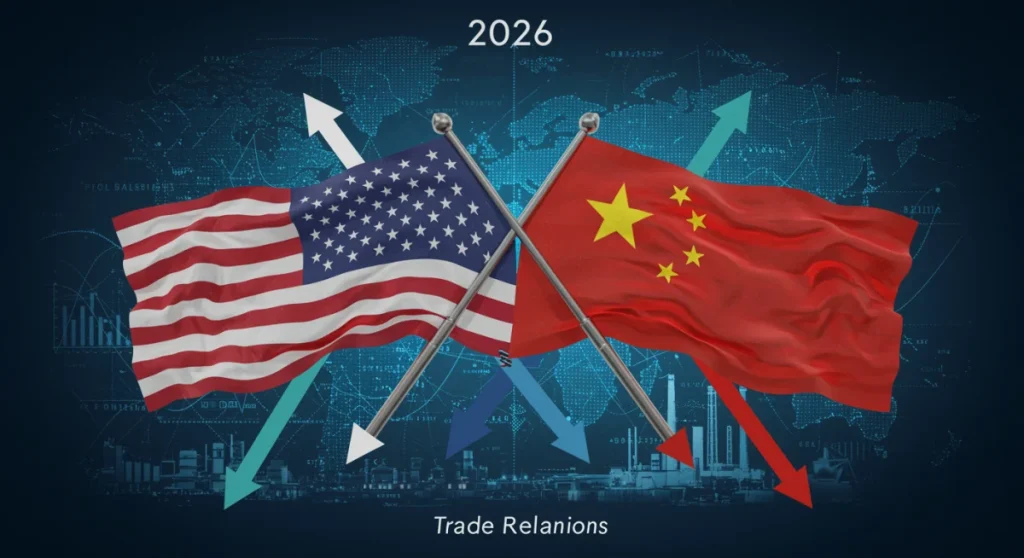
The 2026 US-China trade relations are significantly shaped by 15% tariff adjustments, creating complex economic repercussions across global supply chains and affecting various industries worldwide.
The intricate dance of global economics often finds its rhythm dictated by the major players. In 2026, US-China trade relations remain at the forefront of international discourse, particularly with the continued analysis of 15% tariff adjustments and their far-reaching economic repercussions. This ongoing dynamic isn’t just about two nations; it’s a critical barometer for global stability, supply chain resilience, and the future of industrial development.
Understanding the 15% Tariff Adjustments in 2026
The 2026 landscape of US-China trade is undeniably marked by specific tariff adjustments, prominently featuring the 15% rate on various goods. These tariffs, initially implemented as a strategic tool, have evolved into a persistent feature of the bilateral economic relationship, influencing decision-making from corporate boardrooms to individual consumer choices. Their continued presence underscores a deeper, more entrenched strategic competition.
Initially, these tariffs were imposed with the stated aim of rebalancing trade deficits, protecting domestic industries, and addressing concerns over intellectual property and market access. However, their prolonged application has led to a re-evaluation of their effectiveness and unintended consequences. The 15% figure, while seemingly precise, represents a complex web of product categories and strategic considerations, impacting everything from raw materials to finished consumer electronics.
The Genesis and Evolution of Tariff Policies
- Historical Context: Tariffs between the US and China have a history rooted in broader economic and geopolitical tensions, escalating significantly in the late 2010s.
- Policy Objectives: Key goals included reducing trade imbalances, pressuring China on structural economic reforms, and safeguarding national security interests.
- Phase-One Deal Impact: While some tariffs were reduced or suspended in earlier agreements, the core 15% adjustments on a substantial list of goods persisted, indicating a long-term strategic stance.
The persistence of these tariffs into 2026 signals a fundamental shift in how both nations approach economic engagement. It’s no longer just about temporary measures but about recalibrating entire trade frameworks. This sustained pressure has forced industries on both sides to adapt, often at significant cost, leading to a more fragmented global trading system. The 15% tariff, therefore, is not merely a tax; it’s an economic signal with profound implications for investment, manufacturing, and international cooperation.
Economic Repercussions on US Industries
The 15% tariff adjustments have cast a long shadow over various sectors within the United States. While some domestic industries initially saw tariff protection as a boon, the reality has proven far more nuanced, creating both winners and losers. Companies reliant on Chinese imports for components or finished goods have faced increased costs, often passed on to consumers or absorbed, impacting profit margins.
Manufacturing, in particular, has experienced a mixed bag. For certain sectors, the tariffs have spurred domestic production and investment, aligning with the policy’s original intent. However, for many others, particularly those integrated into global supply chains that include China, the tariffs have meant higher input costs and a competitive disadvantage against producers in non-tariff countries. This has prompted a significant re-evaluation of sourcing strategies.
Key Sectors Affected by Tariffs
- Agriculture: Farmers faced retaliatory tariffs from China, severely impacting exports of soybeans, pork, and other commodities, leading to government aid programs.
- Technology: Companies importing components for electronics, computers, and telecommunications equipment saw increased costs, sometimes accelerating efforts to diversify supply chains.
- Retail and Consumer Goods: Importers of apparel, footwear, and various household items have absorbed or passed on tariff costs, affecting consumer prices and demand.
The ripple effect extends beyond direct import costs. US companies exporting to China have also contended with retaliatory tariffs, making their products less competitive in one of the world’s largest markets. This dual pressure has led to a strategic shift, with many American businesses exploring new markets, investing in automation, or even reshoring production where feasible. The overall impact on US industries remains a complex equation of protection, adaptation, and unforeseen challenges, requiring continuous monitoring and strategic adjustments in 2026 and beyond.
Impact on Chinese Economy and Export Strategies
For China, the sustained 15% tariff adjustments by the US have necessitated significant economic recalibration. As a global manufacturing powerhouse, its export-oriented economy felt the direct pinch of reduced access to the vast American market. This pressure has accelerated long-term strategic goals, pushing China to strengthen its domestic consumption and develop its technological self-sufficiency.
Chinese manufacturers, particularly those heavily reliant on US exports, have been forced to diversify their customer base, seeking new markets in Southeast Asia, Africa, and Europe. This has led to a strategic pivot, emphasizing the ‘Belt and Road Initiative‘ as a means to foster new trade corridors and reduce dependency on traditional Western markets. The tariffs have, in essence, acted as a catalyst for China’s broader economic reorientation.
China’s Adaptive Measures
- Market Diversification: Increased focus on emerging markets and economies participating in the Belt and Road Initiative to offset reduced US demand.
- Domestic Consumption Drive: Policies aimed at boosting internal demand and strengthening the domestic market as a primary economic engine.
- Technological Self-Reliance: Significant investments in research and development to reduce reliance on foreign technology, particularly in critical sectors like semiconductors.
The tariffs have also spurred internal reforms and adjustments within Chinese industries. Some companies have moved production to other countries in Asia to circumvent US tariffs, a phenomenon known as ‘tariff engineering’ or ‘decoupling light.’ This repositioning, while costly in the short term, aims to maintain competitiveness and secure market access. The overall impact on China’s economy in 2026 demonstrates a strategic resilience and a determined effort to navigate global trade headwinds by fostering new growth drivers and strengthening internal capabilities.
Global Trade and Supply Chain Reconfiguration
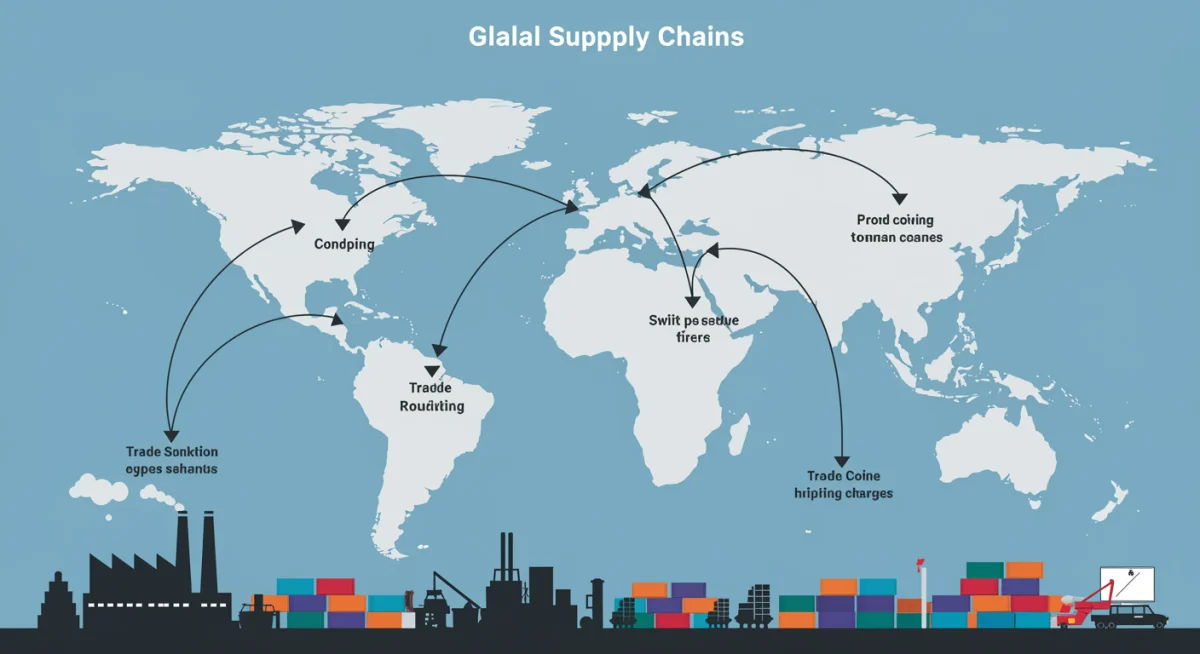
The US-China tariff adjustments have not merely been a bilateral issue; they have sent seismic waves through the entire global trading system, prompting a significant reconfiguration of supply chains worldwide. Companies, fearing disruptions and increased costs, have actively sought to de-risk their operations by diversifying manufacturing bases and sourcing components from multiple regions. This trend, often termed ‘friend-shoring’ or ‘near-shoring,’ reflects a broader desire for resilience over pure cost efficiency.
Nations like Vietnam, Mexico, India, and other Southeast Asian countries have emerged as alternative manufacturing hubs, attracting foreign direct investment from companies looking to bypass tariffs. This shift, while creating new economic opportunities for these nations, also presents challenges related to infrastructure, labor capacity, and regulatory frameworks. The complexity of moving established supply chains means these changes are incremental but persistent, shaping the global economic map for decades to come.
Emerging Trends in Global Supply Chains
- Diversification of Production: Companies are reducing reliance on single-country manufacturing, spreading production across several nations to mitigate risks.
- Regionalization: A growing focus on developing regional supply chains to shorten distances, reduce lead times, and enhance responsiveness to market changes.
- Digital Transformation: Increased adoption of digital tools and artificial intelligence to optimize logistics, track goods, and enhance transparency across fragmented supply networks.
The ramifications extend to global logistics and shipping, with new trade routes and transportation networks being developed or expanded to accommodate these reconfigured supply chains. Ports, shipping lines, and freight forwarders are adapting to altered demand patterns and geographical shifts in manufacturing. In 2026, the global trade landscape is characterized by a more fragmented yet, in some ways, more resilient network, still grappling with the long-term effects of the initial 15% tariff adjustments and the ongoing geopolitical climate.
Geopolitical Implications and International Relations
Beyond the immediate economic figures, the 15% tariff adjustments and the broader US-China trade tensions carry profound geopolitical implications, reshaping international alliances and diplomatic strategies. The economic friction between the world’s two largest economies has forced other nations to navigate a delicate balance, often caught between their economic ties to China and their strategic partnerships with the United States.
This dynamic has fueled a debate over global governance and the future of multilateral institutions. The World Trade Organization (WTO), designed to regulate international trade, has faced increasing challenges in mediating disputes and enforcing rules amidst the bilateral tensions. This has led some nations to question the efficacy of existing frameworks and explore alternative trade blocs or agreements that might offer greater stability and predictability.
Shifting Diplomatic Landscapes
- Alliance Realignment: Countries are re-evaluating their diplomatic and economic allegiances, often seeking to strengthen ties with partners that offer stability in a turbulent trade environment.
- Regional Trade Blocs: Increased emphasis on regional trade agreements (e.g., CPTPP, RCEP) as alternatives to global frameworks strained by US-China tensions.
- Technological Rivalry: Trade disputes often intertwine with competition over critical technologies, leading to export controls and restrictions that have broader national security implications.
The US-China trade relationship in 2026 is therefore not just an economic story but a geopolitical narrative of power competition, influence, and the struggle for global economic leadership. The tariffs serve as a tangible manifestation of this broader rivalry, influencing defense policies, technological development, and even cultural exchanges. Understanding these underlying currents is crucial for comprehending the full scope of the 15% tariff adjustments and their enduring impact on international relations.
Future Outlook and Potential Scenarios for 2026 and Beyond
Looking ahead from 2026, the trajectory of US-China trade relations, and specifically the 15% tariff adjustments, presents several potential scenarios, each with varying degrees of economic and geopolitical impact. Forecasting these dynamics requires considering domestic political shifts in both countries, evolving global economic conditions, and the ongoing technological race. No single outcome is certain, but key trends offer insights into plausible futures.
One scenario involves the continued entrenchment of tariffs, leading to further decoupling of economies. In this future, companies might accelerate their supply chain diversification efforts, potentially leading to higher costs but greater resilience for some. Another possibility is a phased de-escalation, where targeted tariff reductions are negotiated in exchange for specific concessions, perhaps on market access or intellectual property. This would offer some relief to industries but likely not a full return to pre-tariff trade norms.
Key Factors Influencing Future Trade Relations
- Domestic Politics: Presidential elections in the US and policy priorities in China will significantly shape trade stances.
- Global Economic Health: A global recession could pressure both nations to reduce trade barriers to stimulate growth, while robust growth might allow tariffs to persist.
- Technological Competition: The race for dominance in AI, semiconductors, and other critical technologies will continue to influence trade policies and restrictions.
A third scenario, albeit less likely to involve a complete reversal, could see a more pragmatic approach emerging, focusing on areas of mutual interest like climate change or pandemic preparedness, which might indirectly ease trade tensions. However, the fundamental strategic competition is expected to persist. Businesses and policymakers alike must prepare for a future characterized by continued complexity, requiring agility, strategic foresight, and a deep understanding of the evolving US-China trade relationship and the enduring effects of the 15% tariff adjustments.
| Key Aspect | Brief Description |
|---|---|
| Tariff Persistence | 15% tariffs remain a core feature of US-China trade in 2026, signaling a long-term strategic shift. |
| Economic Impact | Significant repercussions for US industries (costs, diversification) and Chinese exports (market shift, self-reliance). |
| Supply Chain Reconfig. | Global supply chains are diversifying and regionalizing to mitigate risks from ongoing trade tensions. |
| Geopolitical Shifts | Trade tensions influence international alliances, multilateral institutions, and technological rivalries. |
Frequently Asked Questions About US-China Trade Relations
The 15% tariff adjustments were primarily implemented to address perceived trade imbalances, protect domestic industries from foreign competition, and pressure China on issues such as intellectual property theft and forced technology transfers. These measures aim to level the playing field for American businesses.
American consumers can be affected in several ways. Tariffs often lead to higher prices for imported goods, as companies either pass on the increased costs or source from more expensive alternatives. This can reduce purchasing power and limit product variety in certain sectors like electronics and apparel.
Yes, some Chinese companies are actively seeking ways to circumvent US tariffs. This includes relocating parts of their production to other countries in Southeast Asia or Mexico, a strategy known as ‘tariff engineering’ or ‘decoupling light,’ to avoid goods being directly subject to US import duties.
The long-term outlook suggests continued strategic competition, even if specific tariff rates fluctuate. Both nations are likely to prioritize national security and technological self-sufficiency, leading to a more managed and potentially fragmented trade relationship rather than a full return to pre-tariff globalization.
Global supply chains have adapted by diversifying production locations, emphasizing regionalization, and investing in digital transformation to enhance resilience. Companies are seeking to reduce single-country dependency and spread manufacturing risk across multiple geographies to avoid future disruptions and tariff impacts.
Conclusion
The US-China trade relations in 2026, heavily influenced by persistent 15% tariff adjustments, represent a pivotal moment in global economic history. These tariffs have not only reshaped bilateral trade flows but have also spurred profound transformations within US and Chinese industries, reconfigured global supply chains, and significantly impacted geopolitical dynamics. As both nations continue to navigate this complex landscape, the emphasis remains on adaptability, strategic diversification, and understanding the intricate interplay between economic policy and international relations. The path forward demands continuous analysis and agile responses from businesses and policymakers alike to mitigate risks and capitalize on emerging opportunities in a world forever altered by these trade tensions.