Remote Work’s Cultural Impact: Reshaping American Society by 2026
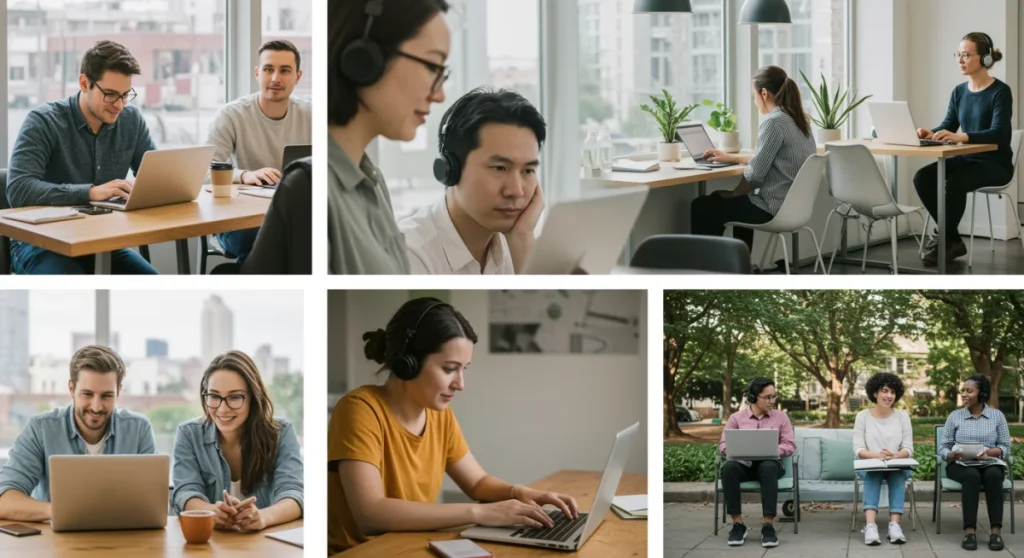
The cultural impact of remote work by 2026 has significantly altered the American social fabric, leading to transformative shifts in community structures, urban development, and personal interactions across the nation.
By 2026, the cultural impact of remote work has become an undeniable force, fundamentally reshaping the American social fabric. What began as a necessity during a global crisis has evolved into a deeply ingrained lifestyle, bringing with it a cascade of changes across communities, individual routines, and the very definition of work-life balance. This pervasive shift demands a closer look at how these new ways of living are influencing everything from urban development to personal relationships.
Redefining the American Workplace and Daily Routines
The traditional 9-to-5 office model, once the bedrock of American corporate culture, has largely given way to a more fluid, location-independent paradigm. This seismic shift has not only altered how and where people work but has also profoundly influenced their daily routines, leisure activities, and family dynamics. The commute, a once-dreaded ritual, has been replaced by newfound flexibility for many, leading to a re-evaluation of time and priorities.
The rise of hybrid models
While fully remote work gained traction, 2026 sees a dominant hybrid model emerging. This blend allows employees to enjoy the benefits of home-based work while retaining some in-person collaboration. Companies are investing heavily in technologies that facilitate seamless transitions between home and office, ensuring productivity and fostering a sense of connection without demanding constant physical presence.
- Increased autonomy over work schedules.
- Reduced daily commute times and costs.
- Greater integration of personal and professional life.
- Access to a wider talent pool for employers.
This hybrid approach has created a new rhythm for daily life. Mornings are no longer solely dictated by rush hour, allowing for more time dedicated to personal well-being, whether it’s exercise, family breakfast, or pursuing hobbies. The boundaries between work and home have blurred, requiring individuals to develop new strategies for maintaining focus and preventing burnout. This constant negotiation of personal and professional space is a defining characteristic of the 2026 remote work landscape.
The redefinition of the American workplace extends beyond mere location. It encompasses a fundamental rethinking of productivity metrics, team collaboration tools, and leadership styles. Companies are now judged not just on their products or services, but on their ability to foster a supportive and flexible remote work environment. This has led to a cultural shift where empathy and trust play a more significant role in employer-employee relationships, reflecting a broader societal move towards valuing well-being alongside output.
Shifting Demographics and Urban Migration Patterns
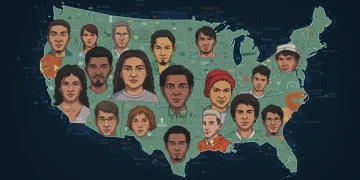
The freedom to work from anywhere has triggered significant demographic shifts and unprecedented urban migration patterns across the United States. Major metropolitan areas, once the undisputed centers of economic opportunity, are experiencing a redistribution of their populations, as individuals and families seek out locales that offer a better quality of life, lower cost of living, and access to nature.
The revitalization of rural and suburban areas
With the tether of the office loosened, many Americans are choosing to relocate to smaller towns and suburban communities. This exodus from dense urban centers has breathed new life into previously declining regions, spurring economic development and diversification in areas that once struggled to retain their younger populations. The demand for housing, services, and amenities in these areas has surged, creating both opportunities and challenges for local governments.
This migration isn’t just about escaping high rents; it’s about a desire for more space, stronger community ties, and a closer connection to the outdoors. Families are increasingly prioritizing access to good schools and safer neighborhoods, factors that were often compromised in expensive urban environments. This has led to a renaissance in local economies, with new businesses emerging to cater to the needs of these incoming residents, from artisanal coffee shops to co-working spaces.
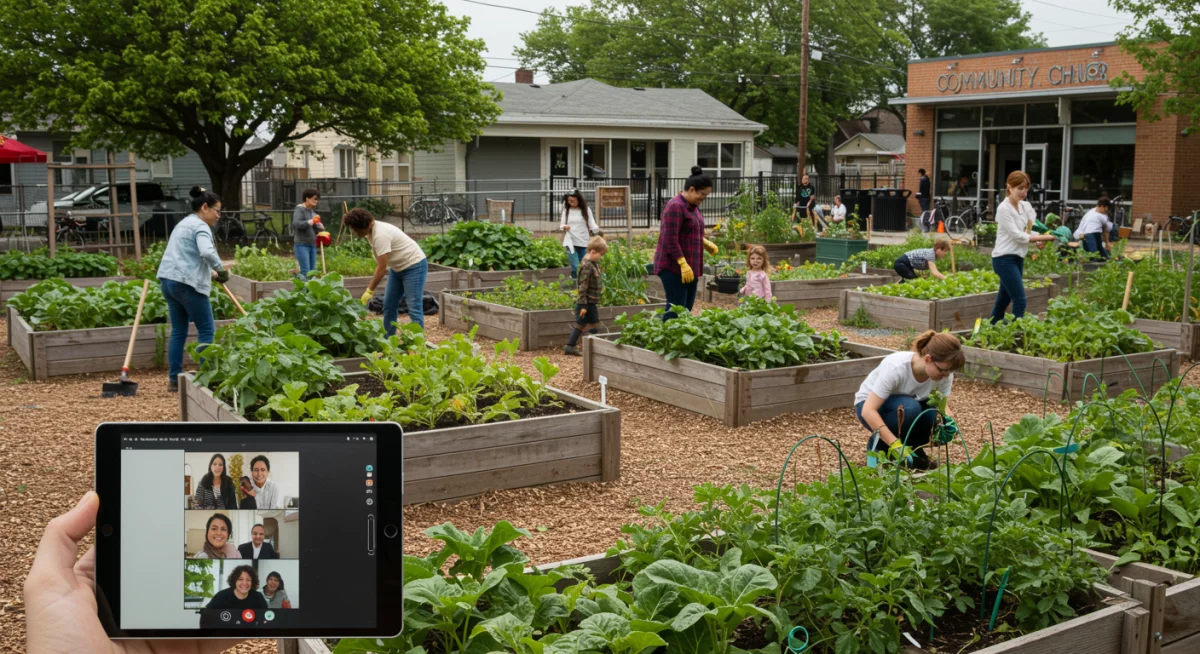
However, this shift is not without its complexities. Rapid influxes of new residents can strain existing infrastructure, drive up housing prices, and sometimes lead to cultural clashes between long-time residents and newcomers. Planning and adaptation are key for these burgeoning communities to thrive sustainably. The long-term implications of these demographic shifts will continue to unfold, but their immediate impact on the American landscape is already palpable, fostering a more distributed and diverse national population.
The Evolution of Community and Social Interaction
Remote work has undeniably altered the landscape of social interaction and community engagement. While concerns about isolation initially arose, 2026 reveals a more nuanced picture, where new forms of community are emerging, and existing ones are being redefined through both digital and localized efforts. The nature of how Americans connect, both personally and professionally, is in constant flux.
Digital communities and their influence
Online platforms have become vital hubs for connection, extending beyond professional networking to encompass shared hobbies, support groups, and even local civic engagement. These digital communities offer a sense of belonging for those who might feel geographically isolated or whose interests are niche. They provide a space for collaboration, learning, and emotional support, bridging distances that physical proximity once dictated.
- Increased participation in online interest groups.
- Development of virtual co-working and social spaces.
- Enhanced ability to maintain long-distance friendships.
- New avenues for political and social activism.
At the same time, there’s a resurgence of interest in hyper-local communities. With more time spent in their immediate neighborhoods, remote workers are investing more in local businesses, parks, and community initiatives. This has led to a strengthening of neighborhood bonds, with people more likely to know their neighbors, participate in local events, and contribute to the well-being of their immediate surroundings. This dual focus on both global digital connections and local physical engagement is a hallmark of the new social fabric.
However, challenges remain in ensuring equitable access to digital resources and fostering meaningful in-person interactions. The quality of social connection can vary, and efforts are ongoing to create inclusive spaces both online and offline. The evolution of community in the remote work era is a testament to human adaptability, as individuals find new ways to connect and build meaningful relationships in a less centralized world.
Impact on Education and Family Dynamics
The widespread adoption of remote work has had a profound and multifaceted impact on American education and family dynamics. With parents often working from home, the traditional boundaries between school, work, and family life have become more permeable, leading to both benefits and challenges for households across the nation. This shift necessitates a re-evaluation of how children are educated and how families structure their time and responsibilities.
Flexible schooling options
The demand for flexible schooling options has surged, with a significant increase in homeschooling, virtual academies, and hybrid learning models. Parents working remotely have greater capacity to oversee their children’s education or to choose alternatives that better suit their family’s schedule and values. This has led to innovations in educational technology and a more personalized approach to learning for many students.
Within the family unit, remote work has ushered in a new era of co-parenting and shared responsibilities. While some families have found increased opportunities for quality time and a more balanced domestic partnership, others struggle with the constant presence of work in the home environment. Managing childcare, household chores, and professional duties simultaneously requires careful planning and communication, testing the resilience of family structures.
The presence of parents at home can also mean more opportunities for children to observe their parents working, potentially inspiring them and providing valuable insights into different professions. However, it also demands clear boundaries to protect family time and ensure children receive undivided attention. The long-term effects on child development, parental stress levels, and overall family well-being are still being studied, but it is clear that remote work has irrevocably altered the American family landscape, pushing for greater adaptability and innovative solutions.
Economic Restructuring and Local Economies
Remote work’s cultural impact extends deeply into the economic fabric of the United States, driving significant restructuring and profoundly affecting local economies. The redistribution of the workforce has led to a re-evaluation of commercial real estate, a surge in entrepreneurial activity in unexpected places, and a renewed focus on local consumption. This economic transformation is both a challenge and an opportunity for various sectors.
The rise of the ‘digital nomad’ economy
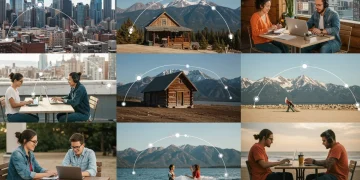
A burgeoning ‘digital nomad’ economy has emerged, where individuals leverage their remote work flexibility to travel and work from different locations, often for extended periods. This trend injects economic activity into diverse regions, from resort towns to smaller cities, as these nomads spend on accommodation, food, and local services. This mobile workforce demands new types of infrastructure and services, including reliable internet and co-working spaces, fostering new business ventures.
- Increased demand for flexible housing solutions.
- Growth of hospitality and tourism in non-traditional locations.
- Stimulation of local service industries.
- Development of new tech-enabled support services.
Simultaneously, the decline in demand for traditional office spaces in major urban centers has led to an overhaul of commercial real estate. Many office buildings are being repurposed into residential units, mixed-use developments, or even urban farms, radically altering cityscapes. This shift opens up opportunities for urban renewal and the creation of more sustainable, community-focused urban environments. The economic restructuring brought about by remote work is not merely a redistribution of wealth but a reimagining of how and where economic value is created and exchanged.
Local economies are benefiting from increased foot traffic and consumer spending, as remote workers are more likely to frequent local shops, restaurants, and service providers. This localized economic activity bolsters small businesses and contributes to a more resilient, diversified economic landscape, moving away from over-reliance on large corporate campuses. The long-term health of these local economies will depend on their ability to adapt and innovate in response to the changing needs of their new populations.
Mental Health and Well-being in the Remote Era
The cultural shift towards remote work has brought both advantages and distinct challenges regarding mental health and overall well-being. While many individuals report reduced stress from commuting and greater flexibility, concerns about isolation, burnout, and the blurring of work-life boundaries have become prominent. Understanding these impacts is crucial for fostering a sustainable and healthy remote work culture by 2026.
Addressing isolation and fostering connection
Isolation is a significant concern for some remote workers, particularly those living alone or lacking strong local community ties. Companies and communities are proactively addressing this by promoting virtual social events, encouraging participation in local activities, and supporting co-working spaces that offer a sense of camaraderie. The focus is on creating intentional opportunities for connection that replace incidental office interactions.
The flexibility of remote work, while beneficial, can also lead to an ‘always-on’ culture, where the lines between professional and personal life become indistinguishable. This can result in increased work hours, difficulty disconnecting, and ultimately, burnout. Employers are implementing policies that encourage digital detox, offer mental health resources, and promote healthy work boundaries. The emphasis is on teaching employees how to manage their time and energy effectively in a less structured environment.
Conversely, many remote workers report improved mental health due to greater autonomy, reduced workplace politics, and the ability to design a work environment that suits their individual needs. The reduction in daily stressors, such as long commutes and rigid schedules, often translates to lower anxiety levels and increased job satisfaction. The key lies in finding a balance that maximizes the benefits of remote work while mitigating its potential drawbacks, ensuring that well-being remains a central component of this evolving lifestyle.
| Key Impact Area | Brief Description of Change |
|---|---|
| Workplace Redefined | Shift from traditional office to hybrid models, emphasizing flexibility and autonomy. |
| Demographic Shifts | Migration from urban centers to suburbs and rural areas, revitalizing local economies. |
| Community Evolution | Emergence of strong digital communities alongside increased local engagement. |
| Well-being Focus | Greater emphasis on mental health, work-life balance, and addressing isolation. |
Frequently Asked Questions About Remote Work’s Cultural Impact
By 2026, American cities are witnessing significant demographic shifts, with many residents moving to suburban or rural areas. This has led to repurposing commercial spaces into residential or mixed-use developments, and a revitalization of local economies in smaller towns, while urban centers adapt to a less office-centric model.
Remote work offers families increased flexibility, allowing for more quality time together, better work-life integration, and greater parental involvement in children’s education. It can also reduce stress from commuting and provide opportunities for a healthier home environment.
Remote work has fostered both vibrant online communities and a resurgence of local engagement. While digital platforms connect people with shared interests globally, many remote workers are also investing more in their immediate neighborhoods, strengthening local social ties and community initiatives.
Challenges include increased feelings of isolation, potential for burnout due to blurred work-life boundaries, and difficulty disconnecting from work. Companies are addressing these by promoting digital detox, offering mental health resources, and encouraging healthy work habits.
Yes, by 2026, the hybrid work model has become the dominant paradigm. It offers a balanced approach, allowing employees the flexibility of remote work while retaining opportunities for in-person collaboration and fostering a sense of company culture, proving highly sustainable.
Conclusion
By 2026, the cultural impact of remote work has unequivocally transformed the American social fabric, ushering in new lifestyles that prioritize flexibility, well-being, and community. From redefining how and where we work to reshaping urban landscapes and strengthening local ties, this paradigm shift is far more than a temporary adjustment; it is a fundamental reorientation of American life. The ongoing adaptation to these changes will continue to mold a more distributed, interconnected, and resilient society, demanding ongoing innovation and thoughtful policy to harness its full potential.