The U.S. green economy is witnessing a substantial boom, offering significant investment potential through 2026, particularly in sustainable energy, electric vehicles, and circular economy initiatives.
The global economy is undergoing a profound transformation, with sustainability at its core. This shift is particularly evident in the United States, where the green economy investment landscape is expanding rapidly. For investors looking to capitalize on this powerful trend, understanding the key sectors driving this growth is crucial, especially with a time-sensitive outlook towards 2026.
The Rise of Sustainable Energy: A Cornerstone of Green Investment
The sustainable energy sector stands as a pivotal force in the burgeoning green economy. Driven by increasing environmental awareness, technological advancements, and supportive government policies, renewable energy sources are rapidly displacing traditional fossil fuels. This transition is not merely an environmental imperative but a significant economic opportunity.
Investment in sustainable energy infrastructure, from utility-scale solar farms to offshore wind projects, is projected to surge. The decreasing cost of renewable technologies, coupled with improved efficiency, makes them increasingly competitive. This creates a fertile ground for both established energy companies and innovative startups.
Solar Power’s Continued Dominance
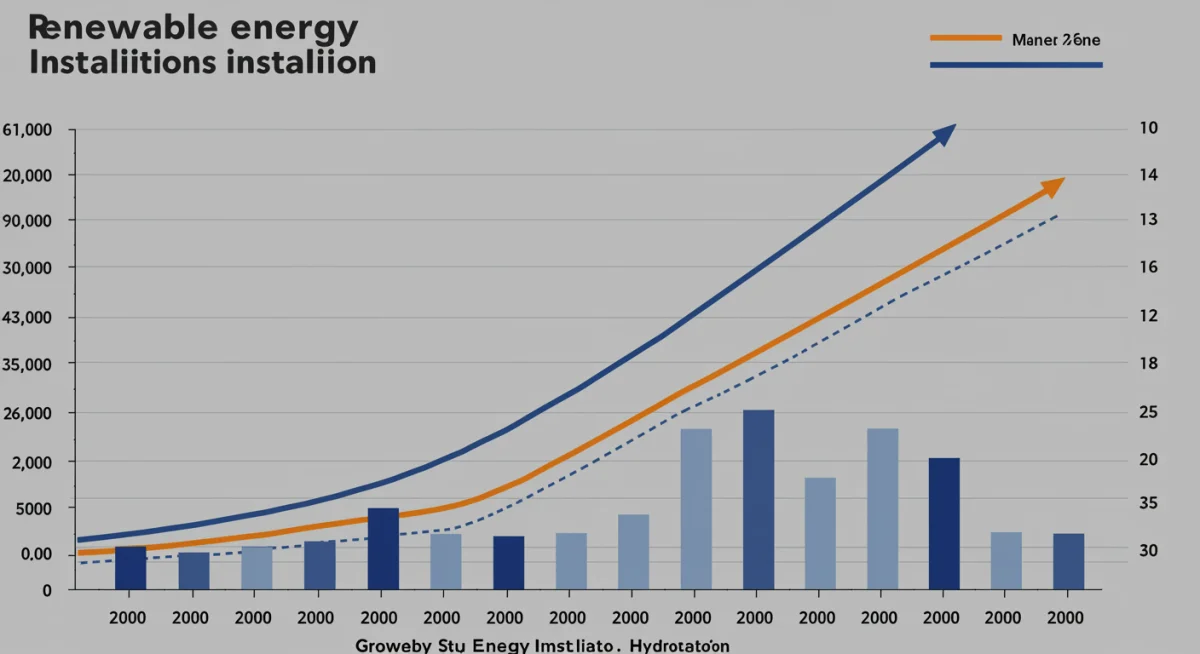
Solar energy remains a frontrunner in the sustainable energy race. The U.S. has seen unprecedented growth in solar installations, both residential and commercial. Advancements in photovoltaic (PV) technology and energy storage solutions are making solar an even more attractive option.
- Technological Innovation: Perovskite solar cells and bifacial modules are enhancing efficiency.
- Battery Storage Integration: Pairing solar with battery storage systems ensures grid stability and reliability.
- Policy Support: Tax credits and incentives continue to stimulate adoption across states.
Wind Energy’s Offshore Potential
While onshore wind has been a significant contributor, offshore wind energy is emerging as a game-changer for the U.S. power grid. The vast potential of coastal winds offers a reliable and powerful source of clean electricity. Developing this infrastructure requires substantial capital, promising long-term returns.
The commitment from federal and state governments to expand offshore wind capacity signals a clear path for investment. Supply chain development, port infrastructure upgrades, and turbine manufacturing are all areas seeing substantial growth. This sector is set to create thousands of jobs and attract billions in private investment.
In conclusion, the sustainable energy sector, encompassing solar, wind, and emerging technologies, is a foundational element of the U.S. green economy. Its growth trajectory is steep, fueled by innovation and a global commitment to decarbonization, making it a prime target for strategic investment through 2026.
Electric Vehicles and Charging Infrastructure: Driving the Future
The automotive industry is undergoing a revolutionary shift towards electrification, with electric vehicles (EVs) at the forefront. This trend is not just about manufacturing cars; it encompasses a complex ecosystem of battery technology, charging infrastructure, and raw material supply chains. The U.S. is a critical market for this transformation, with significant government backing and consumer demand.
The rapid adoption of EVs necessitates a robust and widespread charging infrastructure. This includes public charging stations, residential chargers, and commercial fleet solutions. Companies involved in these areas are experiencing explosive growth and are poised for further expansion through 2026.
Battery Technology Advancements
The heart of an EV is its battery, and innovation in this field is relentless. Developing more efficient, longer-lasting, and safer batteries is paramount for wider EV adoption. Companies focused on solid-state batteries, improved lithium-ion chemistry, and alternative battery materials are attracting substantial investment.
- Increased Energy Density: Batteries are becoming lighter and can store more energy, extending range.
- Faster Charging: New technologies aim to significantly reduce charging times.
- Sustainable Sourcing: Efforts to source raw materials responsibly and recycle batteries are growing.
Expansion of Charging Networks
The availability of convenient and reliable charging infrastructure is critical for overcoming range anxiety and accelerating EV adoption. Investment in public charging networks, including fast-charging stations along major highways and urban centers, is a key growth area. Furthermore, smart charging solutions and vehicle-to-grid (V2G) technology are gaining traction.
Companies specializing in the installation, maintenance, and software management of charging stations are prime investment candidates. The federal government’s commitment to building out a national EV charging network provides a stable foundation for this growth.
The EV sector, supported by advancements in battery technology and the expansion of charging infrastructure, represents a dynamic and high-growth segment within the green economy. Its trajectory is set to redefine transportation and create immense value for investors in the coming years.
Circular Economy Initiatives: Redefining Resource Utilization
Beyond clean energy and electric transport, the green economy is profoundly shaped by the principles of the circular economy. This paradigm shift moves away from the traditional linear ‘take-make-dispose’ model towards one that emphasizes reducing waste, reusing materials, and recycling resources. It’s about maximizing the value of products and materials for as long as possible.
For the U.S. economy, this translates into significant investment opportunities in waste management, advanced recycling technologies, and sustainable product design. Companies that can effectively implement circular practices stand to gain a competitive edge and attract environmentally conscious investors.
Advanced Recycling Technologies
Traditional recycling methods often face limitations in processing complex materials. Advanced recycling technologies, such as chemical recycling and pyrolysis, are capable of breaking down plastics and other materials into their basic components, which can then be used to create new, high-quality products. This reduces reliance on virgin resources and minimizes landfill waste.
- Plastic Waste Solutions: Innovative processes to recycle difficult-to-process plastics.
- Material Recovery Facilities: Upgrading and modernizing facilities for more efficient sorting and processing.
- Textile Recycling: Developing methods to recycle synthetic and natural fibers from clothing.
Sustainable Product Design and Manufacturing
The circular economy also places a strong emphasis on designing products for longevity, repairability, and recyclability from the outset. This involves selecting sustainable materials, minimizing waste in manufacturing processes, and creating systems for product take-back and refurbishment. Companies embracing these principles are building a more resilient and sustainable business model.
From modular electronics to biodegradable packaging, the shift towards sustainable product design is opening up new markets and fostering innovation. Investors can look for companies that demonstrate a clear commitment to these practices, evidenced by certifications and lifecycle assessments.
The circular economy is a transformative force, offering solutions to resource scarcity and waste generation. Investment in advanced recycling, sustainable design, and innovative waste management systems will be crucial for companies aiming to thrive in a resource-constrained future, providing robust returns through 2026.
Government Policies and Economic Incentives Driving Growth
The rapid expansion of the green economy in the U.S. is not solely market-driven; it is significantly bolstered by a supportive policy environment and substantial economic incentives. Federal and state governments have enacted a range of measures designed to accelerate the transition to a sustainable future, creating a predictable and attractive landscape for investors.
Understanding these policies is crucial for identifying where investment capital will be most effectively deployed. The Inflation Reduction Act (IRA) stands out as a landmark piece of legislation, committing hundreds of billions of dollars to climate and clean energy initiatives.
The Impact of the Inflation Reduction Act (IRA)
The IRA provides significant tax credits, grants, and loan programs for renewable energy production, energy efficiency improvements, electric vehicles, and domestic manufacturing of clean energy components. These incentives reduce project costs, enhance profitability, and de-risk investments in green technologies.
- Clean Energy Tax Credits: Extended and expanded tax credits for solar, wind, and other renewables.
- EV Tax Credits: Consumer tax credits for new and used electric vehicles, with domestic manufacturing requirements.
- Manufacturing Incentives: Support for U.S.-based production of batteries, solar panels, and wind turbine components.
State-Level Initiatives and Regulations
Beyond federal policies, many U.S. states are implementing their own ambitious climate goals and incentive programs. These include Renewable Portfolio Standards (RPS) that mandate a certain percentage of electricity come from renewable sources, as well as state-specific rebates and grants for energy efficiency and sustainable transportation. These localized efforts create diverse investment opportunities tailored to regional markets.
The interplay of federal and state policies creates a powerful tailwind for green economy investment. Companies that can strategically leverage these incentives will be well-positioned for growth and success through 2026 and beyond.
Government policies and economic incentives are not just supplementary; they are fundamental drivers of the green economy boom. They provide the necessary framework and financial impetus for innovation and large-scale deployment of sustainable solutions, making them a critical factor for investors to consider.
Navigating Investment Risks and Opportunities
While the green economy presents immense growth potential, like any investment landscape, it comes with its own set of risks and opportunities. Astute investors must perform thorough due diligence, considering market volatility, technological obsolescence, and regulatory changes. However, proactive risk management and strategic foresight can unlock significant value.
Understanding the competitive landscape and the pace of technological change is vital. Investing in companies with strong intellectual property, diversified revenue streams, and robust management teams can mitigate some of these inherent risks.
Technological Evolution and Market Competition
The green technology sector is characterized by rapid innovation. While this drives progress, it also means that today’s cutting-edge technology could be superseded tomorrow. Investors need to evaluate companies’ research and development capabilities and their ability to adapt to evolving market demands. The entry of new players also intensifies competition, potentially impacting profit margins.
- Pace of Innovation: Constant advancements require companies to remain agile and forward-thinking.
- Market Saturation: Some segments may become crowded, leading to price pressures.
- Scalability Challenges: Not all innovative solutions can be scaled efficiently or economically.
Supply Chain Resilience and Geopolitical Factors
The global nature of many green economy supply chains, particularly for critical minerals and components, introduces geopolitical risks. Disruptions due to trade disputes, natural disasters, or international conflicts can impact production and costs. Companies with diversified supply chains or a focus on domestic production may offer greater stability.
Furthermore, the availability and ethical sourcing of raw materials like lithium, cobalt, and rare earth elements are growing concerns. Investing in companies committed to transparent and sustainable sourcing practices aligns with long-term green economy values and reduces reputational risk.
Navigating the green economy requires a balanced approach, weighing the significant opportunities against potential risks. By focusing on companies with strong fundamentals, innovative technologies, and a clear vision for sustainable growth, investors can position themselves to benefit from this transformative economic shift through 2026.
Long-Term Outlook: Beyond 2026 and Global Impact
While our focus for this discussion has been primarily on the U.S. green economy through 2026, it is imperative to consider the broader long-term outlook and global implications. The trends we observe in the United States are often mirrored, and sometimes amplified, on a worldwide scale. The push for decarbonization and sustainable development is a global phenomenon, ensuring the green economy’s continued relevance far beyond the immediate horizon.
The investments made today in renewable energy, electric vehicles, and circular economy initiatives lay the groundwork for a more sustainable and resilient global economy. This long-term perspective offers additional layers of confidence for investors looking beyond short-term gains.
Global Decarbonization Efforts
Countries worldwide are setting ambitious targets for reducing carbon emissions, driven by international agreements like the Paris Agreement and increasing national commitments. This global effort will necessitate massive investments in green technologies and infrastructure across continents. The U.S. innovations and market developments can serve as a blueprint or even export opportunities for other nations.
- International Collaboration: Partnerships between nations to develop and deploy green technologies.
- Emerging Markets: Significant growth potential in developing economies adopting sustainable practices.
- Carbon Pricing Mechanisms: Increasing adoption of carbon taxes and trading schemes creating economic incentives for green solutions.
Technological Convergence and New Frontiers
The future of the green economy will also be shaped by the convergence of various technologies. Artificial intelligence, blockchain, and advanced materials science are increasingly being integrated into sustainable solutions, optimizing energy grids, improving recycling processes, and enabling smart, efficient systems. This continuous innovation will open up entirely new sectors and investment avenues.
Furthermore, areas like green hydrogen production, carbon capture technologies, and sustainable agriculture are poised for significant breakthroughs and scaled deployment. These emerging frontiers represent the next wave of green investment opportunities, promising to extend the green economy boom well into the next decade.
The long-term outlook for the green economy is overwhelmingly positive, characterized by sustained global demand, continuous technological advancement, and a deepening commitment to environmental stewardship. Investors who align their portfolios with these powerful, enduring trends are not just seeking financial returns but also contributing to a more sustainable future.
| Key Investment Sector | Brief Description of Opportunity |
|---|---|
| Sustainable Energy | Growth in solar, wind (especially offshore), and energy storage solutions driven by policy and cost reductions. |
| Electric Vehicles & Infrastructure | Boom in EV adoption, battery technology, and the critical expansion of charging networks. |
| Circular Economy | Opportunities in advanced recycling, waste reduction, and sustainable product design and manufacturing. |
| Policy Support | Government incentives like the Inflation Reduction Act provide strong tailwinds for green investments. |
Frequently Asked Questions About Green Economy Investment
The primary driver is a combination of increasing environmental concerns, rapid technological advancements reducing the cost of green solutions, and significant government policies and incentives, such as the Inflation Reduction Act, which de-risk and promote sustainable investments.
Electric vehicles are a high-growth sector due to accelerated consumer adoption, continuous innovation in battery technology, and the critical need for a vast expansion of charging infrastructure to support this transition. Government incentives also play a significant role.
The circular economy focuses on minimizing waste and maximizing resource value through reuse and recycling. Investment opportunities arise in advanced recycling technologies, sustainable product design, and waste management solutions that reduce reliance on virgin materials and landfill usage.
Government policies, particularly the Inflation Reduction Act, offer substantial tax credits, grants, and incentives. These measures make green projects more financially viable, reduce investment risk, and accelerate the deployment of sustainable technologies, ensuring continued growth through 2026.
Key risks include rapid technological obsolescence, intense market competition, and potential supply chain disruptions, especially for critical raw materials. Investors should also consider the impact of evolving regulatory landscapes and geopolitical factors on specific green sectors.
Conclusion
The U.S. green economy is not merely a passing trend but a fundamental shift in economic structure, offering compelling investment opportunities through 2026 and beyond. The identified sectors—sustainable energy, electric vehicles and their supporting infrastructure, and circular economy initiatives—represent the vanguard of this transformation. Driven by technological innovation, decreasing costs, and robust governmental support, these areas are poised for significant expansion. For investors, understanding these dynamics and strategically allocating capital can lead to substantial returns while contributing to a more sustainable and resilient future. The time-sensitive nature of these opportunities underscores the importance of timely and informed decision-making to capitalize on this unprecedented green boom.