Federal Reserve Policy Shifts: Q4 2025 Analysis & 2026 U.S. Economic Stability
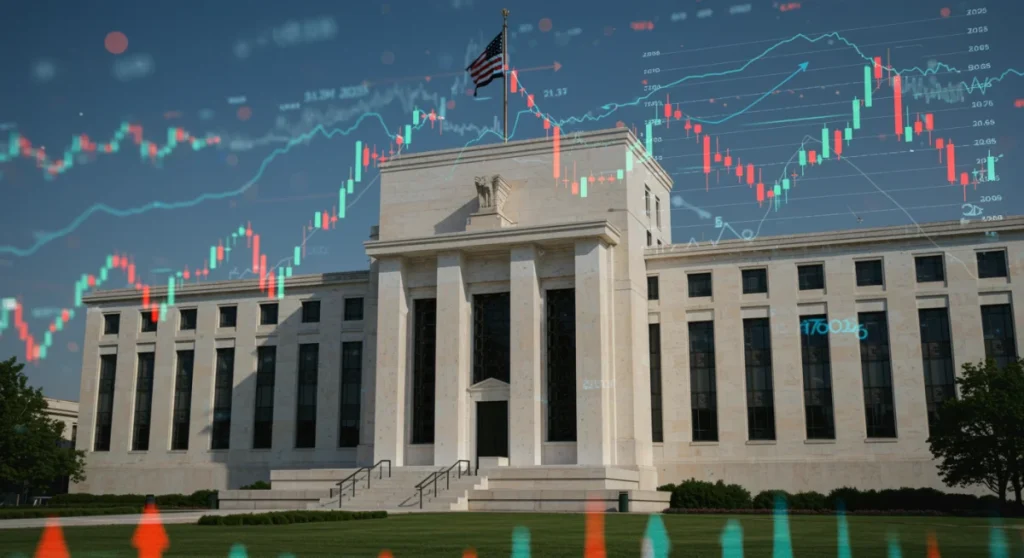
The Federal Reserve’s policy shifts in Q4 2025 are pivotal, directly influencing U.S. economic stability and growth prospects throughout 2026, demanding close attention from market participants and policymakers.
As we approach the latter half of 2025, the anticipation surrounding Federal Reserve Policy Shifts intensifies, holding significant weight for the trajectory of U.S. economic stability into 2026. What might these adjustments mean for your investments, employment, and overall financial landscape?
Understanding the Federal Reserve’s Mandate and Tools
The Federal Reserve, often referred to as the Fed, operates with a dual mandate: to foster maximum employment and maintain price stability. These two objectives are the bedrock upon which all monetary policy decisions are made. In Q4 2025, the Fed’s stance on these mandates will be crucial in shaping the economic outlook for the following year.
To achieve its goals, the Fed employs a range of powerful tools. The primary among these is the federal funds rate, which influences borrowing costs across the economy. Other instruments include quantitative easing or tightening, reserve requirements for banks, and forward guidance, all designed to steer inflation and employment towards desired levels.
The Federal Funds Rate and Its Impact
The federal funds rate is perhaps the most closely watched indicator of the Fed’s policy. By adjusting this target rate, the Fed influences short-term interest rates throughout the banking system. A higher rate typically makes borrowing more expensive, slowing economic activity and curbing inflation, while a lower rate encourages borrowing and spending, stimulating growth.
- Interest Rate Hikes: Designed to cool down an overheating economy and combat inflation.
- Interest Rate Cuts: Intended to stimulate economic growth during periods of slowdown or recession.
- Market Expectations: Financial markets constantly try to predict the Fed’s next move, leading to volatility.
The implications of these rate adjustments extend far beyond just banks, affecting everything from mortgage rates and credit card interest to corporate investment decisions and international capital flows. Understanding the subtle nuances of these tools is essential for predicting the Fed’s likely actions in late 2025.
The Fed’s communication strategy is also a vital tool. Through speeches, press conferences, and meeting minutes, the central bank provides forward guidance, offering insights into its future policy intentions. This transparency aims to reduce market uncertainty and ensure that economic agents can make informed decisions, aligning expectations with the Fed’s objectives. Any shifts in this guidance in Q4 2025 will be dissected for clues about 2026.
Economic Indicators Driving Q4 2025 Policy Decisions
The Federal Reserve’s policy decisions are never made in a vacuum; they are meticulously crafted responses to a constantly evolving economic landscape. As Q4 2025 approaches, several key economic indicators will be under intense scrutiny, directly influencing the Fed’s assessment of U.S. economic stability and its subsequent policy adjustments.
Inflation remains a paramount concern. The Fed targets a long-run average inflation rate of 2%, as measured by the Personal Consumption Expenditures (PCE) price index. If inflation persistently runs above this target, the Fed will likely maintain a tighter monetary policy stance. Conversely, if inflationary pressures subside, it might open the door for more accommodative policies.
Employment Data and Labor Market Health
The health of the labor market is another critical determinant. The unemployment rate, non-farm payrolls, and wage growth figures provide a comprehensive picture of employment conditions. A robust labor market with low unemployment and healthy wage growth typically indicates a strong economy, potentially leading the Fed to consider tightening measures to prevent overheating.
- Unemployment Rate: A key indicator of labor market slack or tightness.
- Non-Farm Payrolls: Measures the number of new jobs created each month, excluding agricultural workers.
- Wage Growth: Can signal inflationary pressures if wages rise too quickly without corresponding productivity gains.
Consumer spending, which accounts for a significant portion of U.S. GDP, also plays a pivotal role. Strong consumer demand can fuel economic growth but also contribute to inflationary pressures. Retail sales reports and consumer confidence surveys offer valuable insights into spending patterns. Business investment, measured by capital expenditures and productivity growth, further informs the Fed’s understanding of long-term economic potential.
Global economic conditions, including geopolitical events, supply chain disruptions, and the economic performance of major trading partners, can also indirectly influence the Fed’s domestic policy. A global slowdown, for example, could dampen U.S. export demand and necessitate a more cautious approach from the central bank. All these factors will converge in Q4 2025, creating a complex analytical challenge for policymakers.
Potential Federal Reserve Policy Shifts in Q4 2025
The final quarter of 2025 is poised to be a period of intense scrutiny for Federal Reserve policy. Given the dynamic nature of economic forces, several potential shifts could emerge, each with distinct implications for the U.S. economy in 2026. These shifts will largely depend on the prevailing inflation and employment data, as well as broader financial market stability.
One significant possibility is a continuation of the current policy stance, particularly if inflation remains stubbornly above target while the labor market shows signs of resilience. In this scenario, the Fed might opt to maintain higher interest rates for an extended period, emphasizing its commitment to price stability. This approach would signal a cautious outlook, prioritizing inflation control over immediate growth stimulation.
Scenarios for Interest Rate Adjustments
Alternatively, if inflation begins to trend convincingly towards the 2% target and there are signs of a softening labor market, the Fed could consider initiating interest rate cuts. Such a move would aim to prevent an economic downturn and support employment. The timing and magnitude of these cuts would be carefully calibrated to avoid reigniting inflationary pressures.
- Rate Hold: If inflation persists and the labor market remains strong.
- Rate Cuts: If inflation eases and economic growth slows, or unemployment rises.
- Quantitative Tightening (QT) Adjustments: Changes to the pace of balance sheet reduction.
Another potential shift could involve adjustments to the Fed’s balance sheet reduction program, known as quantitative tightening (QT). The Fed might slow the pace of QT if financial market liquidity becomes a concern or if it seeks to provide a more accommodative financial environment without directly cutting interest rates. Conversely, an acceleration of QT could be considered if the economy proves robust and inflation remains a threat.
Forward guidance will also be a critical tool in managing market expectations. Any subtle changes in language from Fed officials regarding their outlook on future policy could signal an impending shift. Investors and analysts will be closely monitoring speeches and official statements for any indications of a pivot in monetary strategy. These potential shifts underscore the importance of staying informed and adaptable in the face of evolving economic conditions.
Implications for U.S. Economic Stability in 2026
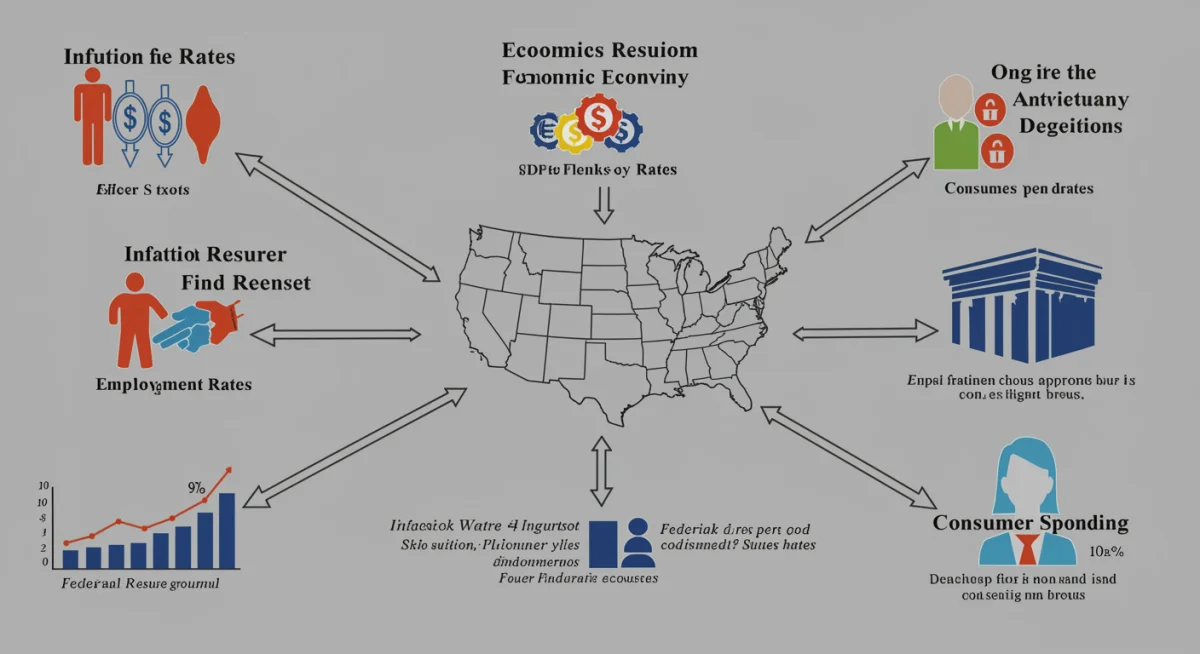
The Federal Reserve’s policy shifts in Q4 2025 will cast a long shadow over U.S. economic stability throughout 2026. The decisions made regarding interest rates and quantitative measures will directly impact various sectors, from housing and financial markets to corporate investment and consumer spending, shaping the overall economic trajectory.
If the Fed opts for continued restrictive policies, such as maintaining high interest rates, U.S. economic growth in 2026 could be moderate. Higher borrowing costs would likely dampen consumer demand for big-ticket items like homes and cars, and businesses might scale back expansion plans. While this could help solidify inflation control, it also carries the risk of slower job creation and potentially a mild economic contraction.
Impact on Inflation and Employment
Conversely, if the Fed initiates interest rate cuts in Q4 2025, 2026 could see a re-acceleration of economic activity. Lower borrowing costs would stimulate investment and consumption, potentially leading to stronger GDP growth and a more robust labor market. However, this scenario would also carry the risk of reigniting inflationary pressures, forcing the Fed to potentially reverse course later.
- Inflation Trajectory: Policy shifts directly influence price stability.
- Employment Levels: Interest rate changes impact hiring and unemployment.
- GDP Growth: Monetary policy is a key driver of economic expansion or contraction.
Financial markets will be particularly sensitive to these shifts. Stock market valuations, bond yields, and the strength of the U.S. dollar are all heavily influenced by the Fed’s interest rate outlook. A clear and consistent policy path can foster stability, while uncertainty can lead to increased volatility and investor apprehension.
The housing market, a significant component of the U.S. economy, will also feel the direct effects. Higher rates typically cool demand and reduce affordability, while lower rates can spark a resurgence. Understanding the Fed’s Q4 2025 decisions is therefore critical for anyone looking to navigate the economic landscape of 2026, as these policy shifts are central to maintaining or disrupting U.S. economic stability.
Comparison with Historical Policy Cycles
Analyzing potential Federal Reserve policy shifts in Q4 2025 and their implications for 2026 gains significant depth when viewed through the lens of historical policy cycles. The Fed has navigated numerous economic challenges over decades, and while each cycle is unique, patterns and lessons from the past can offer valuable insights into current and future strategies.
Historically, the Fed has often responded to high inflation by aggressively raising interest rates, sometimes leading to economic recessions. The early 1980s under Paul Volcker serve as a stark example, where dramatic rate hikes successfully curbed runaway inflation but at the cost of a significant downturn. Comparing potential Q4 2025 actions to such an aggressive stance reveals whether the Fed anticipates a similar inflationary threat or a more nuanced approach.
Lessons from Recent Cycles
More recently, the post-2008 financial crisis era saw the Fed employ unconventional tools like quantitative easing to stimulate a stagnant economy. The challenges of unwinding these policies and normalizing interest rates provided new lessons on managing liquidity and market expectations. The current environment, while distinct, draws upon these experiences, particularly in how the Fed communicates its intentions and manages its balance sheet.
- 1980s Inflation Fight: Aggressive rate hikes to combat high inflation.
- Post-2008 QE: Unconventional tools to stimulate a struggling economy.
- Current Supply Shocks: Navigating inflation driven by supply-side factors.
The 2020-2022 period, marked by the COVID-19 pandemic, presented another unique challenge, with massive fiscal and monetary stimulus leading to a rapid rebound and subsequent inflationary pressures. The Fed’s response in hiking rates quickly from near zero has been compared to past tightening cycles, but the underlying causes of inflation (e.g., supply chain issues) differ from demand-driven inflation of previous eras.
Understanding these historical precedents helps contextualize the Fed’s likely path in Q4 2025. Will it prioritize a ‘soft landing’ for the economy, attempting to bring inflation down without triggering a recession, a feat rarely achieved? Or will it lean towards a more decisive, potentially painful, strategy to ensure price stability? The answers will determine if 2026 mirrors a period of controlled normalization or a more turbulent economic adjustment.
Challenges and Risks to the 2026 Economic Outlook
Despite the Federal Reserve’s best efforts to steer the U.S. economy towards stability, numerous challenges and risks could significantly impact the 2026 outlook, regardless of the Q4 2025 policy shifts. These factors range from persistent inflationary pressures and geopolitical instability to domestic fiscal policy and unforeseen global events, creating a complex and potentially volatile environment.
One of the most persistent risks is the potential for inflation to remain stubbornly high, even after significant monetary tightening. Supply-side constraints, such as ongoing disruptions in global supply chains or energy market volatility, could continue to fuel price increases irrespective of demand-side management by the Fed. This would force the central bank into a difficult position, potentially requiring further restrictive measures that could stifle growth.
Geopolitical and Fiscal Headwinds
Geopolitical instability, including ongoing conflicts or new international tensions, poses another significant threat. Such events can disrupt trade, increase commodity prices, and reduce global confidence, all of which would reverberate through the U.S. economy. The interconnectedness of global markets means that even localized crises can have far-reaching economic consequences.
- Persistent Inflation: Supply-side factors could keep prices elevated.
- Geopolitical Instability: Conflicts and trade disputes impact global economy.
- Fiscal Policy Divergence: Government spending and taxation can counteract Fed efforts.
Domestic fiscal policy also presents a challenge. Large government deficits and increasing national debt can create inflationary pressures or crowd out private investment, potentially working at cross-purposes with the Fed’s monetary policy objectives. A lack of coordination between fiscal and monetary authorities could complicate efforts to achieve sustainable economic stability in 2026.
Furthermore, unforeseen economic shocks, such as a new pandemic wave, a major natural disaster, or a financial market crisis, could derail any well-laid plans. The economy is inherently dynamic and susceptible to external forces that are difficult to predict or control. Therefore, while the Fed’s Q4 2025 decisions are crucial, their effectiveness in ensuring 2026 economic stability will depend on how these myriad challenges and risks unfold.
| Key Policy Area | 2025/2026 Outlook Summary |
|---|---|
| Interest Rates | Potential holds or cuts based on inflation and employment data. |
| Inflation Control | Continued focus on achieving the 2% PCE target. |
| Employment Mandate | Balancing job growth with price stability remains critical. |
| Economic Stability | Policy adjustments aim to foster sustained, non-inflationary growth. |
Frequently Asked Questions About Federal Reserve Policy
The Federal Reserve’s primary goal, mandated by Congress, is to promote maximum employment, stable prices, and moderate long-term interest rates. This dual mandate guides all policy decisions, aiming for a healthy and balanced economy while avoiding excessive inflation or deflation.
Changes in the federal funds rate directly influence various consumer borrowing costs, including mortgage rates, auto loans, and credit card interest. Higher rates make borrowing more expensive, potentially slowing spending, while lower rates encourage borrowing and consumption, stimulating economic activity.
Inflation is a critical factor. The Fed targets a 2% long-run average inflation rate. If inflation is consistently above this target, the Fed typically adopts a tighter monetary policy to bring prices under control. Conversely, if inflation is too low, the Fed might pursue more accommodative policies.
Quantitative tightening (QT) is a monetary policy tool where the Fed reduces its balance sheet by allowing maturing bonds to roll off without reinvestment. It’s used to reduce the money supply and increase long-term interest rates, complementing interest rate hikes to combat inflation and normalize monetary policy.
Global economic stability significantly influences the Fed. International trade, currency fluctuations, and geopolitical events can impact U.S. inflation, growth, and financial markets. The Fed considers these external factors in its policy decisions to mitigate risks and ensure domestic stability.
Conclusion
The Federal Reserve’s policy shifts in Q4 2025 represent a critical juncture for U.S. economic stability in 2026. The careful balancing act between managing inflation and fostering employment will determine the trajectory of interest rates, market liquidity, and overall economic growth. While the Fed possesses a robust toolkit and draws upon historical lessons, the complexities of the current global and domestic landscape demand a nuanced and adaptable approach. Staying informed about these decisions and their potential ripple effects is paramount for businesses, investors, and consumers alike as the nation navigates the path toward sustainable economic health.