Fed Rate Decisions: 2024 vs. 2025 Forecasts & Financial Impact
The U.S. Federal Reserve’s interest rate decisions for 2024 and 2025 are crucial, directly shaping economic growth, inflation, employment, and the financial well-being of households and businesses across the nation.
Understanding the U.S. Federal Reserve’s Interest Rate Decisions: A Comparison of 2024 and 2025 Forecasts and Their Financial Impact is more than just an academic exercise; it’s essential for anyone navigating the American economic landscape. How will these pivotal decisions affect your mortgage, your investments, or even your job prospects? Let’s delve into the anticipated shifts and their far-reaching consequences.
The Federal Reserve’s Mandate and Monetary Policy Tools
The Federal Reserve, often referred to as the Fed, operates under a dual mandate from Congress: to achieve maximum employment and maintain stable prices. These two objectives guide its monetary policy decisions, primarily through adjusting the federal funds rate. This benchmark rate influences borrowing costs throughout the economy, from consumer loans to corporate investments.
The Fed employs several tools to implement its monetary policy. The primary tool is the federal funds rate, which is the target rate for overnight lending between banks. By raising or lowering this rate, the Fed influences other interest rates, impacting economic activity. Other tools include quantitative easing or tightening, which involve buying or selling government securities to inject or withdraw liquidity from the financial system.
Key Monetary Policy Instruments
- Federal Funds Rate: The primary tool, influencing short-term borrowing costs for banks.
- Discount Rate: The interest rate at which commercial banks can borrow directly from the Federal Reserve.
- Reserve Requirements: The amount of funds banks must hold in reserve against deposits.
- Open Market Operations: Buying and selling government securities to manage the money supply.
These tools are not used in isolation but are part of a coordinated strategy to steer the economy toward the Fed’s dual mandate goals. The effectiveness of these tools depends on various factors, including market expectations, global economic conditions, and the responsiveness of businesses and consumers to changes in interest rates.
In conclusion, the Federal Reserve’s role as the central bank of the United States is critical. Its mandate to foster maximum employment and price stability means its interest rate decisions are closely watched and have profound effects on the entire financial system and the daily lives of Americans. Understanding these foundational principles is essential for interpreting future forecasts.
Analyzing 2024 Federal Reserve Interest Rate Forecasts
As 2024 unfolds, market participants and economists are keenly focused on the Federal Reserve’s trajectory for interest rates. Initial forecasts often reflected a more aggressive easing cycle, but evolving economic data has led to adjustments. Inflation, while moderating, has proven stickier than anticipated, and the labor market has demonstrated remarkable resilience.
Current projections from the Federal Open Market Committee (FOMC) members, often summarized in their dot plot, indicate a more cautious approach to rate cuts. While some cuts are still expected, the magnitude and timing have shifted. Factors such as persistent wage growth, geopolitical events, and commodity price fluctuations continue to influence the Fed’s outlook.
Factors Influencing 2024 Rate Decisions
- Inflation Data: Core inflation metrics, excluding volatile food and energy prices, remain a key concern.
- Labor Market Strength: Low unemployment rates and sustained job growth can put upward pressure on wages and, consequently, inflation.
- Economic Growth: Strong GDP growth may reduce the urgency for rate cuts, as the economy can absorb higher rates.
- Global Economic Conditions: International trade, currency fluctuations, and global demand can indirectly impact domestic inflation and growth.
Many analysts now foresee fewer rate cuts in 2024 than initially predicted, possibly starting later in the year. This revised outlook stems from a recognition that the fight against inflation is not yet fully won, and premature easing could risk a resurgence of price pressures. The Fed’s commitment to data-dependency means flexibility, and forecasts are subject to change with each new economic report.
Ultimately, the 2024 interest rate forecasts are characterized by a degree of uncertainty, reflecting the complex interplay of economic forces. The Fed’s primary objective remains bringing inflation back to its 2% target, and its decisions will be heavily influenced by how quickly and sustainably that goal is achieved, balancing it against the risks to employment.
Projected Interest Rate Landscape for 2025
Looking ahead to 2025, the picture for interest rates begins to clarify, albeit with its own set of assumptions about economic performance. Most forecasts suggest that by 2025, the Federal Reserve will have achieved its inflation targets, allowing for a more normalized monetary policy stance. This could translate into a series of gradual rate cuts, bringing the federal funds rate closer to its long-run equilibrium.
However, the path to 2025 is not without potential detours. Geopolitical stability, technological advancements, and shifts in global supply chains could all impact inflation and growth, forcing the Fed to recalibrate its strategy. The long-term effects of fiscal policy decisions made in 2024 will also play a significant role in shaping the economic environment for 2025.
Key Drivers for 2025 Rate Projections
Several fundamental economic principles are expected to guide the Federal Reserve’s actions in 2025. A sustained return to the 2% inflation target is paramount. Should inflation prove more persistent, the Fed might maintain a higher-for-longer stance. Conversely, a significant economic downturn or unexpected increase in unemployment could accelerate rate cuts.
- Inflation Normalization: A sustained decline in inflation towards the 2% target will be a primary trigger for further rate adjustments.
- Labor Market Balance: A healthy labor market that is neither too tight nor too loose will support a stable rate environment.
- Productivity Growth: Higher productivity can allow for economic growth without inflationary pressures, giving the Fed more flexibility.
- Government Spending and Debt: Fiscal policies can influence aggregate demand and inflation, indirectly impacting monetary policy.
The consensus among many economists points to a more accommodative monetary policy in 2025 compared to 2024, assuming current trends continue. This would involve a gradual reduction in the federal funds rate, aiming to support economic growth without reigniting inflationary pressures. The Fed’s communication and forward guidance will be critical in managing market expectations.
In summary, 2025 is anticipated to be a year of continued adjustment for interest rates, with a likely downward trend as inflation recedes. However, the exact pace and magnitude of these adjustments will remain contingent on a dynamic economic landscape, requiring the Fed to exercise careful judgment and adaptability.
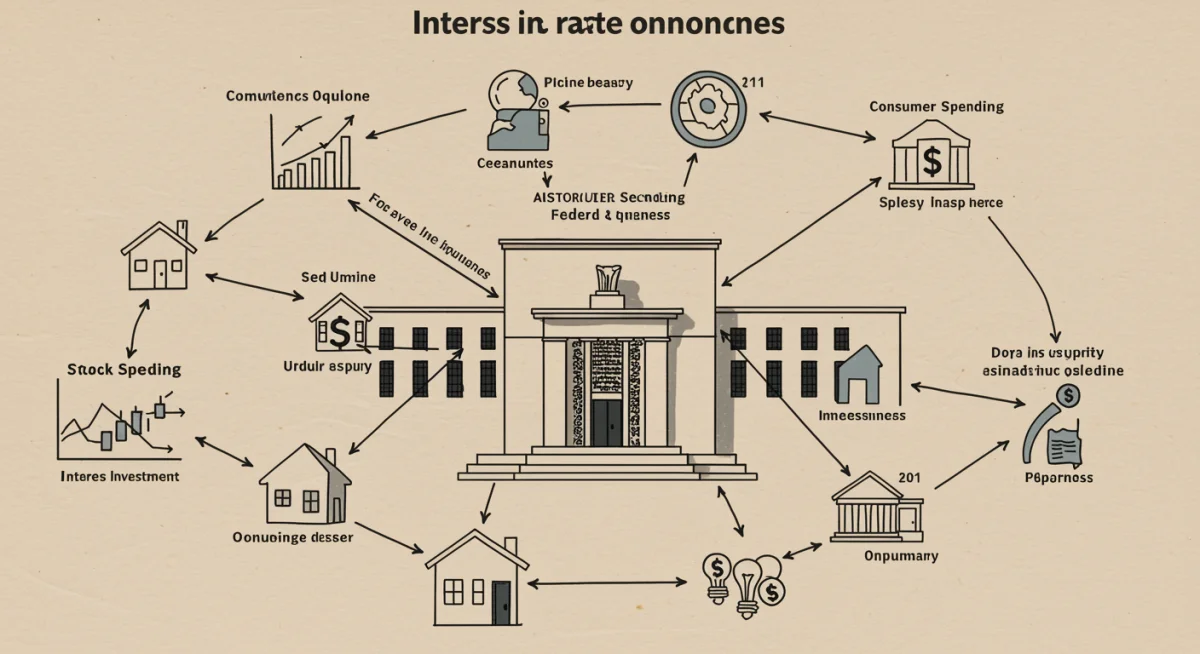
Financial Impact on Mortgage Rates and Housing Market
The Federal Reserve’s interest rate decisions have a direct and profound impact on mortgage rates, which in turn significantly influence the housing market. When the Fed raises its benchmark rate, it typically leads to higher borrowing costs for banks, which then pass these costs on to consumers in the form of higher mortgage rates. Conversely, rate cuts tend to lower mortgage rates, making homeownership more affordable.
In 2024, with the expectation of fewer and later rate cuts, mortgage rates are likely to remain elevated compared to the ultra-low rates seen in previous years. This scenario has several implications for the housing market. Higher rates can cool demand by reducing purchasing power for prospective homebuyers. It can also lead to a decrease in refinancing activity, as existing homeowners are less incentivized to switch to a new, higher rate.
Mortgage Rate Dynamics and Housing Outlook
- Affordability Challenges: Higher mortgage rates increase monthly payments, making homeownership less accessible for many.
- Reduced Demand: Elevated rates can lead to fewer home sales and a slowdown in market activity.
- Inventory Fluctuations: Some homeowners might delay selling to retain lower existing mortgage rates, potentially impacting inventory.
- Builder Sentiment: Higher borrowing costs for developers can slow new construction, affecting housing supply.
Looking into 2025, if the Fed begins a more consistent easing cycle, mortgage rates are expected to gradually decline. This could revitalize the housing market, stimulating demand from buyers who were previously priced out. Lower rates might also encourage more homeowners to consider selling, increasing inventory and potentially easing price pressures.
However, the housing market’s response is not solely dependent on interest rates. Factors such as housing supply, demographic shifts, and regional economic performance also play crucial roles. The interplay of these elements will determine the overall health and direction of the housing sector in the coming years. The Fed’s decisions will certainly be a major catalyst, but not the only one.
In conclusion, the Fed’s interest rate policies are a critical determinant of mortgage rates and, by extension, the affordability and activity within the housing market. Both 2024 and 2025 will see significant reactions in this sector as the Fed navigates its monetary policy objectives.
Impact on Stock Market and Investment Strategies
The Federal Reserve’s interest rate decisions are a cornerstone for understanding stock market movements and shaping investment strategies. Higher interest rates typically translate to higher borrowing costs for corporations, which can compress profit margins and reduce investment in expansion. This often leads to a more cautious sentiment among investors, potentially causing market downturns or slower growth.
Conversely, lower interest rates make borrowing cheaper, encouraging businesses to invest and expand, which can boost corporate earnings and investor confidence. This environment often favors growth stocks and can lead to bull markets. The anticipation of rate changes, rather than just the changes themselves, often drives market reactions, as investors price in future Fed actions.
Investment Considerations Amid Rate Changes
- Equity Valuations: Higher discount rates (due to higher interest rates) reduce the present value of future earnings, impacting stock valuations.
- Sector Performance: Interest-sensitive sectors like technology and real estate may react more strongly to rate changes.
- Fixed Income: Bond yields tend to move inversely to bond prices; rising rates can lead to capital losses for existing bondholders.
- Alternative Investments: Investors may seek alternatives like commodities or real estate if traditional assets offer less attractive returns.
For 2024, with the Fed expected to maintain a relatively tight monetary policy, investors might favor value stocks and dividend-paying companies, which tend to be more resilient in higher-rate environments. The focus will likely be on companies with strong balance sheets and consistent cash flow, capable of weathering increased borrowing costs.
As we move into 2025, assuming a more dovish Fed stance with potential rate cuts, the landscape could shift. Growth stocks and sectors that thrive on cheaper capital might regain favor. Investors may begin to reallocate capital towards riskier assets in anticipation of a more supportive economic environment. However, careful selection and diversification will remain paramount, as market volatility can persist.
In conclusion, the Fed’s interest rate decisions are powerful drivers of market sentiment and asset allocation. Investors must remain agile, adapting their strategies to both the expected and unexpected shifts in monetary policy, understanding that different sectors and asset classes react uniquely to these changes.
Broader Economic Implications and Consumer Spending
Beyond specific sectors, the Federal Reserve’s interest rate decisions cast a wide net over the entire U.S. economy, significantly influencing consumer spending, business investment, and overall economic growth. When interest rates are high, borrowing for big-ticket items like cars and appliances becomes more expensive, leading consumers to delay purchases and save more. This can slow down economic activity.
Conversely, lower interest rates encourage borrowing and spending, stimulating demand and fostering economic expansion. Businesses find it cheaper to finance new projects, hire more employees, and expand operations, contributing to job growth and a healthier economy. The Fed’s challenge lies in finding the right balance to avoid both overheating (leading to inflation) and overcooling (leading to recession).
Economic Consequences of Rate Adjustments
The ripple effects of Fed policy extend to international trade and the strength of the U.S. dollar. Higher interest rates can attract foreign investment, strengthening the dollar. A stronger dollar makes U.S. exports more expensive and imports cheaper, impacting trade balances and domestic industries. This complex interplay requires constant monitoring by policymakers and businesses alike.
- Consumer Confidence: Perceptions of economic stability and future job prospects influence spending habits.
- Business Investment: The cost of capital directly impacts corporate decisions on expansion, research, and development.
- Inflation Control: Tighter monetary policy aims to curb excessive demand, which is a primary driver of inflation.
- Employment Levels: Economic slowdowns induced by high rates can lead to job losses, while stimulation can create jobs.
For 2024, the prevailing higher interest rates could continue to temper consumer spending, particularly on discretionary items. Businesses might adopt a more conservative approach to investment, prioritizing efficiency over aggressive expansion. This environment is part of the Fed’s strategy to bring inflation down, even if it means some short-term economic deceleration.
As 2025 approaches with potential rate cuts, the hope is for a re-acceleration of consumer spending and business investment, supporting a soft landing for the economy. A gradual easing of monetary policy could provide the necessary stimulus to sustain growth without reigniting inflationary pressures, leading to a more robust economic environment for all stakeholders.
In conclusion, the Federal Reserve’s interest rate decisions are a powerful lever for steering the national economy. Their impact permeates consumer behavior, business strategies, and overall growth, making the forecasts for 2024 and 2025 critical for understanding the future economic trajectory of the U.S.
Challenges and Uncertainties in Forecasting Fed Decisions
Forecasting the Federal Reserve’s interest rate decisions is an inherently challenging endeavor, fraught with numerous uncertainties. The Fed itself emphasizes its data-dependent approach, meaning its policy path can shift rapidly in response to new economic information. This makes precise long-term predictions difficult for even the most seasoned economists and market analysts.
One major challenge is the unpredictable nature of inflation. While the Fed targets a 2% inflation rate, exogenous shocks such as geopolitical conflicts, supply chain disruptions, or sudden shifts in commodity prices can quickly alter the inflation outlook. These unexpected events can force the Fed to adjust its strategy, sometimes dramatically, to maintain price stability.
Unpredictable Variables Affecting Fed Policy
- Geopolitical Events: Conflicts or political instability can disrupt global trade and energy markets, impacting inflation.
- Technological Advancements: New technologies can boost productivity or create new inflationary pressures.
- Fiscal Policy: Government spending and taxation policies can either complement or counteract the Fed’s monetary efforts.
- Consumer Behavior Shifts: Unexpected changes in spending or saving patterns can alter economic forecasts.
Another layer of complexity comes from the global economic landscape. The U.S. economy does not operate in a vacuum; international growth, currency movements, and central bank actions in other major economies can all influence the Fed’s decisions. A stronger dollar, for instance, can help cool domestic inflation but might hurt U.S. exports.
Furthermore, the communication aspect of monetary policy is crucial. The Fed’s forward guidance, press conferences, and meeting minutes are closely scrutinized by markets. Misinterpretations or changes in communication strategy can lead to market volatility, even without an actual policy change. Managing expectations effectively is a delicate balance.
In conclusion, while forecasts for 2024 and 2025 provide a valuable framework, they are subject to a multitude of unforeseen variables. The Federal Reserve’s commitment to data-driven decision-making means that flexibility and adaptability will remain hallmarks of its policy-setting process, making precise long-term predictions a continuous challenge.
| Key Aspect | Description |
|---|---|
| 2024 Forecasts | Fewer, later rate cuts expected due to persistent inflation and strong labor market. |
| 2025 Projections | More consistent rate cuts anticipated as inflation normalizes. |
| Housing Market Impact | Elevated rates in 2024 may cool demand; 2025 cuts could stimulate activity. |
| Investment Strategies | Shift to value stocks in 2024; potential for growth stocks in 2025 with easing. |
Frequently Asked Questions About Fed Interest Rates
The Federal Reserve’s primary goal is to achieve maximum employment and stable prices, typically targeting 2% inflation. Interest rate adjustments are its main tool to influence economic activity and achieve these dual objectives.
Higher interest rates generally lead to higher mortgage rates for new loans, increasing monthly payments and overall borrowing costs. This can reduce housing affordability and slow down the housing market, impacting both buyers and sellers.
Forecasts for 2024 rate cuts are being adjusted primarily due to persistent inflation staying above the Fed’s 2% target and a surprisingly resilient labor market. These factors suggest less urgency for immediate monetary easing.
Higher interest rates can negatively impact the stock market by increasing borrowing costs for companies, reducing profit margins, and making bonds more attractive relative to stocks. Lower rates tend to have the opposite, positive effect.
Data plays a crucial role as the Fed is data-dependent, meaning its decisions are primarily guided by incoming economic reports on inflation, employment, and growth. This ensures policy adjustments are responsive to real-time economic conditions.
Conclusion
The intricate dance of the U.S. Federal Reserve’s interest rate decisions for 2024 and 2025 will undoubtedly shape the economic landscape for millions of Americans. While 2024 appears poised for a cautious approach with potentially fewer rate cuts than initially anticipated, 2025 holds the promise of a more accommodative monetary policy as inflation hopefully normalizes. These shifts will reverberate through mortgage markets, influence investment strategies, and impact overall consumer spending and business activity. Staying informed about the Fed’s evolving forecasts and understanding the underlying economic indicators will be paramount for individuals and businesses aiming to navigate these financial waters successfully. The path ahead remains dynamic, requiring adaptability and a keen eye on the data that guides the nation’s central bank.