Energy Transition’s Economic Dividends: $1.5 Trillion US Market by 2026

The energy transition is generating substantial economic dividends, with the US market projected to reach $1.5 trillion by 2026, unlocking significant investment avenues and fostering widespread economic growth.
The global shift towards sustainable energy sources is not merely an environmental imperative; it is a profound economic transformation. The concept of the energy transition economic dividends, specifically within the United States, reveals a monumental opportunity, with projections indicating a staggering $1.5 trillion market by 2026. This dynamic evolution is reshaping industries, fostering innovation, and creating unprecedented investment avenues across the nation.
Understanding the Energy Transition’s Economic Impact
The energy transition represents a fundamental change in how energy is produced, distributed, and consumed. This transition, moving away from fossil fuels to cleaner, renewable sources, carries with it an array of economic benefits that extend far beyond environmental protection. It’s a catalyst for job creation, technological advancement, and a resurgence in manufacturing.
As the United States accelerates its commitment to decarbonization, the economic landscape is being reshaped. New industries are emerging, requiring specialized skills and innovative solutions. This shift is not just about installing solar panels or wind turbines; it encompasses a vast ecosystem of supporting technologies, infrastructure, and services.
job creation and workforce development
One of the most significant economic dividends of the energy transition is its potential for job creation. The development, installation, and maintenance of renewable energy infrastructure require a skilled workforce, spanning engineering, construction, manufacturing, and technical services.
- Manufacturing: Increased demand for components like solar cells, wind turbine blades, and battery storage systems is stimulating domestic manufacturing.
- Construction: Large-scale renewable energy projects, grid upgrades, and charging infrastructure require extensive construction efforts.
- Research & Development: Continuous innovation in energy technology fuels job growth in science and engineering fields.
The energy transition is proving to be a powerful engine for economic growth, creating new employment opportunities and fostering a resilient, future-oriented workforce. This economic momentum is crucial for sustained prosperity and competitiveness on a global scale.
Unlocking New Investment Avenues
The projected $1.5 trillion US market by 2026 underscores the vast investment potential within the energy transition. This capital influx is not concentrated in a single sector but is distributed across a diverse range of opportunities, appealing to both institutional and individual investors.
From utility-scale projects to localized community initiatives, the avenues for investment are expanding rapidly. Government incentives, regulatory frameworks, and increasing consumer demand for sustainable solutions are further driving this investment boom. Understanding where these opportunities lie is key to capitalizing on this transformative period.
key sectors attracting capital
Several sectors are at the forefront of attracting significant investment. These areas are critical to building out the new energy infrastructure and supporting the broader transition.
- Renewable Energy Generation: Solar and wind power projects continue to be major attractors of capital, driven by decreasing costs and improved efficiency.
- Energy Storage: Battery technology, grid-scale storage, and other innovative storage solutions are vital for grid stability and renewable energy integration.
- Electric Vehicles (EVs) & Charging Infrastructure: The rapid adoption of EVs necessitates massive investment in charging networks and supporting infrastructure.
- Green Hydrogen: As a versatile, clean fuel, green hydrogen production and distribution are emerging as high-potential investment areas.
- Grid Modernization: Upgrading and digitizing the existing electrical grid is essential for handling distributed renewable energy sources and enhancing resilience.
The breadth of these investment opportunities highlights the comprehensive nature of the energy transition. Investors can choose from various risk profiles and growth potentials, contributing to a sustainable future while realizing substantial returns.
Government Policies and Regulatory Support
Government policies and regulatory frameworks play a pivotal role in accelerating the energy transition and fostering economic growth. In the United States, a combination of federal and state-level initiatives is providing the necessary impetus and stability for sustained investment.
These policies often aim to reduce financial risks for investors, incentivize innovation, and create a level playing field for renewable energy technologies. Understanding the policy landscape is crucial for stakeholders looking to navigate this evolving market.
impact of federal initiatives
Federal policies, such as the Inflation Reduction Act (IRA), have significantly reshaped the investment landscape for clean energy. The IRA offers substantial tax credits, grants, and loan programs designed to boost domestic manufacturing, renewable energy deployment, and energy efficiency.
These incentives provide long-term predictability for investors and developers, making clean energy projects more financially attractive. They also encourage the reshoring of supply chains, strengthening the US economy and creating high-quality jobs.
- Tax Credits: Investment Tax Credits (ITCs) and Production Tax Credits (PTCs) for solar, wind, and other clean energy technologies.
- Manufacturing Incentives: Tax credits for domestic production of clean energy components, from batteries to electric vehicle parts.
- Research Funding: Increased funding for federal agencies to advance cutting-edge energy technologies.
State-level policies, including Renewable Portfolio Standards (RPS) and clean energy mandates, further complement federal efforts, creating a robust and supportive environment for the energy transition across diverse regions.
Technological Advancements Driving Market Growth
Technological innovation is at the heart of the energy transition, continuously driving down costs, improving efficiency, and expanding the possibilities of renewable energy. These advancements are not only making clean energy more competitive but are also opening up entirely new market segments.
From breakthroughs in material science to sophisticated digital solutions, technology is enabling the rapid deployment and integration of sustainable energy systems. This constant evolution is a key factor behind the projected $1.5 trillion market size.
innovations in renewable energy and storage
Significant strides have been made in renewable energy generation technologies. Solar panel efficiency continues to improve, while wind turbines are becoming larger and more powerful, capable of generating more electricity at lower costs. Beyond generation, energy storage is undergoing a revolution.
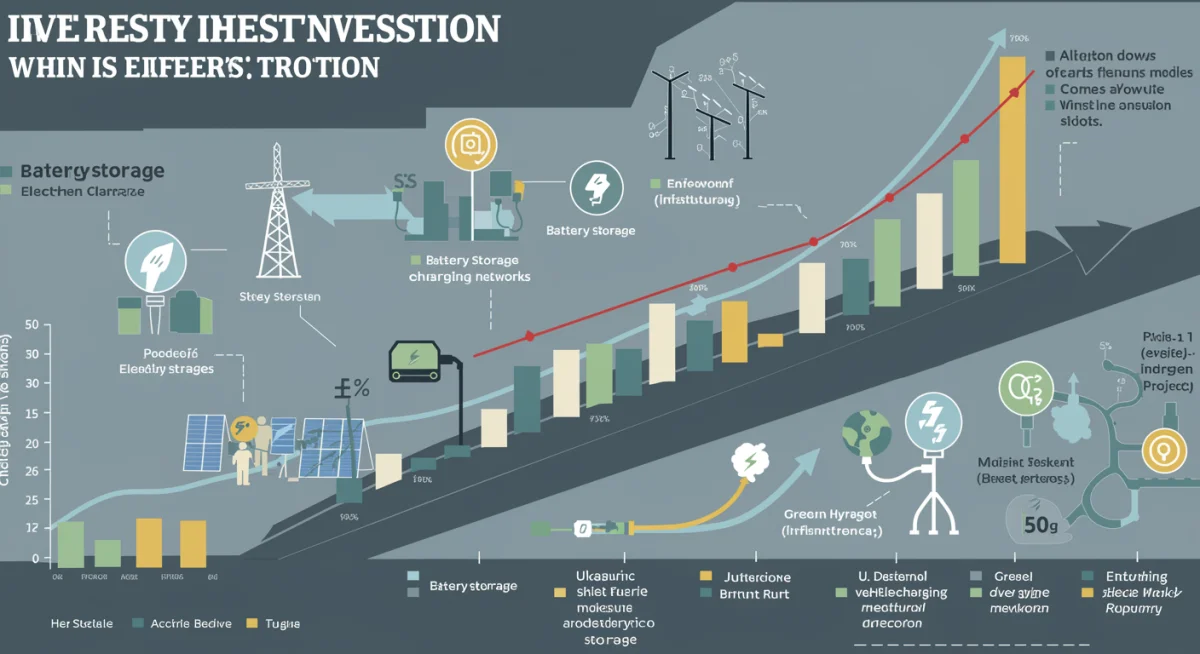
Advanced battery technologies, including lithium-ion and solid-state batteries, are becoming more affordable and energy-dense, making grid-scale storage and electric vehicle adoption more viable. Furthermore, innovative solutions like pumped-hydro storage and thermal energy storage are gaining traction.
- Artificial Intelligence (AI): AI and machine learning are optimizing grid management, forecasting renewable energy output, and enhancing energy efficiency.
- Smart Grids: Modernized grids with advanced sensors and communication capabilities are crucial for integrating distributed renewable energy.
- Carbon Capture, Utilization, and Storage (CCUS): While still developing, CCUS technologies offer potential pathways for industrial decarbonization.
These technological leaps are creating a virtuous cycle: as technology improves, costs decrease, leading to greater adoption, which in turn fuels further investment and innovation. This dynamic process is fundamental to realizing the full economic potential of the energy transition.
Regional Economic Opportunities Across the US
The economic dividends of the energy transition are not uniformly distributed across the United States; rather, they manifest in diverse regional opportunities tailored to local resources, industrial strengths, and policy environments. Each region presents unique investment landscapes and growth potentials.
Understanding these regional nuances is crucial for investors and policymakers alike, enabling targeted strategies that maximize economic benefits and accelerate the transition nationwide. From the sunny Southwest to the windy Midwest, the country is a patchwork of green growth.
For instance, states with abundant solar resources are seeing a boom in utility-scale solar farms and rooftop installations, creating jobs in construction, installation, and maintenance. Meanwhile, coastal states and those in the Great Plains are capitalizing on their wind resources, becoming hubs for wind turbine manufacturing and wind farm development.
emerging regional hubs
Specific regions are emerging as leaders in particular segments of the energy transition, attracting specialized investments and fostering innovation clusters.
- California & Southwest: Dominant in solar energy, battery storage, and electric vehicle innovation, driven by aggressive state policies and abundant sunshine.
- Texas & Midwest: Leading in wind power generation and increasingly in green hydrogen production, leveraging vast land resources and existing energy infrastructure.
- Northeast: Focusing on offshore wind, grid modernization, and energy efficiency solutions, often supported by strong state commitments to decarbonization.
- Southeast: Experiencing growth in solar manufacturing and nuclear energy advancements, with several states investing in new clean energy projects.
These regional specializations create interconnected supply chains and foster competitive advantages, contributing to the overall strength and resilience of the US energy economy. The decentralized nature of many renewable energy projects also means that economic benefits can reach rural and underserved communities.
Navigating Challenges and Future Outlook
While the economic dividends of the energy transition are substantial, navigating this transformative period is not without its challenges. Addressing these hurdles effectively will be crucial for sustaining momentum and achieving the projected $1.5 trillion market by 2026. The future outlook remains overwhelmingly positive, yet careful planning and strategic investments are paramount.
Key challenges include grid infrastructure limitations, supply chain vulnerabilities, and the need for continuous workforce retraining. However, these challenges also present opportunities for further innovation and investment in solutions that enhance resilience and efficiency.
addressing critical obstacles
Several critical obstacles require focused attention to ensure the smooth progression of the energy transition. These areas represent significant investment opportunities for innovative companies and policymakers.
- Grid Modernization: The existing electrical grid needs substantial upgrades to handle the influx of intermittent renewable energy and distributed generation. This includes investments in smart grid technologies, transmission lines, and energy storage.
- Supply Chain Resilience: Geopolitical factors and increasing demand have exposed vulnerabilities in clean energy supply chains. Diversifying sources, reshoring manufacturing, and investing in material recycling are essential.
- Workforce Development: As the energy sector evolves, there is a continuous need to train and retrain workers with the skills required for new green jobs, ensuring a just transition for communities reliant on fossil fuel industries.
- Permitting and Siting: Streamlining the permitting process for large-scale renewable energy projects and transmission lines is critical to accelerate deployment.
Despite these challenges, the long-term outlook for the energy transition in the US is robust. Continued policy support, relentless technological innovation, and growing private sector investment are poised to overcome these hurdles, cementing the nation’s leadership in the global clean energy economy. The momentum is undeniable, pointing towards a future where sustainable energy drives prosperity.
| Key Aspect | Brief Description |
|---|---|
| Market Projection | US energy transition market expected to reach $1.5 trillion by 2026. |
| Investment Avenues | Opportunities in renewables, storage, EVs, green hydrogen, and grid modernization. |
| Policy Support | Federal and state incentives, like the IRA, drive growth and investment. |
| Technological Drivers | Advancements in solar, wind, battery, and AI optimize energy systems. |
Frequently Asked Questions About the Energy Transition
The primary economic dividends include significant job creation across various sectors like manufacturing and construction, stimulation of new industries, increased domestic investment, improved energy independence, and the development of advanced technologies that enhance overall economic productivity and competitiveness.
The US market for the energy transition is projected to reach an impressive $1.5 trillion by 2026. This forecast highlights the rapid expansion and substantial investment opportunities within renewable energy, electric vehicles, energy storage, and grid modernization sectors, driven by both public and private capital.
Key investment avenues include renewable energy generation (solar, wind), advanced energy storage solutions (batteries), electric vehicle infrastructure (charging stations, manufacturing), green hydrogen production, and extensive modernization of the electrical grid. These areas offer diverse opportunities for investors seeking sustainable growth.
Government policies, such as the Inflation Reduction Act (IRA), provide crucial support through tax credits, grants, and loan programs. These incentives reduce investment risks, stimulate domestic manufacturing, and accelerate the deployment of clean energy technologies, ensuring a stable and attractive environment for economic expansion.
Technological advancements in solar panel efficiency, wind turbine power, battery energy density, and AI-driven grid management are significantly driving market expansion. These innovations reduce costs, improve performance, and enable more seamless integration of renewable energy, unlocking new possibilities for sustainable economic development.
Conclusion
The energy transition in the United States is more than an environmental initiative; it is a powerful economic engine, poised to generate unprecedented dividends. With a projected market value of $1.5 trillion by 2026, the transition is unlocking vast investment avenues, fostering job creation, and driving technological innovation across diverse sectors. While challenges remain, the robust policy support, continuous technological advancements, and growing commitment from both public and private sectors indicate a resilient and prosperous future. The strategic embrace of this transition is not just about sustainability, but about securing long-term economic growth and global competitiveness for the nation.