
Global Supply Chain Realignments: US Business Opportunities & Risks
Global supply chain realignments present both significant opportunities and considerable risks for US businesses over the next 18 months, necessitating strategic adaptation and proactive planning.
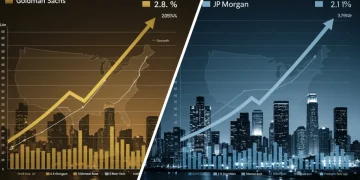
US Economic Forecasts 2026: Goldman Sachs vs. JP Morgan
Comparing US economic forecasts for 2026 reveals a notable divergence between Goldman Sachs' 2.8% GDP growth prediction and JP Morgan's 2.1%, driven by differing views on monetary policy, consumer spending, and global factors.

Energy Transition’s Economic Dividends: $1.5 Trillion US Market by 2026
The energy transition is generating substantial economic dividends, with the US market projected to reach $1.5 trillion by 2026. This monumental shift unlocks new investment avenues across various sectors, driven by technological advancements and policy support.

2026 Labor Market: Strategies for 4.2% Unemployment Rate
Businesses in the United States must strategically adapt to the projected 4.2% unemployment rate in the 2026 labor market to secure talent and maintain competitive advantage through innovative recruitment and retention practices.

2026 U.S. Economic Outlook: 5 Key Trends & Investment Strategies
The 2026 U.S. economic outlook is characterized by evolving technological landscapes, shifting global trade dynamics, and persistent inflationary pressures, demanding agile investment strategies for sustained national growth.

Federal Reserve Policy Shifts: Q4 2025 Analysis & 2026 U.S. Economic Stability
The Federal Reserve's policy shifts in Q4 2025 are pivotal, directly influencing U.S. economic stability and growth prospects throughout 2026, demanding close attention from market participants and policymakers.
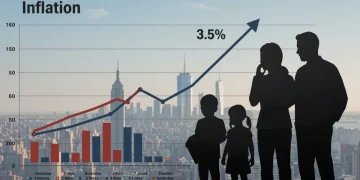
Inflation Alert: 3.5% Core CPI in Q1 2026 & US Consumer Spending
A projected 3.5% Core CPI in Q1 2026 could significantly alter U.S. consumer spending patterns, impacting various sectors and necessitating strategic financial adjustments for households and businesses.

Supply Chain Resilience 2026: Mitigating 15% Higher Shipping Costs
U.S. businesses face significant challenges with projected 15% higher shipping costs in 2026; building robust supply chain resilience through strategic planning and technological adoption is crucial for sustained profitability and competitive advantage.

Green Economy Boom: 3 High-Growth U.S. Sectors for 2026 Investment
The green economy is experiencing a significant boom, presenting lucrative investment opportunities in the U.S. through 2026, particularly in sustainable energy, electric vehicles, and circular economy practices.

2026 Digital Economy: Key Trends Driving 15% US Tech Growth
The 2026 digital economy is poised for significant transformation, with US tech sectors expected to achieve 15% annual growth, fueled by advancements in artificial intelligence, blockchain, and an increasing focus on sustainable technologies.