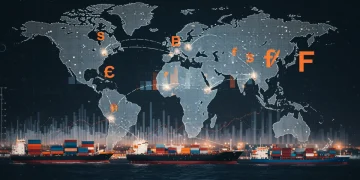
Global Supply Chain Realignments: US Business Opportunities & Risks

Global supply chain realignments will significantly reshape the operational landscape for US businesses over the next 18 months, demanding strategic foresight and agile responses to leverage new opportunities and mitigate emerging risks.
The global economy is currently undergoing a transformative period, with significant shifts impacting how goods and services move across borders. For US businesses, understanding the nuances of global supply chain realignments in the next 18 months is not just beneficial, but critical for sustained growth and resilience. These shifts present a complex interplay of challenges and unprecedented opportunities.
Understanding the Drivers of Supply Chain Transformation
The current wave of global supply chain realignments is not a sudden phenomenon but rather the culmination of several interconnected geopolitical, economic, and technological forces. Businesses that grasp these underlying drivers will be better positioned to anticipate future changes and adapt their strategies effectively.
Recent events, including geopolitical tensions, trade disputes, and the lingering effects of the pandemic, have exposed vulnerabilities in traditionally lean, globalized supply chains. This has prompted a widespread re-evaluation of sourcing strategies and production locations, moving away from an sole focus on cost efficiency towards greater resilience and security.
Geopolitical Shifts and Trade Policies
The escalating trade tensions between major economic powers have undeniably accelerated the push for supply chain diversification. Tariffs and sanctions have forced companies to reconsider their reliance on single-country sourcing, particularly from regions deemed politically unstable or adversarial. This has led to a strategic pivot towards ‘friend-shoring’ or ‘ally-shoring,’ where businesses prioritize sourcing from countries with stable political relationships.
- Increased tariffs on imported goods from specific regions.
- Government incentives for domestic production and sourcing.
- Enhanced scrutiny of foreign direct investment and technology transfers.
- Focus on national security implications of critical supply chains.
Furthermore, government policies aimed at fostering domestic manufacturing, such as the CHIPS and Science Act in the US, are actively reshaping the landscape, driving investment in critical sectors like semiconductors. These legislative efforts signal a long-term commitment to reducing foreign dependency and strengthening national industrial bases. Understanding these policy shifts is crucial for US businesses to align their strategies with governmental priorities and potentially leverage available support.
In conclusion, the drivers of supply chain transformation are multifaceted, stemming from a desire for resilience, security, and strategic independence. Geopolitical considerations and evolving trade policies are paramount, compelling businesses to adopt more diversified and robust supply chain models. This fundamental shift requires continuous monitoring and adaptation to remain competitive and compliant.
Opportunities for US Businesses: Reshoring and Nearshoring
The strategic imperative to de-risk global supply chains has created significant opportunities for US businesses through reshoring and nearshoring initiatives. These approaches involve bringing manufacturing and service operations closer to home, offering a host of benefits that extend beyond mere cost savings.
Reshoring, the process of returning manufacturing and production to the United States, has gained considerable traction. This movement is fueled by a desire to reduce lead times, enhance quality control, and mitigate the risks associated with geopolitical instability and distant logistics. For many US companies, the long-term benefits now outweigh the initial cost advantages of overseas production.
Technological Advancements and Automation
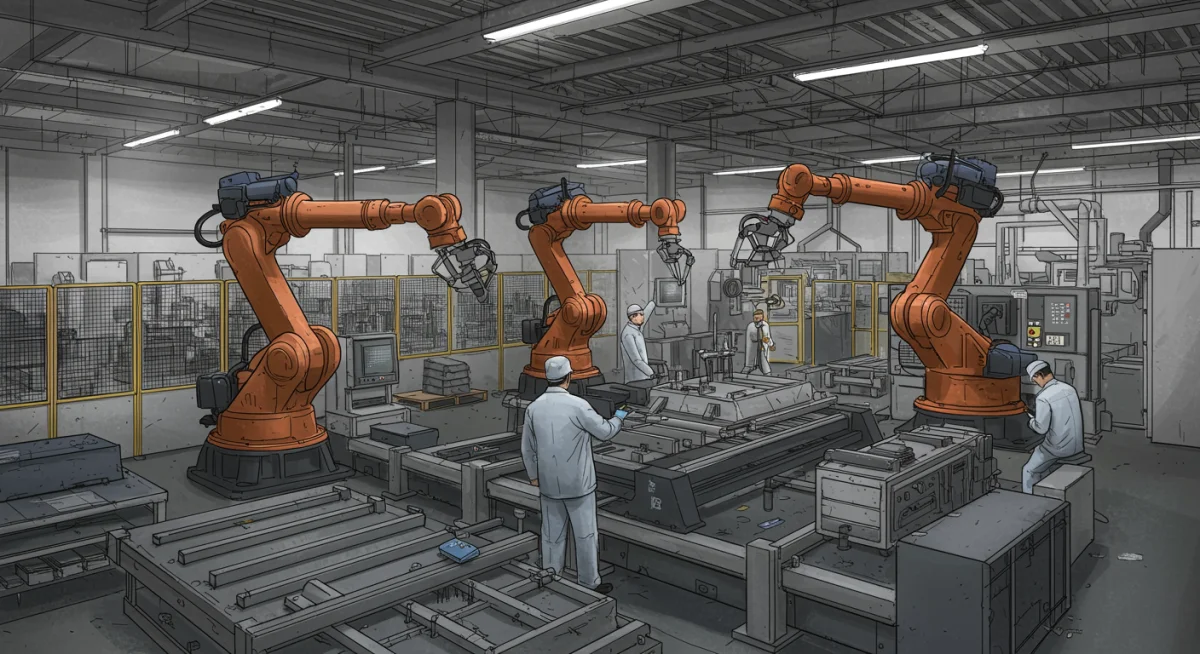
Advances in automation, artificial intelligence, and robotics are making reshoring more economically viable than ever before. Automated factories can operate with fewer labor costs, offsetting some of the wage differences between the US and lower-cost manufacturing hubs. This technological integration also leads to higher precision, increased efficiency, and reduced waste, further bolstering the case for domestic production.
- Robotics reducing manual labor requirements.
- AI-driven optimization of production processes.
- Additive manufacturing (3D printing) enabling localized production.
- Enhanced data analytics for predictive maintenance and quality control.
Nearshoring, relocating production to neighboring countries like Mexico or Canada, also presents a compelling option. This strategy offers geographic proximity, often with lower labor costs than the US, while still providing many of the benefits of shorter supply lines and reduced geopolitical risk compared to distant Asian markets. The USMCA agreement further strengthens the appeal of North American supply chains.
In summary, reshoring and nearshoring represent tangible opportunities for US businesses to enhance operational resilience, improve responsiveness to market demands, and capitalize on technological advancements. By strategically investing in domestic or regionally close production, companies can build more robust and agile supply chains, positioning themselves for long-term success.
Risks and Challenges for US Businesses
While the realignments in global supply chains present new opportunities, they are not without significant risks and challenges for US businesses. Navigating this evolving landscape requires a keen understanding of potential pitfalls and proactive strategies to mitigate them.
One of the primary challenges is the increased cost associated with reshoring and diversifying supply chains. Moving production back to the US or to other nearshore locations often entails higher labor, land, and operational expenses compared to traditional low-cost manufacturing hubs. These increased costs can impact profit margins and consumer prices if not managed effectively.
Inflationary Pressures and Labor Shortages
The push for domestic production can exacerbate existing inflationary pressures. Higher production costs are frequently passed on to consumers, contributing to overall economic inflation. Furthermore, a significant challenge in the US is the persistent labor shortage, particularly in skilled manufacturing roles. Finding and retaining a qualified workforce for expanded domestic operations can be a major hurdle.
- Higher operational costs impacting profitability.
- Rising consumer prices due to increased production expenses.
- Scarcity of skilled labor in specific manufacturing sectors.
- Training and upskilling requirements for new domestic workforces.
Another critical risk involves the complexity of disentangling established global supply networks. Many US businesses have spent decades optimizing their international supply chains for efficiency and cost. Untangling these intricate webs and establishing new ones requires substantial investment in time, capital, and expertise, potentially disrupting operations in the short term. Regulatory hurdles and compliance with new trade agreements also add layers of complexity.
Ultimately, US businesses must carefully weigh the opportunities against these considerable risks. The transition to more resilient supply chains demands significant investment, strategic planning, and a robust understanding of both economic and labor market dynamics to avoid unintended consequences and maintain competitiveness.
Diversification and Regionalization Strategies
In response to the vulnerabilities exposed in monolithic global supply chains, US businesses are increasingly adopting diversification and regionalization strategies. These approaches aim to build more resilient networks by spreading risks and reducing over-reliance on any single source or region.
Diversification involves expanding the number of suppliers and sourcing locations. Instead of having a sole supplier for a critical component, companies are now looking to have multiple suppliers spread across different geographies. This reduces the impact of disruptions in any one area, whether from natural disasters, geopolitical events, or factory shutdowns.
Building Redundancy and Resilience
Regionalization, on the other hand, focuses on creating self-sufficient supply chains within specific geographic regions. This means sourcing, manufacturing, and distributing goods primarily within North America, Europe, or Asia, rather than relying on intercontinental movements for every stage of production. This shortens lead times, reduces transportation costs, and makes supply chains less susceptible to global transit disruptions.
- Identifying alternative suppliers in different countries.
- Establishing production hubs in key regional markets.
- Investing in localized inventory and warehousing solutions.
- Developing robust risk assessment frameworks for new suppliers.
The implementation of these strategies requires significant upfront investment in supplier vetting, infrastructure development, and logistical planning. However, the long-term benefits of enhanced resilience, improved responsiveness, and reduced exposure to external shocks often justify these investments. Businesses that successfully regionalize their supply chains will gain a substantial competitive advantage in an increasingly unpredictable global environment.
In conclusion, diversification and regionalization are becoming cornerstones of modern supply chain management for US businesses. By purposefully spreading risks and building more localized networks, companies can significantly enhance their resilience to future disruptions, ensuring continuity of operations and a more stable flow of goods.
The Role of Digital Transformation
Digital transformation is not merely a buzzword but a fundamental enabler for US businesses navigating the complexities of global supply chain realignments. Leveraging advanced technologies is crucial for optimizing new supply chain structures, enhancing visibility, and improving decision-making.
One of the most impactful applications of digital technology is in achieving end-to-end supply chain visibility. Traditional supply chains often operate in silos, making it difficult to track goods, identify bottlenecks, or react swiftly to disruptions. Digital platforms, powered by IoT sensors, AI, and blockchain, can provide real-time data on inventory levels, shipment locations, and production statuses across the entire network.
Predictive Analytics and AI
Predictive analytics, driven by artificial intelligence and machine learning, allows businesses to forecast demand more accurately, anticipate potential disruptions, and optimize inventory levels. By analyzing vast datasets, AI can identify patterns and anomalies that human analysts might miss, leading to more informed and proactive decision-making. This capability is invaluable in a rapidly changing global landscape.
- Real-time tracking of goods and materials.
- AI-powered demand forecasting and inventory optimization.
- Blockchain for enhanced transparency and traceability.
- Automated processes for order fulfillment and logistics.
Furthermore, cloud-based platforms facilitate seamless collaboration between different stakeholders in the supply chain, from suppliers and manufacturers to logistics providers and retailers. This interconnectedness allows for faster communication, shared data, and a more synchronized response to market changes or unforeseen events. The adoption of digital twins, virtual replicas of physical supply chains, also enables businesses to simulate scenarios and test strategies before implementation, minimizing risk.
In essence, digital transformation is the backbone of resilient and agile supply chains. By embracing technologies like AI, IoT, and blockchain, US businesses can gain unparalleled visibility, predictive capabilities, and operational efficiency, transforming challenges into strategic advantages in the realigned global market.
Government Support and Policy Initiatives
Recognizing the strategic importance of robust supply chains, the US government is actively implementing policies and programs designed to support businesses through these realignments. Understanding these initiatives is crucial for companies looking to capitalize on available resources and align with national economic priorities.
A key focus of government policy is incentivizing domestic manufacturing and critical infrastructure development. Legislation such as the CHIPS and Science Act provides billions in funding for semiconductor research, development, and manufacturing within the United States. This not only strengthens national security but also creates new opportunities for businesses involved in the tech supply chain.
Funding and Tax Incentives
Beyond semiconductors, various government agencies offer grants, loans, and tax credits to businesses that invest in reshoring, expand domestic production capabilities, or adopt advanced manufacturing technologies. These financial incentives aim to offset the higher upfront costs associated with transitioning away from purely offshore production models.
- Grants for R&D in critical industries.
- Tax credits for domestic manufacturing investments.
- Low-interest loans for small and medium-sized enterprises (SMEs) to retool.
- Partnerships between government, academia, and industry for workforce development.
Moreover, the government is working to streamline regulatory processes and improve trade facilitation, making it easier for businesses to import necessary raw materials and export finished goods. Efforts to strengthen international trade agreements with allied nations also aim to create more stable and predictable sourcing environments, further promoting friend-shoring strategies.
In conclusion, government support and policy initiatives are playing a pivotal role in shaping the trajectory of US supply chain realignments. By leveraging these programs, US businesses can mitigate some of the financial burdens and risks associated with transforming their supply networks, ultimately contributing to a more resilient and competitive national economy.
| Key Aspect | Brief Description |
|---|---|
| Reshoring/Nearshoring | US businesses returning production closer to home for resilience and reduced lead times. |
| Diversification | Expanding supplier bases across multiple geographies to mitigate single-point failure risks. |
| Digital Transformation | Leveraging AI, IoT, and data analytics for supply chain visibility and predictive capabilities. |
| Government Support | Policies, incentives, and funding to encourage domestic production and R&D. |
Frequently Asked Questions About Supply Chain Realignments
The main drivers include geopolitical tensions, trade disputes, the lessons learned from pandemic-induced disruptions, and a strategic shift towards national security and self-sufficiency in critical industries. These factors compel businesses to rethink their global sourcing and production models.
Benefits include reduced lead times, enhanced quality control, lower transportation costs, mitigation of geopolitical risks, and improved responsiveness to market changes. Advanced automation technologies are also making these strategies more economically viable for many companies.
Key risks involve increased operational costs, potential inflationary pressures, and challenges in finding skilled labor for domestic production. There is also the complexity and significant capital investment required to reconfigure established global supply networks.
Digital transformation, through AI, IoT, and blockchain, provides end-to-end visibility, predictive analytics for demand forecasting, and enhanced collaboration. These technologies are crucial for optimizing new supply chain structures and improving agility and decision-making.
The US government offers various forms of support, including grants, tax incentives, and loans for domestic manufacturing and R&D, particularly in critical sectors like semiconductors. They also work to streamline regulations and foster stronger trade agreements with allied nations.
Conclusion
The ongoing global supply chain realignments represent a pivotal moment for US businesses. While the path ahead is fraught with challenges, including increased costs and logistical complexities, the opportunities for enhanced resilience, innovation, and strategic independence are substantial. By embracing reshoring, diversification, and digital transformation, supported by proactive government policies, US companies can not only navigate this dynamic landscape but also emerge stronger and more competitive. The next 18 months will be crucial for strategic decisions that will define the future of American commerce on the global stage.