Global Climate Diplomacy: Key Agreements & US Implications 2026

Recent shifts in global climate diplomacy have produced four critical agreements over the past six months, directly influencing U.S. policy and economic projections for 2026 and beyond.
The landscape of international environmental policy is constantly evolving, with recent developments in global climate diplomacy setting a new course for nations worldwide. The past six months have been particularly active, witnessing the formulation of four critical agreements that carry significant weight, especially for the United States, as we look towards 2026. Understanding these diplomatic efforts and their potential implications is crucial for policymakers, businesses, and citizens alike.
The evolving landscape of climate negotiations
Climate negotiations have transformed from sporadic discussions into a continuous, urgent dialogue. The scientific consensus on global warming, coupled with increasing extreme weather events, has fueled a heightened sense of urgency among nations to act decisively. This accelerated pace has led to more frequent and substantive diplomatic engagements, aiming to forge unified approaches to a shared global challenge.
These negotiations are often complex, balancing the economic interests of developed and developing nations with the imperative of environmental protection. Each agreement represents a delicate compromise, reflecting the diverse priorities and capabilities of participating countries. The outcomes, while sometimes incremental, collectively contribute to a broader framework for global climate action.
Key drivers for accelerated climate action
- Scientific urgency: Mounting evidence of climate change impacts.
- Public pressure: Growing global awareness and demand for action.
- Economic opportunities: Recognition of green technology and sustainable development as economic drivers.
- Geopolitical stability: Acknowledging climate change as a threat multiplier for instability.
The commitment to these diplomatic processes underscores a global recognition that no single nation can tackle climate change in isolation. The interconnectedness of our planet’s ecosystems demands a collective response, making effective climate diplomacy more vital than ever. The agreements discussed below are testament to this ongoing, collaborative effort.
Agreement 1: The Global Methane Pledge Expansion
The Global Methane Pledge, initially launched at COP26, has seen a significant expansion in the past six months, with more countries committing to substantial reductions in methane emissions. This agreement targets a potent greenhouse gas, often overlooked in favor of CO2, but with a much higher short-term warming potential. The expanded pledge now includes a broader coalition of nations, collectively responsible for a significant portion of global anthropogenic methane emissions.
The focus on methane is strategic, as rapid reductions can yield immediate benefits in slowing the rate of global warming. Sources of methane include agriculture, fossil fuel operations, and waste management. The expanded pledge encourages signatories to implement policies and technologies to curb emissions across these sectors.
U.S. implications for 2026
For the U.S., a signatory to the initial pledge, this expansion reinforces existing domestic efforts and may necessitate further regulatory actions. The Environmental Protection Agency (EPA) and other federal bodies are likely to introduce stricter standards for oil and gas infrastructure, targeting leaks and flaring. Additionally, agricultural practices, particularly livestock management, may see increased incentives for methane capture and reduction technologies.
- Energy sector: Stricter regulations on methane leaks from oil and gas.
- Agriculture: Incentives for sustainable farming and waste management.
- Innovation: Increased investment in methane capture and utilization technologies.
The economic impact could be significant, fostering innovation in green technologies and creating new jobs in environmental compliance and sustainable agriculture. Companies failing to adapt may face penalties, while those embracing methane reduction strategies could gain a competitive edge in a rapidly greening economy.
Agreement 2: Enhanced Commitments to Renewable Energy Deployment
A second major diplomatic achievement involves enhanced commitments to accelerate renewable energy deployment, moving beyond aspirational targets to concrete implementation plans. Several nations, including major economies, have pledged to significantly increase their renewable energy capacity by 2026, often through a combination of policy incentives, public investment, and international partnerships. This agreement marks a turning point, signaling a global shift away from fossil fuels at an accelerated pace.
The agreement emphasizes the importance of diversifying energy portfolios, strengthening grid infrastructure, and ensuring equitable access to clean energy technologies. It also recognizes the vital role of international collaboration in technology transfer and financing for developing countries to meet their renewable energy goals.
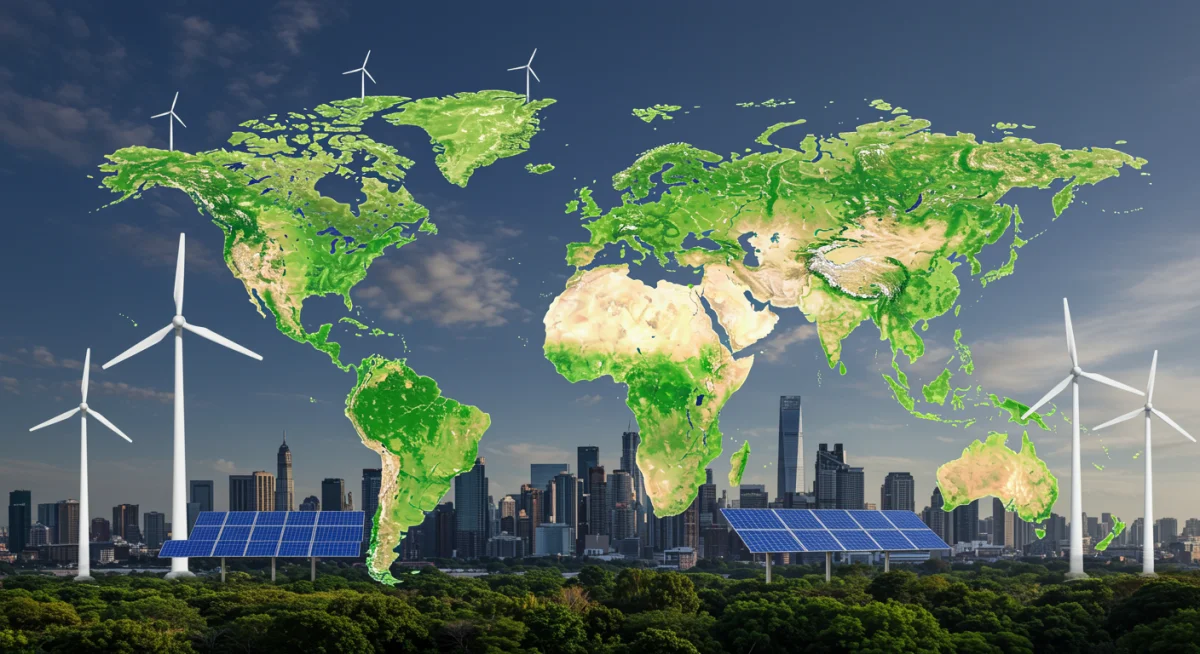
The U.S. is already heavily invested in renewable energy, and this global push will likely amplify domestic efforts. Federal and state governments may roll out new tax credits, grants, and regulatory frameworks to expedite the construction of solar farms, wind power installations, and advanced battery storage facilities. Utilities will face increased pressure to integrate higher percentages of renewables into their energy mix.
Economic and policy impacts in the U.S.
- Investment boom: Significant capital flow into renewable energy projects.
- Job creation: Growth in manufacturing, installation, and maintenance sectors.
- Technological advancement: Incentives for research and development in clean energy.
- Grid modernization: Urgent need for infrastructure upgrades to support intermittent renewables.
This agreement positions the U.S. to further solidify its leadership in clean energy innovation, potentially leading to a competitive advantage in global markets. However, it also presents challenges related to supply chain resilience, critical mineral sourcing, and workforce development to meet the demands of a rapidly expanding sector.
Agreement 3: The Global Adaptation Fund Replenishment Initiative
Recognizing that mitigation alone is insufficient, the past six months have also seen a successful initiative to replenish the Global Adaptation Fund, with substantial new financial commitments from developed nations. This fund is crucial for supporting developing countries in their efforts to adapt to the unavoidable impacts of climate change, such as rising sea levels, extreme heat, and altered precipitation patterns. The replenished fund aims to provide more predictable and accessible financing for adaptation projects.
This initiative reflects an increasing understanding that climate justice is integral to effective global climate action. Vulnerable nations, often least responsible for historical emissions, bear the brunt of climate impacts and require significant support to build resilience. The new commitments represent a step towards fulfilling promises made under the Paris Agreement regarding climate finance.
U.S. role and domestic implications
The U.S., as a major donor, has committed significant resources to this replenishment. While the direct domestic implications might seem less immediate than mitigation efforts, this commitment strengthens U.S. diplomatic standing and fosters international goodwill. Indirectly, it can contribute to global stability, reducing climate-induced migration and conflicts that could eventually impact U.S. security interests.
- International leadership: Bolstering U.S. credibility in climate diplomacy.
- Humanitarian aid: Supporting vulnerable populations globally, aligning with U.S. values.
- Risk reduction: Mitigating future global crises that could affect U.S. interests.
Domestically, the U.S. is also increasing its own adaptation efforts, particularly in coastal protection, water management, and disaster preparedness. Lessons learned and technologies developed through international adaptation projects could potentially inform and enhance these domestic initiatives by 2026, creating a feedback loop of knowledge and innovation.
Agreement 4: Advancements in Carbon Market Mechanisms
The fourth critical development involves significant advancements and clarifications in global carbon market mechanisms, particularly under Article 6 of the Paris Agreement. After years of complex negotiations, clearer rules and guidelines have emerged for international carbon trading, allowing countries to cooperate on emissions reductions through market-based approaches. These advancements aim to create a more robust, transparent, and environmentally sound global carbon market.
This agreement provides a framework for countries to transfer carbon credits, enabling more cost-effective emissions reductions globally. It also includes provisions to ensure environmental integrity, preventing double counting of emissions reductions and promoting sustainable development co-benefits. The goal is to mobilize private sector investment in climate action by creating a clear price signal for carbon.
U.S. engagement and market opportunities
While the U.S. does not have a federal carbon pricing scheme, many states and regions operate their own cap-and-trade programs. The advancements in global carbon markets could influence future discussions on national carbon pricing and provide new avenues for U.S. companies to engage in international emissions trading. By 2026, U.S. businesses might find new opportunities in developing and selling carbon reduction projects overseas.
- New market access: U.S. companies can participate in international carbon markets.
- Investment potential: Opportunities in global carbon offset projects.
- Policy influence: Potential for federal carbon policies to be informed by global standards.
The clarity provided by these new rules could also spur innovation in carbon accounting, verification, and project development within the U.S., as companies prepare for potential future integration with global carbon pricing systems. This diplomatic breakthrough creates a more predictable environment for carbon finance and investment, potentially accelerating global decarbonization efforts.
U.S. domestic policy alignment and challenges for 2026
The cumulative effect of these four agreements places considerable pressure and opportunity on U.S. domestic policy as we approach 2026. The Biden administration has already signaled a strong commitment to climate action, aligning with many of these international goals. However, translating global pledges into effective domestic policy requires navigating a complex political and economic landscape. The implications by 2026 will likely involve a combination of new regulations, financial incentives, and technological shifts across various sectors.
One primary challenge is ensuring a just transition for communities and workers currently dependent on fossil fuel industries. Policies must be carefully crafted to provide retraining, new job opportunities, and economic diversification to avoid exacerbating social inequalities. Another hurdle is maintaining bipartisan support for climate initiatives, which often face political polarization.
Key areas of domestic impact by 2026
- Regulatory frameworks: Stricter emissions standards for industries and vehicles.
- Infrastructure investment: Significant funding for clean energy, smart grids, and climate resilience.
- Research and development: Enhanced support for breakthrough climate technologies.
- International collaboration: Increased U.S. engagement in multilateral climate initiatives.
The U.S. will also need to address supply chain vulnerabilities for critical minerals essential to renewable energy technologies and electric vehicles. Ensuring secure and ethical sourcing will be paramount. By 2026, the success of U.S. climate policy will largely depend on its ability to integrate these global commitments into a coherent, comprehensive, and equitable national strategy, fostering both environmental protection and economic growth.
| Key Agreement | U.S. Implication by 2026 |
|---|---|
| Global Methane Pledge Expansion | Stricter EPA regulations for oil/gas, agricultural incentives. |
| Renewable Energy Commitments | Increased federal/state incentives, infrastructure upgrades. |
| Global Adaptation Fund Replenishment | Enhanced U.S. diplomatic standing, potential domestic adaptation insights. |
| Carbon Market Mechanism Advancements | New opportunities for U.S. companies in international carbon markets. |
Frequently asked questions about climate agreements
▼
The Global Methane Pledge aims to reduce global anthropogenic methane emissions by at least 30% from 2020 levels by 2030. This is crucial because methane is a potent greenhouse gas with a high warming potential over a shorter timeframe, offering a quick win in slowing global warming.
▼
Enhanced renewable energy commitments are expected to spur significant U.S. investment in clean energy infrastructure, create numerous jobs in manufacturing and installation, and drive technological innovation. This transition also positions the U.S. to be a leader in the global green economy.
▼
The Global Adaptation Fund replenishment provides vital financial support for developing countries to cope with the unavoidable impacts of climate change. These nations often lack resources to build resilience, and the fund helps them implement projects to protect communities and infrastructure from climate-related disasters.
▼
Advancements in carbon market mechanisms create clearer rules for international carbon trading, potentially allowing U.S. businesses to participate more effectively. This could lead to new opportunities for investment in carbon reduction projects globally and influence future domestic carbon pricing discussions.
▼
By 2026, average U.S. citizens may see increased access to cleaner energy, potentially lower energy bills due to renewables, and new job opportunities in green sectors. They might also experience improved air quality and greater resilience in their communities against climate impacts due to adaptation efforts.
Conclusion
The recent surge in global climate diplomacy, marked by four critical agreements over the past six months, underscores a collective international resolve to address climate change. For the United States, these agreements are not merely distant international commitments but direct catalysts for significant shifts in domestic policy, economic strategies, and technological innovation by 2026. From methane reduction to renewable energy expansion, adaptation funding, and carbon market advancements, each accord presents both challenges and unparalleled opportunities. The path forward demands proactive engagement, strategic investment, and a unified national approach to harness these global efforts for a sustainable and prosperous future.