The Evolving American Family: 2026 Shift Analysis

By 2026, the American family continues its profound evolution, characterized by increased diversity in household structures, delayed parenthood, and the growing influence of technology on familial relationships and support networks.
The Evolving American Family: A 2026 Analysis of Shifting Structures and Societal Impacts (COMPARISON/ANALYSIS) reveals a landscape far more complex and diverse than previous generations. This comprehensive look into modern familial dynamics uncovers how economic pressures, cultural shifts, and technological advancements are reshaping what it means to be a family in the United States today.
Understanding the Shifting Definitions of Family
The traditional nuclear family, once the predominant model, has steadily given way to a mosaic of household arrangements. By 2026, this diversification is not just a trend but a fundamental characteristic of American society. The concept of ‘family’ has broadened significantly, encompassing various forms that reflect individual choices and socioeconomic realities.
This evolution is driven by several interconnected factors, including changing social norms, increased economic independence, and greater acceptance of diverse lifestyles. As a result, policies and support systems are increasingly challenged to adapt to these new realities, ensuring inclusivity for all family types.
The Rise of Non-Traditional Households
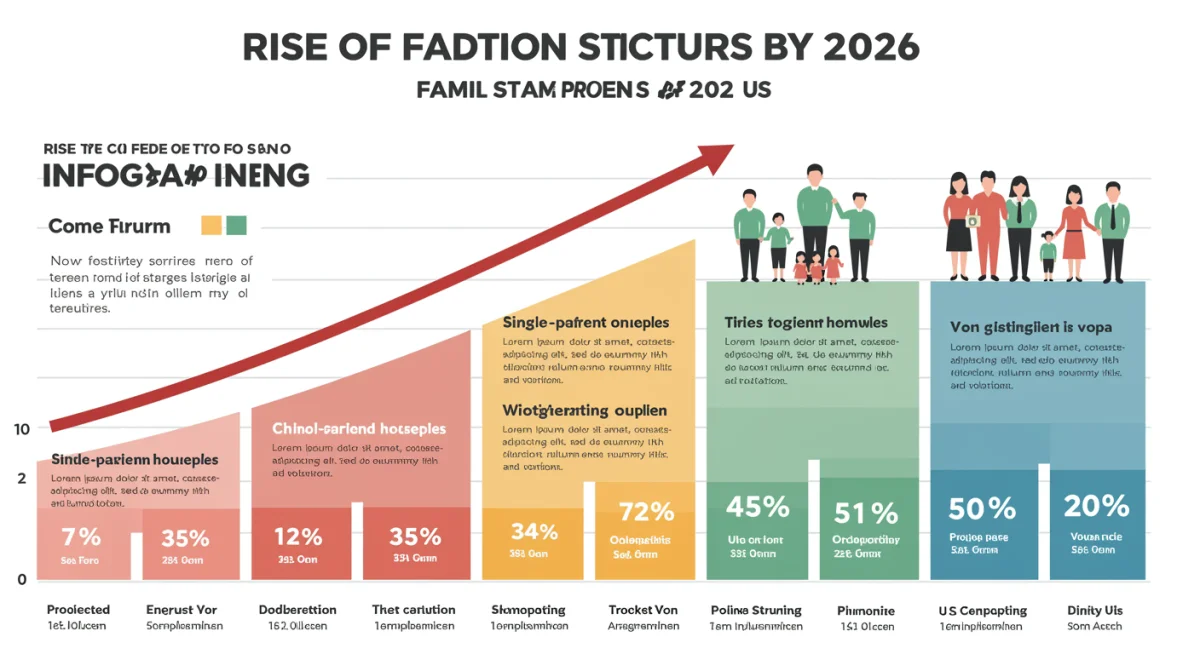
Non-traditional households are now a cornerstone of the American family structure. These include single-parent families, cohabiting couples, and multi-generational households, each presenting unique dynamics and needs. Understanding these structures is crucial for developing effective community and government support.
- Single-Parent Households: Often led by women, these families face distinct economic and social challenges, requiring targeted support.
- Cohabiting Couples: An increasing number of couples choose to live together without marriage, forming committed relationships that function similarly to married units.
- Multi-Generational Living: Economic factors and care needs often lead to multiple generations living under one roof, providing mutual support and shared responsibilities.
The shift towards these diverse forms underscores a societal embrace of flexibility and personalized family models. It also highlights the need for a more nuanced understanding of family well-being, moving beyond outdated definitions.
Economic Pressures and Their Impact on Family Formation
Economic forces play an undeniable role in shaping how families form and function in 2026. High costs of living, student loan debt, and precarious employment situations are significant hurdles, particularly for younger generations. These pressures often lead to delayed major life milestones, such as marriage and childbirth.
The pursuit of financial stability has become a prerequisite for many before considering starting a family, impacting fertility rates and family size. This economic reality creates a complex interplay between individual aspirations and the broader societal structure of families.
Delayed Parenthood and Smaller Family Sizes
A notable trend is the delay in parenthood, with more individuals and couples waiting until their late 20s, 30s, or even 40s to have children. This decision is frequently linked to career development and achieving a certain level of financial security. Consequently, family sizes are generally shrinking.
This delay has implications for societal demographics, including an aging population and potential strains on social security and healthcare systems. Furthermore, smaller families can mean fewer built-in support networks, potentially increasing reliance on external services.
- Financial Stability: A primary driver for delaying children, ensuring resources for education and well-being.
- Career Aspirations: Women, in particular, often prioritize career development before starting families.
- Access to Education: Higher education often postpones marriage and childbearing, extending the period of individual focus.
The economic landscape of 2026 continues to exert considerable influence, pushing families to adapt and innovate in their structures and planning. These adaptations are not merely personal choices but reflections of larger systemic economic challenges.
Cultural Shifts and Evolving Social Norms
Beyond economics, significant cultural shifts are driving the evolution of the American family. Increased acceptance of diverse sexual orientations and gender identities has expanded the definition of family to include same-sex parents and gender-diverse individuals. This cultural embrace fosters more inclusive family environments.
Moreover, the dissolution of traditional gender roles within households means that childcare and household responsibilities are often more equitably distributed. This contributes to greater flexibility and partnership in modern family units, challenging long-held patriarchal norms.
Diversity and Inclusion in Family Structures
The cultural tapestry of the United States is richer and more varied than ever, directly influencing family structures. Diversity, in all its forms, is increasingly celebrated, leading to a broader understanding and acceptance of what constitutes a family. This includes families formed through adoption, blended families, and chosen families.
This acceptance is not merely symbolic; it translates into evolving legal frameworks and social support systems that aim to cater to the unique needs of these diverse families. The emphasis is on love, commitment, and mutual support, rather than rigid biological or marital definitions.
The ongoing cultural dialogue around identity and belonging continues to redefine the boundaries of family, making it a more fluid and inclusive concept. These cultural shifts are foundational to understanding the evolving American family.
Technology’s Role in Connecting and Disconnecting Families
Technology in 2026 presents a dual-edged sword for family dynamics. On one hand, it offers unprecedented opportunities for connection, especially for geographically dispersed family members. Video calls, social media, and shared digital platforms allow families to maintain close ties across distances, fostering a sense of togetherness.
However, technology also introduces new challenges. Excessive screen time, digital distractions, and the blurring lines between work and home life can sometimes lead to disconnection within the household. Families are navigating how to leverage technology’s benefits while mitigating its potential drawbacks.
Digital Communication and Family Bonds
Digital communication tools have become indispensable for modern families. They enable real-time interactions, shared experiences, and a continuous flow of information, strengthening bonds even when physical proximity is not possible. Grandparents can read bedtime stories via video chat, and parents can stay updated on their children’s school activities through apps.
- Maintaining Long-Distance Relationships: Technology bridges geographical gaps, keeping families connected across states or countries.
- Shared Experiences: Collaborative online games or virtual family gatherings can create new forms of shared experiences.
- Information Sharing: Family group chats and shared calendars streamline communication and coordination.
The challenge lies in finding a healthy balance, ensuring technology enhances rather than detracts from face-to-face interactions and quality time. The integration of technology into family life is a defining characteristic of the American family evolution 2026.
Societal Impacts and Policy Implications
The transformations within the American family have far-reaching societal impacts, necessitating adaptive policy responses. From urban planning to social welfare programs, understanding these shifts is essential for creating supportive communities. Policies need to move beyond a one-size-fits-all approach, recognizing the diversity of family needs.
Healthcare, education, and housing policies, for instance, must consider the growing number of single-parent households, multi-generational living arrangements, and families with diverse structures. This requires a proactive approach to policy development, anticipating future trends rather than merely reacting to them.
Adapting Social Support Systems
Social support systems are undergoing a critical re-evaluation to better serve the contemporary American family. This involves expanding access to affordable childcare, developing flexible work arrangements, and providing inclusive family leave policies. The goal is to create an environment where all family types can thrive.
Furthermore, mental health services and community resources are increasingly vital, addressing the unique stresses and challenges faced by modern families. These adaptations reflect a growing recognition that family well-being is fundamental to societal health and stability.
- Childcare Accessibility: Crucial for supporting working parents in diverse family structures.
- Flexible Work: Remote work and flexible hours allow parents to balance professional and family responsibilities more effectively.
- Inclusive Healthcare: Policies that cover diverse family definitions and needs, including LGBTQ+ families.
The ongoing dialogue between family realities and public policy is crucial for fostering a resilient and supportive society. As families continue to evolve, so too must the systems designed to support them.
The Future Outlook: Resilience and Adaptability
Looking ahead to 2026 and beyond, the evolving American family demonstrates remarkable resilience and adaptability. Despite the challenges posed by economic pressures, cultural shifts, and technological integration, families continue to find ways to connect, support each other, and redefine what ‘family’ means. This adaptability is a testament to the enduring human need for belonging and mutual care.
The future likely holds even greater diversity in family structures, driven by ongoing societal changes and individual choices. This requires a continuous open-minded approach from policymakers, community leaders, and individuals alike, focusing on fostering environments that embrace and empower all forms of families. The emphasis will remain on the quality of relationships and the strength of bonds, rather than adherence to traditional molds.
Fostering Stronger Family Bonds in a Changing World
As American families navigate this dynamic landscape, the focus remains on building and maintaining strong, supportive bonds. This involves open communication, mutual respect, and a willingness to adapt to new circumstances. Education and resources that promote healthy family dynamics, regardless of structure, will become increasingly important.
Community initiatives that bring diverse families together, and policies that recognize and support their varied needs, will be key to ensuring a thriving societal fabric. The strength of the American family in 2026 lies not in uniformity, but in its rich and varied expressions of love and commitment.
The journey of the American family evolution 2026 is one of continuous adaptation and redefinition, reflecting the vibrant and complex nature of American society itself. Embracing this evolution is essential for a prosperous and inclusive future.
| Key Point | Brief Description |
|---|---|
| Diverse Structures | The traditional nuclear family is replaced by single-parent, multi-generational, and cohabiting households. |
| Economic Influence | High costs and debt lead to delayed marriage, parenthood, and smaller family sizes. |
| Cultural Acceptance | Increased embrace of LGBTQ+ families and diverse gender roles reshapes family definitions. |
| Technological Impact | Technology connects distant relatives but also presents challenges with digital distraction. |
Frequently Asked Questions About the American Family in 2026
The definition of family is broadening to include diverse structures like single-parent, cohabiting, multi-generational, and LGBTQ+ households, moving beyond the traditional nuclear model due to cultural and economic shifts.
High costs of living, student loan debt, and job instability are leading many Americans to delay marriage and parenthood, resulting in smaller family sizes and increased multi-generational living arrangements.
Technology facilitates connections for geographically dispersed families through video calls and social media. However, it also poses challenges with screen time and digital distractions, impacting in-person interactions.
Traditional gender roles are significantly less prevalent. There’s a growing trend towards more equitable distribution of childcare and household responsibilities, fostering greater partnership within family units.
Policies must adapt to support diverse families, including affordable childcare, flexible work arrangements, inclusive family leave, and healthcare that covers varied family definitions and needs.
Conclusion
The analysis of the evolving American family in 2026 reveals a dynamic and multifaceted landscape. Far from being a static entity, the American family is a testament to human adaptability, continually redefining itself in response to economic pressures, cultural shifts, and technological advancements. Understanding these transformations is not merely an academic exercise; it is crucial for fostering inclusive communities, developing effective social policies, and ensuring that all families have the support they need to thrive in an increasingly complex world. The future of the American family is one of diversity, resilience, and an enduring commitment to connection, regardless of structure.
The journey of the American family evolution 2026 is one of continuous adaptation and redefinition, reflecting the vibrant and complex nature of American society itself. Embracing this evolution is essential for a prosperous and inclusive future.