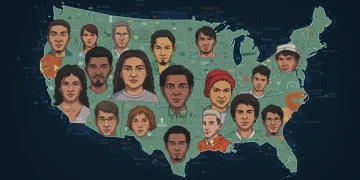
Decoding American Identity: Key Cultural Trends This Quarter

The current quarter sees American identity significantly influenced by three major cultural trends: the heightened awareness surrounding digital privacy, the growing emphasis on conscious consumerism, and the dynamic evolution of local community engagement.
Understanding the intricate tapestry of American society requires a keen eye on its ever-evolving cultural landscape. This quarter, we delve into
American cultural trends, examining three pivotal shifts that are profoundly reshaping the nation’s identity. From the digital sphere to grassroots movements, these trends offer a unique window into the collective consciousness and future direction of the United States.
The Evolving Digital Privacy Discourse
The conversation around digital privacy has never been more intense or multifaceted. What began as a niche concern for tech enthusiasts has now permeated mainstream consciousness, becoming a fundamental aspect of how Americans perceive their interactions with technology and institutions. This shift isn’t just about data breaches; it’s about a deeper re-evaluation of personal autonomy in an increasingly connected world.
Consumers are becoming more aware of the vast amounts of data collected about them, from browsing habits to purchasing patterns. This awareness is fueling a demand for greater transparency and control over personal information, challenging long-standing business models that rely heavily on data monetization. The implications extend beyond individual concerns, touching upon national security and ethical AI development.
Increased Scrutiny on Tech Giants
Major technology companies are facing unprecedented levels of scrutiny from both the public and regulatory bodies. This has led to a push for more stringent data protection laws and greater accountability for how user data is handled. The public’s trust in these platforms is eroding, prompting a re-evaluation of their role in daily life.
- Regulatory pressure: New legislation and antitrust investigations are targeting tech monopolies.
- User demand for control: Individuals are actively seeking tools and settings to manage their data.
- Ethical concerns: Debates around AI ethics and data bias are becoming more prominent.
The evolving digital privacy discourse is not merely a technological issue but a societal one, reflecting a growing desire for balance between convenience and security. It highlights a collective awakening to the power of personal data and the need for robust frameworks to protect it.
The Surge in Conscious Consumerism
Conscious consumerism, once a niche market, has exploded into a powerful movement, fundamentally altering how Americans make purchasing decisions. This trend goes beyond simply buying eco-friendly products; it encompasses a holistic approach to consumption where ethical sourcing, environmental impact, social responsibility, and corporate transparency are paramount. Consumers are increasingly using their purchasing power as a form of activism, pushing companies to align with their values.
This shift is driven by a heightened awareness of global issues, from climate change to labor practices. Social media and readily available information have empowered consumers to research brands thoroughly, holding them accountable for their actions. The demand for sustainable and ethically produced goods is no longer a fringe request but a significant market force.
Ethical Sourcing and Transparency Demands
Consumers are actively seeking out brands that can demonstrate a clear commitment to ethical sourcing, fair labor practices, and transparent supply chains. This means an increasing rejection of fast fashion, exploitative labor, and environmentally damaging production methods. Brands that fail to meet these expectations risk losing significant market share and public trust.
- Supply chain visibility: Consumers want to know where products come from and how they are made.
- Fair trade practices: Support for products ensuring fair wages and safe working conditions.
- Environmental impact: Preference for brands with reduced carbon footprints and sustainable materials.
The surge in conscious consumerism signifies a broader cultural shift towards greater personal responsibility and a desire to contribute positively to the world through everyday choices. It’s a powerful indicator of how American values are translating into market behavior.
Redefining Community Engagement
In an era often characterized by digital connections, the redefinition of community engagement stands out as a powerful counter-narrative. Americans are actively seeking and creating new forms of local and shared experiences, moving beyond traditional structures to build more inclusive and purpose-driven communities. This trend reflects a desire for authentic connection and collective action in response to both local and global challenges.
This redefinition isn’t about abandoning digital tools but integrating them to foster real-world interactions. From hyper-local mutual aid networks to shared interest groups, people are finding innovative ways to come together, support one another, and address issues that matter most to them. This invigorated sense of localism is strengthening social bonds and building resilience within neighborhoods.

Community engagement is shifting from passive participation to active co-creation, where individuals feel empowered to shape their local environments and contribute meaningfully. This bottom-up approach is fostering a stronger sense of belonging and collective efficacy among diverse groups of people.
Rise of Local Activism and Mutual Aid Networks
There’s a noticeable increase in local activism, with residents organizing around issues ranging from environmental protection to social justice. Simultaneously, mutual aid networks, which flourished during recent crises, continue to thrive, providing direct support and resources within communities. These networks highlight a renewed emphasis on self-sufficiency and collective care.
- Hyper-local initiatives: Focus on neighborhood-specific challenges and solutions.
- Volunteerism boost: Increased participation in local clean-ups, food drives, and support groups.
- Shared interest groups: Formation of clubs and organizations based on common hobbies or causes, fostering connection.
The redefinition of community engagement underscores a fundamental human need for belonging and purpose. It is a vibrant cultural trend that is revitalizing local ties and demonstrating the power of collective action in building a more connected and supportive society.
The Interplay of Technology and Identity
The intersection of technology and American identity is a dynamic and ever-evolving landscape. While digital privacy concerns highlight the potential downsides of our connected lives, technology also plays a crucial role in shaping how individuals express themselves, form communities, and engage with the world. This quarter, we see a fascinating interplay where technology can both fragment and unify, depending on its application and the user’s intent.
Social media platforms, for instance, continue to be central to personal branding and identity formation, allowing individuals to curate their public personas and connect with like-minded people across vast distances. However, this same connectivity also raises questions about authenticity, mental well-being, and the impact of algorithms on individual perspectives. The challenge lies in harnessing technology’s power for positive self-expression and community building while mitigating its potential for isolation and misinformation.
Digital Spaces for Identity Exploration
Online communities and digital spaces offer fertile ground for individuals to explore various facets of their identity, particularly for marginalized groups who may find solidarity and support that is less accessible offline. These platforms facilitate discussions, shared experiences, and a sense of belonging that transcends geographical boundaries.
- Inclusive online communities: Spaces for diverse identities to connect and thrive.
- Creative self-expression: Digital tools enabling new forms of art, music, and storytelling.
- Advocacy and awareness: Platforms for social and political movements to gain momentum and reach wider audiences.
Ultimately, the relationship between technology and American identity is a nuanced one. It’s a reflection of society’s ongoing negotiation with progress, emphasizing the need for digital literacy and critical engagement to ensure technology serves to enhance, rather than detract from, human connection and well-being.
Economic Shifts and Cultural Values
Economic shifts invariably leave an indelible mark on cultural values, and this quarter is no exception. Inflationary pressures, changes in employment landscapes, and evolving consumption patterns are not just financial news; they are powerful forces reshaping American priorities, aspirations, and the very definition of success. The pursuit of stability and security is clashing with desires for personal fulfillment and ethical living, creating a complex cultural dynamic.
The rising cost of living, for example, is influencing everything from housing choices to family planning, leading many to re-evaluate traditional milestones and lifestyles. This economic reality is fostering a culture of pragmatism and resourcefulness, where value and longevity often trump fleeting trends. Simultaneously, there’s a growing appreciation for experiences over material possessions, driven partly by economic constraints and partly by a broader philosophical shift.
Impact on Lifestyles and Priorities
Economic uncertainties are prompting a re-evaluation of long-held American dreams, such as homeownership and career trajectories. This leads to new priorities, with greater emphasis on financial literacy, flexible work arrangements, and the pursuit of passions that offer both meaning and economic viability.
- Budget-conscious living: Increased focus on saving, investing, and mindful spending.
- Gig economy growth: Adaptability and diversification of income streams becoming commonplace.
- Work-life balance emphasis: A cultural shift valuing personal time and well-being over relentless career advancement.
These economic shifts are not just momentary adjustments but are fundamentally altering the cultural fabric of the nation, influencing everything from individual aspirations to collective societal norms. They highlight a growing resilience and adaptability within the American identity as it navigates complex financial landscapes.
The Role of Media in Shaping Perceptions
The media landscape, in all its forms, plays an undeniable and increasingly complex role in shaping American identity and perceptions of current cultural trends. From traditional news outlets to social media algorithms, the narratives presented and consumed influence public opinion, reinforce or challenge existing beliefs, and ultimately contribute to the collective understanding of who Americans are and what they value. This quarter, the fragmentation of media consumption and the rise of personalized news feeds are particularly impactful.
The proliferation of information sources means that individuals can curate their news, often leading to echo chambers that reinforce pre-existing biases. This phenomenon has profound implications for national unity and the ability to find common ground on critical issues. Conversely, media also serves as a powerful tool for raising awareness about social injustices, promoting diverse voices, and fostering dialogue across different communities.
Challenges of Misinformation and Polarization
One of the most significant challenges facing American society is the spread of misinformation and its contribution to political and cultural polarization. The speed at which false narratives can propagate through digital channels poses a threat to informed public discourse and the ability to forge a shared understanding of reality.
- Fact-checking initiatives: Growing efforts to combat false information and promote media literacy.
- Algorithmic influence: The impact of personalized content on individual worldviews and societal division.
- Diverse representation: Calls for more inclusive and nuanced portrayals of American life in media.
Understanding the powerful influence of media is crucial for decoding American identity. It underscores the need for critical thinking and media literacy skills to navigate a complex information environment and foster a more informed and cohesive society.
| Key Trend | Brief Description |
|---|---|
| Digital Privacy Evolution | Growing public awareness and demand for control over personal data, challenging tech companies. |
| Conscious Consumerism Surge | Consumers prioritize ethical sourcing, environmental impact, and corporate transparency in purchasing. |
| Redefining Community | Shift towards hyper-local activism, mutual aid, and purpose-driven shared experiences. |
| Economic Influence | Economic shifts impacting lifestyles, priorities, and the redefinition of success in America. |
Frequently Asked Questions About American Cultural Trends
The heightened focus on digital privacy stems from a growing public awareness of data collection practices, numerous high-profile data breaches, and a desire for greater personal autonomy over online information. Regulatory actions and increased media attention also play significant roles in this evolving discourse.
Conscious consumerism is pushing businesses to adopt more ethical sourcing, sustainable practices, and greater transparency. Companies are responding by adjusting supply chains, investing in eco-friendly alternatives, and communicating their social responsibility efforts to meet evolving consumer demands and maintain brand loyalty.
It refers to a shift from traditional community structures to more active, purpose-driven local involvement. This includes the rise of mutual aid networks, hyper-local activism, and shared interest groups, fostering stronger local bonds and collective action in response to various challenges.
While these trends have distinct American manifestations, many are part of broader global movements. Concerns about digital privacy, conscious consumerism, and renewed community focus are evident in various countries, reflecting universal shifts in values and responses to modern challenges.
Economic shifts, such as inflation and job market changes, directly impact cultural values by altering priorities. They often lead to a greater emphasis on financial security, pragmatism, and work-life balance, influencing lifestyle choices and the pursuit of happiness beyond traditional material benchmarks.
Conclusion
The American identity is a continually evolving mosaic, shaped by a confluence of social, technological, and economic forces. This quarter’s insights into digital privacy, conscious consumerism, and redefined community engagement reveal a nation actively grappling with its values and priorities. These trends are not isolated phenomena but interconnected threads weaving a new narrative for the United States, emphasizing personal autonomy, ethical responsibility, and genuine human connection in an increasingly complex world. Understanding these shifts is crucial for anyone seeking to comprehend the pulse of contemporary American society.