US Government Cybersecurity Threats: Breaches & Mitigation 2026
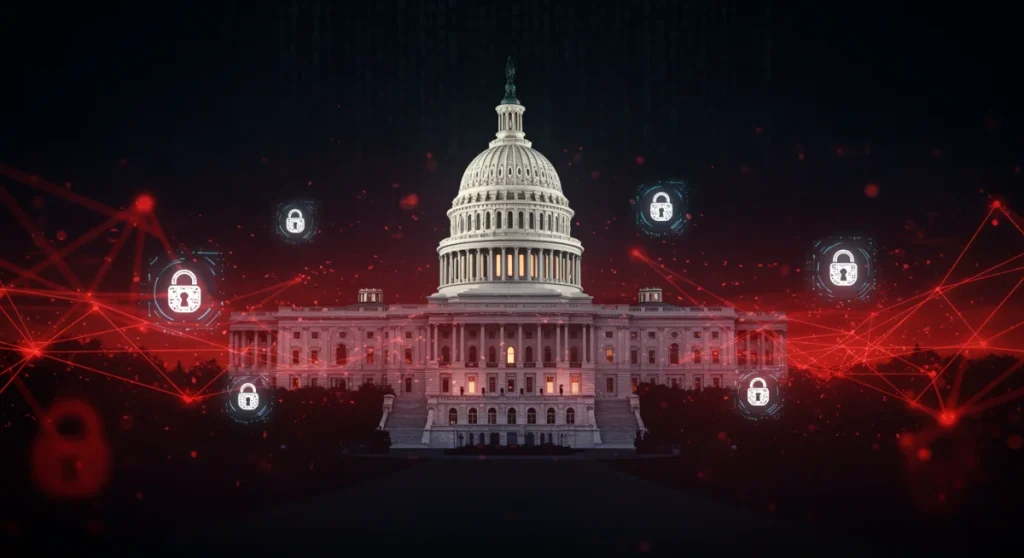
Understanding the evolving landscape of cybersecurity threats in U.S. government systems is paramount, necessitating a deep dive into recent major breaches and the proactive mitigation strategies crucial for safeguarding national security in 2026.
The digital age has ushered in an era where national security is intrinsically linked to cyber resilience. As we navigate towards 2026, the discussion around cybersecurity threats in U.S. government systems intensifies, demanding continuous vigilance and innovative defense mechanisms. How prepared are these critical systems against the sophisticated adversaries of today?
The Evolving Landscape of Cyber Threats Against U.S. Government
The digital frontier presents an ever-shifting battleground where U.S. government systems face persistent and increasingly sophisticated cyber threats. These attacks originate from a diverse array of actors, including state-sponsored groups, organized cybercrime syndicates, and even insider threats. The motivations behind these intrusions vary widely, ranging from espionage and intellectual property theft to political disruption and financial gain. Understanding this complex threat landscape is the first step in developing robust defense strategies.
The sheer volume and complexity of data managed by government agencies make them prime targets. From classified intelligence to personal citizen information, the potential impact of a successful breach is immense, threatening national security, economic stability, and public trust. The continuous evolution of cyber attack techniques, coupled with the interconnected nature of modern government infrastructure, requires a dynamic and adaptive approach to cybersecurity.
Advanced Persistent Threats (APTs)
Advanced Persistent Threats (APTs) represent a significant challenge. These are stealthy and continuous computer hacking processes, often orchestrated by nation-states, targeting specific entities. APTs aim to gain prolonged access to networks and systems, often remaining undetected for extended periods while exfiltrating sensitive data or compromising critical operations.
- Sophisticated Reconnaissance: Attackers meticulously research targets to identify vulnerabilities.
- Evasion Techniques: APTs employ advanced methods to bypass traditional security measures.
- Long-term Presence: The goal is sustained access, not just a quick hit-and-run.
- Data Exfiltration: Covertly stealing sensitive information over time.
The focus on APTs highlights the need for not just preventative measures, but also robust detection and response capabilities that can identify and neutralize these deeply embedded threats. The government’s defense strategies must evolve to counter these patient and well-resourced adversaries.
In conclusion, the threat landscape for U.S. government systems is characterized by its dynamic nature and the high stakes involved. A comprehensive understanding of the adversaries and their methodologies is critical for developing effective countermeasures and protecting national interests in the digital domain.
Recent Major Breaches: Lessons from the Front Lines
Examining past cyber incidents provides invaluable insights into the vulnerabilities that persist within U.S. government systems and the tactics employed by adversaries. While specific details of ongoing or highly sensitive breaches are often classified, publicly disclosed incidents and generalized patterns offer crucial learning opportunities. These events underscore the urgent need for continuous improvement in cybersecurity posture.
Each breach, regardless of its scale, reveals weaknesses in defense mechanisms, human factors, or technological deployments. Analysts meticulously dissect these events to understand the attack vectors, the extent of data compromise, and the effectiveness of response protocols. This retrospective analysis forms the bedrock of future mitigation strategies, ensuring that lessons learned are translated into actionable security enhancements.
The SolarWinds Supply Chain Attack (2020)
The SolarWinds attack stands as a stark reminder of the devastating potential of supply chain compromises. Malicious code was inserted into updates for SolarWinds’ Orion software, which is widely used by government agencies. This allowed attackers to gain deep access into numerous federal networks.
- Sophisticated Entry Point: Exploited trusted software updates to infiltrate systems.
- Widespread Impact: Affected multiple U.S. government departments and private companies.
- Stealthy Persistence: Attackers maintained access for months before detection.
- Espionage Focus: Primarily aimed at intelligence gathering and data exfiltration.
This incident highlighted the critical need for enhanced supply chain security, rigorous vendor vetting, and continuous monitoring of third-party software. The ripple effects of SolarWinds forced a re-evaluation of how government agencies manage their software dependencies and trust external providers.
Colonial Pipeline Ransomware Attack (2021)
While not directly a government system, the Colonial Pipeline attack had significant national security implications, demonstrating the vulnerability of critical infrastructure to ransomware. This incident caused widespread fuel shortages and disrupted essential services.
The attack underscored the interconnectedness of public and private sector infrastructure and the potential for cyberattacks to have tangible, real-world consequences beyond data theft. It prompted a renewed focus on defending critical infrastructure sectors against similar disruptive attacks.
In summary, these major breaches serve as critical case studies, offering profound lessons on the evolving nature of cyber threats and the imperative for comprehensive, multi-layered defense strategies across all levels of government and critical infrastructure.
Emerging Threats and Vulnerabilities in 2026
As technology advances, so do the methods of cyber adversaries. Looking towards 2026, several emerging threats and vulnerabilities are poised to challenge the cybersecurity resilience of U.S. government systems. These include the increasing sophistication of AI-driven attacks, the expansion of the attack surface due to IoT and 5G, and the persistent challenge of human error.
The rapid pace of digital transformation within government operations, while offering efficiency gains, also introduces new vectors for exploitation. Agencies are adopting cloud services, integrating more smart devices, and leveraging advanced analytics, each presenting a potential entry point for malicious actors. Proactive identification and mitigation of these future vulnerabilities are essential for maintaining a strong defense posture.
AI-Driven Cyberattacks
The advent of artificial intelligence offers powerful tools for both defense and offense. In the wrong hands, AI can automate and scale cyberattacks, making them faster, more efficient, and harder to detect. Adversaries can use AI to:
- Spear-phishing Automation: Generate highly convincing and personalized phishing emails.
- Vulnerability Scanning: Rapidly identify and exploit weaknesses in systems.
- Malware Evolution: Create polymorphic malware that constantly changes its signature.
- Adversarial AI: Evade AI-based detection systems by manipulating data inputs.
The rise of AI-powered attacks necessitates the deployment of equally advanced AI-driven defenses capable of detecting subtle anomalies and predicting attack patterns. This creates an ongoing arms race in the cyber domain.
IoT and 5G Expansion
The proliferation of Internet of Things (IoT) devices within government infrastructure, coupled with the rollout of 5G networks, significantly expands the attack surface. Each connected device, from smart sensors to autonomous vehicles, represents a potential entry point if not properly secured.
The sheer number and diversity of IoT devices make their management and security a monumental task. Similarly, 5G networks, while offering unprecedented speed and connectivity, introduce new complexities in network slicing and edge computing that require robust security protocols from inception. Ensuring the security of these technologies is crucial to prevent widespread vulnerabilities.
In conclusion, anticipating and preparing for these emerging threats is vital. The U.S. government must invest in cutting-edge research, develop adaptive security frameworks, and foster a culture of continuous learning to stay ahead of the curve in the face of evolving cyber threats.
Key Mitigation Strategies for 2026
To effectively counter the escalating cybersecurity threats, the U.S. government must implement a multi-faceted and continuously evolving set of mitigation strategies. These strategies span technological advancements, policy enhancements, and human capital development, all aimed at building a more resilient and impenetrable digital infrastructure. The goal is not just to react to breaches, but to proactively prevent them and minimize their impact.
A comprehensive approach integrates various layers of defense, from the network perimeter to individual user behavior. This holistic view recognizes that robust cybersecurity is not a one-time fix but an ongoing commitment requiring constant adaptation and investment. Collaboration between government agencies, the private sector, and international partners is also crucial for sharing threat intelligence and developing collective defense capabilities.
Zero Trust Architecture Implementation
One of the most critical shifts in cybersecurity philosophy is the widespread adoption of a Zero Trust Architecture. This model operates on the principle of “never trust, always verify,” meaning no user or device is inherently trusted, regardless of their location on the network.
- Strict Identity Verification: All users and devices must be authenticated and authorized.
- Least Privilege Access: Users are granted only the minimum access necessary for their tasks.
- Continuous Monitoring: All network traffic and activity are constantly inspected.
- Micro-segmentation: Networks are divided into smaller, isolated segments to contain breaches.
Implementing Zero Trust across government systems significantly reduces the risk of insider threats and limits the lateral movement of attackers once a breach occurs, making it a cornerstone of future cybersecurity.
Enhanced Supply Chain Security
The SolarWinds incident highlighted the severe vulnerabilities within the software supply chain. For 2026, a strengthened focus on supply chain security is non-negotiable. This involves:
Rigorous vetting of all third-party vendors and software, Mandating secure development practices from suppliers, Implementing continuous monitoring of third-party components, and Establishing clear incident response plans for supply chain compromises. These measures aim to prevent the introduction of malicious code or vulnerabilities through trusted channels.
Ultimately, a proactive and adaptive approach to mitigation strategies, centered on advanced technologies, robust policies, and a skilled workforce, will be essential for the U.S. government to safeguard its systems against the complex cyber threats of 2026 and beyond.
The Role of AI and Machine Learning in Defense
Artificial Intelligence (AI) and Machine Learning (ML) are rapidly transforming the landscape of cybersecurity, offering powerful tools for defense that can operate at speeds and scales beyond human capabilities. In the context of U.S. government systems, these technologies are becoming indispensable for threat detection, anomaly identification, and automating response mechanisms. Their integration is crucial for staying ahead of increasingly sophisticated adversaries.
AI and ML algorithms can process vast amounts of data from various network points, identifying patterns and anomalies that might indicate a cyberattack. This capability is particularly valuable in environments where traditional signature-based detection falls short against novel threats. By continuously learning and adapting, AI/ML systems can significantly enhance the government’s ability to anticipate and neutralize cyber threats.
Automated Threat Detection and Response
AI and ML excel at automating critical cybersecurity functions, enabling faster and more effective responses to threats. This automation includes:
- Real-time Anomaly Detection: Identifying unusual network behavior that could signal an intrusion.
- Predictive Analytics: Forecasting potential attack vectors based on historical data and current trends.
- Automated Incident Response: Initiating immediate countermeasures, such as isolating compromised systems.
- Vulnerability Management: Automatically scanning and prioritizing vulnerabilities for patching.
By leveraging AI for automated threat detection and response, government agencies can reduce human workload, minimize response times, and significantly improve their defensive posture against rapid, large-scale attacks.

Behavioral Analytics for Insider Threat Detection
Insider threats, whether malicious or accidental, pose a significant risk to government systems. AI and ML-powered behavioral analytics can monitor user and entity behavior to detect suspicious activities that deviate from established norms. This approach involves:
Establishing baseline behaviors for users and systems, flagging unusual access patterns or data movements, identifying potential data exfiltration attempts, and distinguishing between legitimate and malicious internal activities. The ability of AI to learn and adapt to normal behavior patterns makes it an invaluable tool for pinpointing insider threats that might otherwise go unnoticed.
In conclusion, AI and ML are not just supplementary tools but foundational components of a modern cybersecurity strategy for U.S. government systems. Their ability to automate, predict, and analyze at scale is essential for building robust defenses against the complex and evolving threat landscape of 2026.
Policy and Regulatory Frameworks for Cyber Resilience
Effective cybersecurity is not solely about technology; it is also deeply rooted in robust policy and regulatory frameworks. For U.S. government systems, these frameworks provide the essential guidelines, standards, and mandates necessary to ensure a consistent and high level of cyber resilience across diverse agencies. Without clear policies, even the most advanced technologies can be rendered ineffective due to inconsistent implementation or lack of accountability.
The legislative and executive branches play a critical role in shaping the cybersecurity landscape, issuing directives, funding initiatives, and establishing compliance requirements. These frameworks must be dynamic, capable of adapting to new threats and technological advancements, while also fostering collaboration and information sharing among all stakeholders. A strong regulatory foundation is paramount for national cyber defense.
Executive Orders and Federal Directives
Recent years have seen a surge in executive orders and federal directives aimed at strengthening government cybersecurity. These mandates often set ambitious goals and require specific actions from agencies, such as:
- Mandating Zero Trust Adoption: Accelerating the transition to a Zero Trust architecture.
- Enhancing Software Supply Chain Security: Implementing stricter controls on software used by federal agencies.
- Improving Incident Response: Standardizing and streamlining the process for reporting and responding to cyber incidents.
- Investing in Cybersecurity Workforce: Prioritizing recruitment and training for skilled cyber professionals.
These directives provide a top-down impetus for change, driving agencies to modernize their security practices and adopt best-in-class solutions. Their enforcement is crucial for achieving widespread improvements in cyber resilience.
Public-Private Partnerships and Information Sharing
Cybersecurity threats often transcend the boundaries between government and the private sector. Establishing and strengthening public-private partnerships is vital for a comprehensive national defense. These partnerships facilitate:
Sharing of threat intelligence and best practices, collaborative research and development of security solutions, joint exercises and training programs, and coordinated responses to major cyber incidents. By fostering a culture of shared responsibility and mutual support, the U.S. government can leverage the expertise and resources of the private sector to bolster its overall cyber resilience against common adversaries.
In essence, robust policy and regulatory frameworks are the backbone of U.S. government cybersecurity. They ensure that technological investments are guided by clear objectives, foster accountability, and promote the necessary collaboration to defend against an increasingly complex threat landscape.
Preparing the Cyber Workforce for 2026 and Beyond
The most sophisticated technologies and policies are only as effective as the people who implement and manage them. A critical component of strengthening cybersecurity for U.S. government systems by 2026 is the development of a highly skilled and continuously evolving cyber workforce. The demand for cybersecurity professionals far outstrips the current supply, creating a significant challenge for federal agencies.
Addressing this talent gap requires a multi-pronged approach that focuses on recruitment, training, and retention. Investing in human capital is an investment in national security, ensuring that the government has the expertise needed to design, defend, and respond to cyber threats effectively. Without a robust and knowledgeable workforce, even the best technological defenses can be compromised.
Recruitment and Retention Strategies
Attracting and retaining top cybersecurity talent in government often means competing with the private sector. Agencies must develop innovative strategies to make federal service an attractive career path:
- Competitive Salaries and Benefits: Offering compensation packages that rival private industry.
- Professional Development Opportunities: Providing continuous training, certifications, and career advancement paths.
- Meaningful Mission: Highlighting the critical role cyber professionals play in national security.
- Flexible Work Arrangements: Adapting to modern work preferences to attract and retain talent.
Creating a supportive and challenging work environment is key to building a stable and expert cybersecurity workforce within the government.
Continuous Training and Skill Development
The cyber threat landscape evolves rapidly, necessitating continuous learning and skill development for all cybersecurity personnel. Training programs must be dynamic and responsive to emerging threats and technologies. This includes:
Regular refreshers on best practices and new vulnerabilities, specialized training in areas like AI/ML security and cloud security, incident response drills and simulations, and partnerships with academic institutions for advanced research and education. Ensuring that the workforce possesses up-to-date skills is paramount for maintaining an effective defense against evolving cyber adversaries.
In conclusion, building and maintaining a highly skilled cyber workforce is an indispensable pillar of U.S. government cybersecurity. By prioritizing recruitment, retention, and continuous professional development, the nation can ensure it has the human expertise required to protect its digital assets against the challenges of 2026 and beyond.
| Key Point | Brief Description |
|---|---|
| Evolving Cyber Threats | U.S. government systems face sophisticated state-sponsored APTs, cybercrime, and insider threats. |
| Major Breaches Learnings | SolarWinds and Colonial Pipeline highlight supply chain and critical infrastructure vulnerabilities. |
| Mitigation Strategies | Implementing Zero Trust, enhancing supply chain security, and leveraging AI for defense. |
| Cyber Workforce Development | Crucial for recruitment, retention, and continuous training of skilled cybersecurity professionals. |
Frequently Asked Questions About Government Cybersecurity
U.S. government systems primarily face Advanced Persistent Threats (APTs) from nation-states, ransomware attacks from cybercriminals, and insider threats. These threats aim for espionage, data theft, service disruption, and intellectual property compromise, requiring multifaceted defense strategies.
The SolarWinds attack profoundly impacted government cybersecurity by highlighting critical supply chain vulnerabilities. It spurred a shift towards stricter vendor vetting, enhanced software integrity checks, and the rapid adoption of Zero Trust architectures to prevent similar compromises through trusted third-party software.
Zero Trust Architecture mandates that no user or device is trusted by default, regardless of network location. Every access request is verified. It’s crucial for government security as it significantly reduces the risk of unauthorized access and limits lateral movement during a breach, protecting sensitive data effectively.
AI and ML are utilized for automated threat detection, real-time anomaly identification, and predictive analytics to anticipate attacks. They also power behavioral analytics for insider threat detection, enabling faster, more efficient responses and reducing the burden on human analysts.
Key challenges include fierce competition with the private sector for talent, the need for continuous skill development due to evolving threats, and attracting new professionals. Addressing these requires competitive compensation, robust training, and highlighting the critical national security mission.
Conclusion
The journey to secure U.S. government systems against the multifaceted and evolving landscape of cybersecurity threats in U.S. government systems is an ongoing and complex endeavor. As we look towards 2026, the imperative to strengthen cyber defenses has never been more critical. From learning invaluable lessons from past breaches like SolarWinds to anticipating emerging threats driven by AI and IoT, a proactive and adaptive strategy is essential. The implementation of Zero Trust architectures, robust supply chain security, and the strategic deployment of AI and Machine Learning are not merely technological upgrades but fundamental shifts in defense philosophy. Crucially, investing in a skilled and continuously trained cyber workforce remains the bedrock of national cyber resilience. By integrating advanced technology, comprehensive policy frameworks, and human expertise, the U.S. government can build a formidable defense, safeguarding national security and public trust in an increasingly interconnected world.