IRA’s Renewable Energy Impact in US by 2026: Insider Look

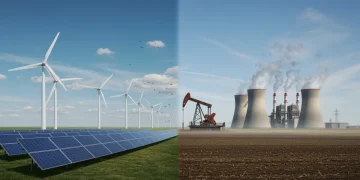
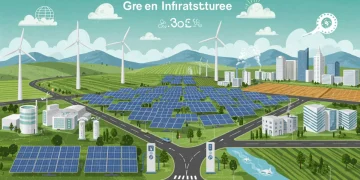
The Inflation Reduction Act is significantly accelerating U.S. renewable energy development, offering unprecedented incentives and shaping a transformative landscape for solar, wind, and storage projects through 2026 and beyond.
Understanding the Inflation Reduction Act’s Impact on U.S. Renewable Energy Projects by 2026: Insider Knowledge is crucial for anyone involved in or observing the clean energy sector. This landmark legislation fundamentally reshapes the economic calculus for renewable energy, promising a transformative period for the nation’s power grid. We’ll delve into the specifics, offering a forward-looking perspective on what to expect.
The Inflation Reduction Act: A Game Changer for Renewables
The Inflation Reduction Act (IRA), signed into law in August 2022, represents the largest climate investment in U.S. history. Its extensive provisions are designed to accelerate the transition to a clean energy economy, with a particular focus on domestic manufacturing and deployment of renewable technologies. This legislation has fundamentally altered the investment landscape for solar, wind, and battery storage projects, providing long-term certainty that was previously lacking.
Prior to the IRA, renewable energy incentives often faced uncertainty, requiring regular reauthorization by Congress. The IRA, however, extends and expands these critical tax credits for a decade, providing a stable foundation for project development and financing. This predictability is a key factor driving rapid growth and attracting significant private capital into the sector.
Extended and Enhanced Tax Credits
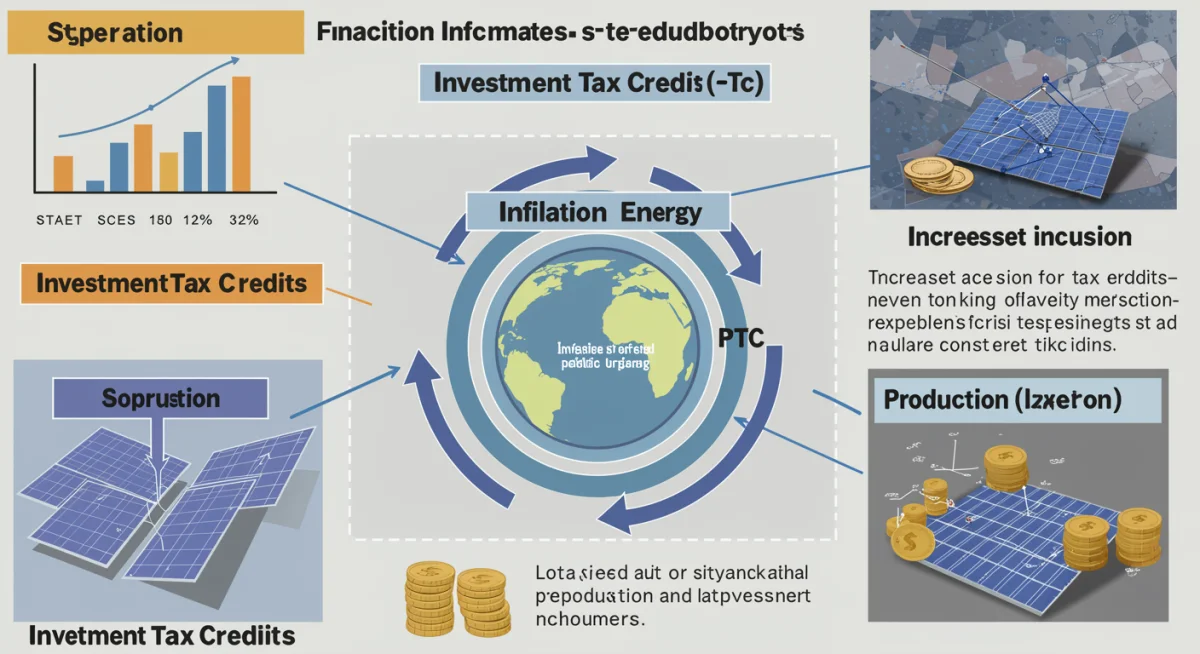
The IRA significantly boosts and extends the Investment Tax Credit (ITC) and Production Tax Credit (PTC) for eligible renewable energy projects. These credits are crucial for improving the economic viability of projects across the country.
- Investment Tax Credit (ITC): Offers a 30% credit for solar, geothermal, and certain other clean energy technologies.
- Production Tax Credit (PTC): Provides a per-kilowatt-hour credit for electricity produced from wind, geothermal, and other renewable sources for the first 10 years of operation.
- Direct Pay and Transferability: Introduces options for direct payment of tax credits to non-taxable entities and allows for the transfer of credits to unrelated third parties, broadening access to these incentives.
These enhanced incentives are not just about making projects cheaper; they are about creating a robust, self-sustaining clean energy industry. The long-term nature of these credits allows developers to plan with confidence, fostering innovation and economies of scale.
Domestic Manufacturing and Supply Chain Reshoring
A core tenet of the IRA is its emphasis on bolstering domestic manufacturing and strengthening the U.S. renewable energy supply chain. The act includes specific bonus credits and requirements tied to using American-made components, from solar modules to wind turbine blades and battery cells. This strategic move aims to reduce reliance on foreign supply chains and create high-quality manufacturing jobs within the U.S.
The incentives for domestic content are designed to incentivize companies to build out manufacturing capabilities stateside. This includes tax credits for producing clean energy components and critical minerals. The goal is to establish a resilient and competitive domestic industry capable of meeting the growing demand for renewable energy technologies.
Incentives for American-Made Components
The IRA provides additional bonus credits for projects that meet certain domestic content thresholds. This encourages developers to source their materials and components from U.S. manufacturers.
- Bonus Credit for Domestic Content: An additional 10% adder to the ITC or PTC for projects meeting specific domestic content requirements for steel, iron, and manufactured products.
- Manufacturing Production Tax Credits: New credits for the domestic production of solar and wind components, as well as battery cells and modules.
- Critical Minerals: Incentives for the extraction and processing of critical minerals domestically, reducing reliance on foreign sources.
These provisions are already catalyzing significant investments in new manufacturing facilities across the U.S., from solar panel factories to battery gigafactories. This reshoring effort is not only about economic growth but also about national energy security and resilience.
Energy Storage: The Linchpin of Grid Modernization
While solar and wind power are central to the renewable energy transition, energy storage—particularly battery storage—is equally vital for grid stability and reliability. The IRA recognizes this by extending standalone tax credits for energy storage technologies, a critical step that had long been sought by the industry. This inclusion marks a significant policy shift, acknowledging storage as an independent and indispensable component of a modern clean energy grid.
The ability to store excess renewable energy and dispatch it when needed addresses the intermittency challenges of solar and wind. This makes the grid more resilient, reduces curtailment of renewable generation, and ultimately lowers electricity costs for consumers. The IRA’s support for storage is expected to unlock massive deployment in the coming years.
Standalone Storage Tax Credit
For the first time, standalone energy storage projects are eligible for the full 30% ITC, without needing to be paired with a solar or wind project. This opens up new pathways for investment and development.
- Investment Certainty: The 30% ITC provides a strong financial incentive for developers to deploy large-scale battery storage projects.
- Grid Flexibility: Increased storage capacity enhances grid flexibility, enabling better integration of variable renewable energy sources.
- Peak Shaving: Storage can reduce reliance on expensive and often carbon-intensive peaker plants during periods of high demand.
The momentum created by the IRA’s storage provisions is undeniable, with numerous projects already announced or under development. This will be instrumental in building a more robust and reliable energy infrastructure for the future.
Impact on Project Development Timelines and Permitting
While the IRA offers substantial financial incentives, the actual deployment of renewable energy projects still faces challenges related to permitting and interconnection queues. The increased demand spurred by the IRA has, in some cases, exacerbated these bottlenecks. Developers are navigating complex federal, state, and local permitting processes, as well as lengthy queues for grid interconnection.
Despite these hurdles, the long-term certainty provided by the IRA’s tax credits helps developers absorb some of these costs and delays. There is also a growing push for permitting reform at various levels of government to streamline the process and allow projects to come online more quickly. The success of the IRA’s clean energy goals hinges significantly on addressing these non-financial barriers.
Addressing Permitting and Interconnection Challenges
The industry is actively seeking solutions to accelerate project development, recognizing that financial incentives alone are not sufficient.
- Grid Modernization: Investments in grid infrastructure are essential to accommodate the influx of new renewable generation.
- Streamlined Regulatory Processes: Efforts are underway to simplify and expedite permitting at federal agencies like FERC and BLM.
- Interconnection Reform: FERC Order 2023 aims to reform the interconnection process, although its full impact will take time to materialize.
Navigating these complexities requires strategic planning and collaboration between developers, utilities, and regulatory bodies to ensure that the benefits of the IRA translate into tangible projects on the ground.
Emerging Technologies and Future Growth Areas
Beyond established solar, wind, and battery storage, the IRA also provides significant support for a range of emerging clean energy technologies. This includes incentives for clean hydrogen production, carbon capture, sustainable aviation fuel, and advanced nuclear power. These provisions are designed to foster innovation and bring a diverse portfolio of decarbonization solutions to market, ensuring a comprehensive approach to climate change mitigation.
The act’s technology-neutral tax credits for clean electricity generation and clean fuel production mean that as new technologies mature, they can also benefit from the IRA’s long-term support. This flexibility is crucial for adapting to future technological advancements and ensuring the U.S. remains at the forefront of clean energy innovation.
Diversifying the Clean Energy Portfolio
The IRA’s broad scope encourages investment in a variety of technologies that will be critical for achieving deep decarbonization.
- Clean Hydrogen: Production tax credits for low-carbon hydrogen are expected to jumpstart this nascent industry.
- Carbon Capture and Storage (CCS): Enhanced tax credits for CCS projects aim to reduce emissions from heavy industry.
- Advanced Nuclear: Support for new and existing nuclear power plants as a reliable, carbon-free energy source.
These emerging technologies, supported by the IRA, are vital for tackling hard-to-decarbonize sectors and achieving economy-wide emissions reductions. Their growth will complement the expansion of solar and wind, creating a more resilient and diverse clean energy system.
Market Dynamics and Investment Trends by 2026
By 2026, the cumulative effects of the IRA are expected to be profoundly visible across the U.S. renewable energy market. Industry analysts project a significant acceleration in solar, wind, and storage deployments, with substantial growth in domestic manufacturing capacity. Investment capital, both domestic and international, is flowing into the sector at an unprecedented rate, driven by the long-term policy certainty and attractive returns offered by the IRA.
The market is increasingly sophisticated, with new business models emerging to leverage the IRA’s provisions, such as direct pay and transferability of tax credits. This period will likely see a maturation of the domestic supply chain, increased competition among developers, and continued downward pressure on the cost of renewable energy. The U.S. is poised to solidify its position as a global leader in clean energy innovation and deployment.
Key Market Indicators by 2026
Several trends will define the clean energy landscape in the next few years:
- Accelerated Deployment: Significant increases in installed capacity for solar, wind, and energy storage.
- Supply Chain Growth: Expansion of U.S. manufacturing for key renewable energy components.
- Investment Surge: Continued high levels of private investment in clean energy projects and infrastructure.
The period leading up to 2026 will be characterized by sustained growth and strategic adjustments as the industry fully integrates the IRA’s incentives, laying the groundwork for a decarbonized future.
| Key Aspect | IRA’s Impact on Renewables by 2026 |
|---|---|
| Tax Credits | Extended and enhanced ITCs/PTCs provide long-term financial certainty for projects. |
| Domestic Content | Strong incentives drive reshoring of manufacturing for solar, wind, and battery components. |
| Energy Storage | Standalone ITC for storage accelerates deployment, enhancing grid reliability and flexibility. |
| Market Growth | Expect significant acceleration in project deployment and substantial private investment. |
Frequently Asked Questions About the IRA and Renewables
The primary goal is to accelerate the U.S. transition to a clean energy economy by providing substantial, long-term financial incentives for renewable energy deployment and domestic manufacturing. It aims to reduce carbon emissions significantly while creating jobs and strengthening energy security.
The IRA extends and enhances tax credits like the Investment Tax Credit (ITC) and Production Tax Credit (PTC) for ten years, offering significant financial certainty. These credits reduce project costs, making renewable energy more competitive and attractive to investors, thus driving faster deployment.
Domestic manufacturing is central to the IRA, with bonus credits for projects using U.S.-made components. This strategy aims to reduce reliance on foreign supply chains, create American jobs, and build a resilient domestic clean energy industry, from solar panels to battery cells.
The IRA provides a standalone Investment Tax Credit (ITC) for energy storage projects, a crucial development. This incentive significantly boosts the economic viability of battery storage, essential for integrating intermittent renewables, stabilizing the grid, and ensuring reliable power delivery.
Despite strong incentives, projects may still encounter hurdles such as lengthy permitting processes, grid interconnection bottlenecks, and local siting challenges. Addressing these non-financial barriers through policy reforms and infrastructure investments is critical for maximizing the IRA’s impact.
Conclusion
The Inflation Reduction Act stands as a monumental legislative achievement, poised to fundamentally reshape the U.S. renewable energy landscape by 2026 and beyond. Its comprehensive approach, encompassing extended tax credits, robust support for domestic manufacturing, and vital incentives for energy storage, provides an unprecedented foundation for growth. While challenges in permitting and grid infrastructure persist, the long-term certainty and financial impetus from the IRA are driving significant investment and innovation. The coming years will undoubtedly witness a transformative acceleration in clean energy deployment, solidifying the U.S.’s leadership in the global energy transition.