Housing Market Correction: What a 12% Drop in 2026 Means for US Investors
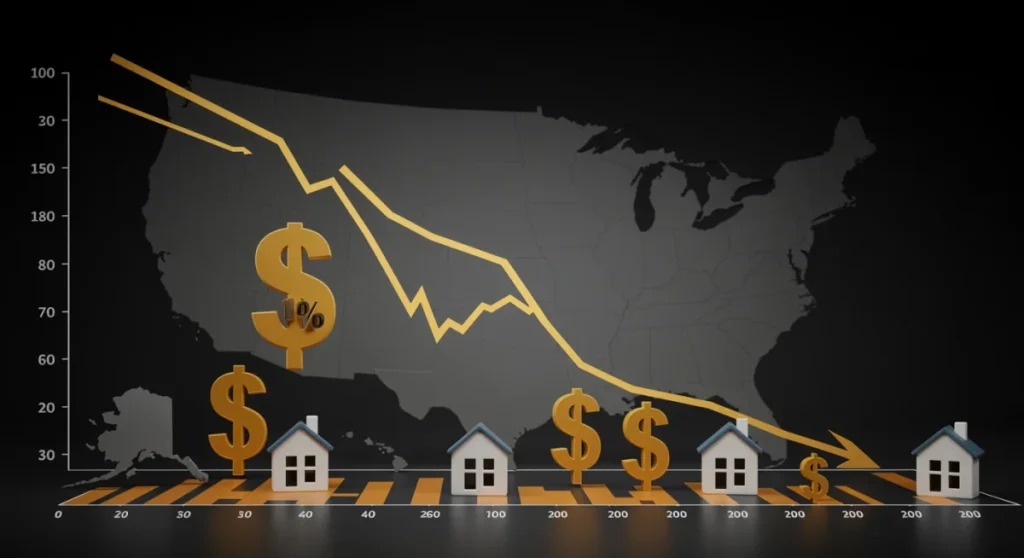
The projected 12% drop in the US housing market by 2026 signals a significant correction influenced by interest rates, inflation, and supply-demand imbalances, requiring investors to reassess strategies for resilience and opportunity.
As whispers turn into louder forecasts, the prospect of the looming housing market correction has many US investors on edge. What does a projected 12% drop in 2026 truly signify for your real estate portfolio, and how should you prepare for these economic shifts? This article delves into recent updates and expert analyses to provide clarity and strategic insights.
understanding the 2026 housing market forecast
The anticipation of a significant housing market correction by 2026 is not merely speculative; it is grounded in a convergence of economic indicators and expert analyses. While the housing market has experienced unprecedented growth over the past few years, fueled by low interest rates and high demand, many economists now point to a necessary rebalancing. This section explores the fundamental drivers behind the 12% projected decline, offering a clear picture of what lies ahead.
Several key factors contribute to this outlook. Rising interest rates, a tightening monetary policy by the Federal Reserve, and persistent inflation are collectively eroding buyer affordability and cooling demand. Furthermore, the supply chain issues that once constrained new construction are gradually easing, potentially leading to an increase in housing inventory. These combined forces suggest a shift from a seller’s market to one that increasingly favors buyers, leading to price adjustments.
economic forces shaping the market
- Interest Rate Hikes: The Federal Reserve’s aggressive stance on interest rates directly impacts mortgage rates, making homeownership more expensive and reducing purchasing power.
- Inflationary Pressures: High inflation diminishes consumer savings and disposable income, further hindering the ability of potential buyers to enter the market.
- Supply-Demand Rebalancing: An increase in housing inventory, coupled with decreased demand, creates an environment ripe for price corrections.
Understanding these underlying economic currents is crucial for any investor. The 2026 forecast isn’t just a number; it represents a complex interplay of macroeconomic forces that will redefine the landscape of real estate investment. Investors who accurately gauge these shifts will be better positioned to navigate the coming correction.
key drivers behind the projected 12% drop
The projected 12% decline in the US housing market by 2026 is not an arbitrary figure but a culmination of specific economic pressures and market dynamics. Identifying these drivers is essential for investors seeking to understand the root causes of the anticipated correction and formulate effective strategies. This section breaks down the primary forces at play, offering a deeper insight into the market’s trajectory.
One of the most significant factors is the Federal Reserve’s ongoing battle against inflation. To curb rising prices, the Fed has implemented a series of interest rate hikes, which directly translate to higher mortgage rates. This increase in borrowing costs makes homes less affordable, pushing many potential buyers out of the market or forcing them to reconsider their budgets. Consequently, demand softens, and sellers may need to lower prices to attract buyers.
factors influencing housing affordability
- Mortgage Rate Increases: Higher rates mean larger monthly payments for the same loan amount, severely impacting affordability.
- Wage Stagnation: While inflation has been high, wage growth has not kept pace for many, further squeezing household budgets.
- High Home Prices: Years of rapid appreciation have pushed home prices to unsustainable levels in many regions, creating a bubble-like scenario.
Another critical driver is the evolving supply-demand dynamic. During the pandemic, a surge in demand met with limited supply, leading to bidding wars and skyrocketing prices. However, as construction catches up and demand cools, the market is beginning to normalize. Furthermore, demographic shifts, such as delayed household formation among younger generations due to economic uncertainty, also play a role in moderating demand. These combined factors set the stage for a significant price adjustment.
regional variations and their impact on investors
While a national 12% drop in the housing market by 2026 is a significant forecast, it is crucial for investors to understand that this correction will not be uniform across all regions of the United States. Housing markets are inherently local, and various factors can lead to vastly different outcomes from one city or state to another. This section delves into the regional variations that investors should monitor closely to make informed decisions.
Areas that experienced the most rapid appreciation during the recent boom are often the most vulnerable to significant corrections. These include many Sun Belt cities and tech hubs, where demand outstripped supply at an accelerated pace. Conversely, more stable, established markets with diverse economies and steady population growth might see milder adjustments. Understanding these nuances is paramount for strategic investment.
hotspots and resilient markets
- Vulnerable Regions: Markets with high speculation, significant remote worker influx during the pandemic, and over-reliance on a single industry may face steeper declines. Examples might include Boise, Austin, or Phoenix.
- Resilient Regions: Markets with strong job growth, diverse economies, and historically stable housing values, such as parts of the Northeast or Midwest, might experience less severe corrections.
Investors must conduct thorough due diligence on specific local markets, considering factors like employment rates, population shifts, local economic health, and housing inventory levels. A national forecast provides a general direction, but localized data offers the actionable insights needed to protect existing investments and identify emerging opportunities. The impact of the correction will be a patchwork across the nation, making regional analysis indispensable.
strategies for US investors during a market correction
Navigating a projected 12% housing market correction by 2026 requires a proactive and well-thought-out investment strategy. For US investors, this period presents both challenges and opportunities. The key is to adapt to the changing landscape, protect existing assets, and position oneself to capitalize on potential bargains. This section outlines actionable strategies to help investors weather the storm and emerge stronger.
One fundamental strategy is to strengthen your financial position. This involves reducing debt, building up cash reserves, and diversifying your investment portfolio beyond real estate. For existing property owners, reviewing mortgage terms, exploring refinancing options if rates become favorable, and ensuring properties are well-maintained can help mitigate risks. Avoiding over-leveraging is crucial in a declining market.
mitigating risks and finding opportunities
- Diversify Your Portfolio: Don’t put all your eggs in one real estate basket. Consider other asset classes, or diversify across different types of real estate (e.g., commercial, residential, REITs).
- Focus on Cash Flow: In a downturn, properties that generate strong, consistent rental income become more valuable. Look for opportunities in rental markets with high demand.
- Long-Term Perspective: Real estate is often a long-term investment. Avoid panic selling and focus on properties with strong long-term growth potential, even if short-term values fluctuate.
For investors looking to buy, a correction can create excellent entry points. Identifying undervalued properties, particularly those in stable markets or areas poised for future growth, can yield significant returns once the market recovers. Distressed properties, foreclosures, and short sales might become more common, offering opportunities for savvy investors. Networking with real estate professionals and staying informed about local market conditions will be invaluable during this period. Strategic patience and disciplined investing will be paramount.
lessons from past housing market cycles
To truly understand the implications of a projected 12% housing market correction in 2026, it is beneficial to examine past cycles. History often rhymes, and while no two market downturns are identical, valuable lessons can be gleaned from previous periods of adjustment. This section explores insights from historical housing market corrections, providing context and guidance for today’s investors.
The most recent significant downturn, the 2008 financial crisis, was severe due to subprime lending and widespread mortgage defaults. While the current environment differs, particularly regarding lending standards, the principles of overvaluation, affordability issues, and the impact of interest rates remain relevant. Earlier corrections, such as those in the early 1980s or early 1990s, were often tied to high interest rates or regional economic shocks.
historical patterns and investor takeaways
- Affordability Limits: Historically, when housing prices outpace wage growth and interest rates rise, a correction eventually follows as affordability constraints become too great.
- Regional Resilience: Some markets always fare better than others due to stronger underlying economic fundamentals. Diversity in local economies is a key protective factor.
- Government Intervention: Past corrections have sometimes prompted government intervention, though the nature and timing of such actions are unpredictable.
A recurring theme from past corrections is the importance of financial prudence and a long-term perspective. Investors who maintained strong balance sheets and avoided excessive leverage were better positioned to weather the storm and even acquire assets at reduced prices. Panic selling often leads to realized losses, whereas strategic holding or selective buying during a downturn can set the stage for future gains. Understanding these historical patterns empowers investors to approach the 2026 forecast with informed caution rather than fear.
preparing your portfolio for 2026 and beyond
The forecast of a 12% housing market correction by 2026 necessitates a comprehensive review and strategic adjustment of your investment portfolio. For US investors, preparing effectively means not just reacting to potential declines but proactively positioning assets for resilience and growth in the long term. This section provides a roadmap for portfolio preparedness, focusing on practical steps to safeguard and enhance your investments.
Begin by conducting a thorough assessment of your current real estate holdings. Evaluate each property’s cash flow, debt-to-equity ratio, and potential for appreciation or depreciation in a declining market. Identify any highly leveraged assets or properties in particularly vulnerable regions that might require immediate attention. This period is also an opportune time to reassess your overall financial goals and risk tolerance.
actionable steps for portfolio resilience
- Stress Test Your Investments: Model how a 12% or even greater decline would impact your portfolio’s value and cash flow. Identify weak points.
- Optimize Debt Structure: Consider refinancing high-interest loans, converting variable-rate mortgages to fixed, or paying down principal where feasible to reduce exposure.
- Explore Alternative Investments: Diversify into asset classes less correlated with real estate, such as dividend stocks, bonds, or even commodities, to spread risk.
Beyond defensive measures, consider offensive strategies. A market correction can be an excellent time to acquire properties at a discount, particularly for cash-rich investors or those with access to favorable financing. Research emerging markets or property types that may be less affected by the downturn or even thrive. Professional advice from financial advisors and real estate experts can provide tailored guidance. By taking these proactive steps, investors can transform a challenging market correction into a period of strategic advantage and long-term portfolio strengthening.
| Key Point | Brief Description |
|---|---|
| 12% Drop Forecast | Experts predict a significant US housing market correction by 2026, driven by economic shifts. |
| Key Drivers | Rising interest rates, inflation, and shifting supply-demand dynamics are primary causes. |
| Regional Variations | Impact will vary significantly by region; some markets are more vulnerable than others. |
| Investor Strategies | Diversification, debt reduction, and long-term focus are crucial for navigating the downturn. |
Frequently asked questions about the housing market correction
The primary drivers include sustained increases in interest rates by the Federal Reserve to combat inflation, which elevates mortgage costs and reduces buyer affordability. Additionally, a normalization of housing supply following pandemic-era shortages and a tempering of demand are contributing factors.
The impact will not be uniform. Regions that saw the most rapid appreciation and speculative buying during the recent boom, such as certain Sun Belt cities, are likely to experience more significant declines. More stable, diversified markets may see milder adjustments, emphasizing the need for local analysis.
Homeowners should focus on strengthening their financial position by reducing high-interest debt and building emergency savings. Reviewing mortgage terms, ensuring properties are well-maintained, and avoiding unnecessary leveraging can also help mitigate risks during a correction.
Yes, a correction can create buying opportunities for savvy investors. Undervalued properties, foreclosures, and short sales may become more prevalent. Focusing on properties with strong cash flow potential in resilient markets and adopting a long-term investment horizon can yield significant returns post-recovery.
While each correction has unique triggers, common themes include affordability limits and interest rate impacts. Unlike the 2008 crisis, current lending standards are generally stronger, suggesting a correction might be less severe in terms of systemic financial collapse, focusing more on price adjustments.
conclusion
The prospect of a 12% housing market correction by 2026, while daunting for some, represents a critical juncture for US investors. It is an opportunity to re-evaluate strategies, fortify portfolios, and identify new avenues for growth. By understanding the underlying economic drivers, acknowledging regional variations, and learning from historical cycles, investors can navigate this anticipated downturn with informed confidence. Proactive planning, financial prudence, and a long-term perspective will be the cornerstones of successful real estate investment in the years ahead, transforming potential challenges into strategic advantages.