Presidential Election 2024: 90-Day Outlook on Battleground States
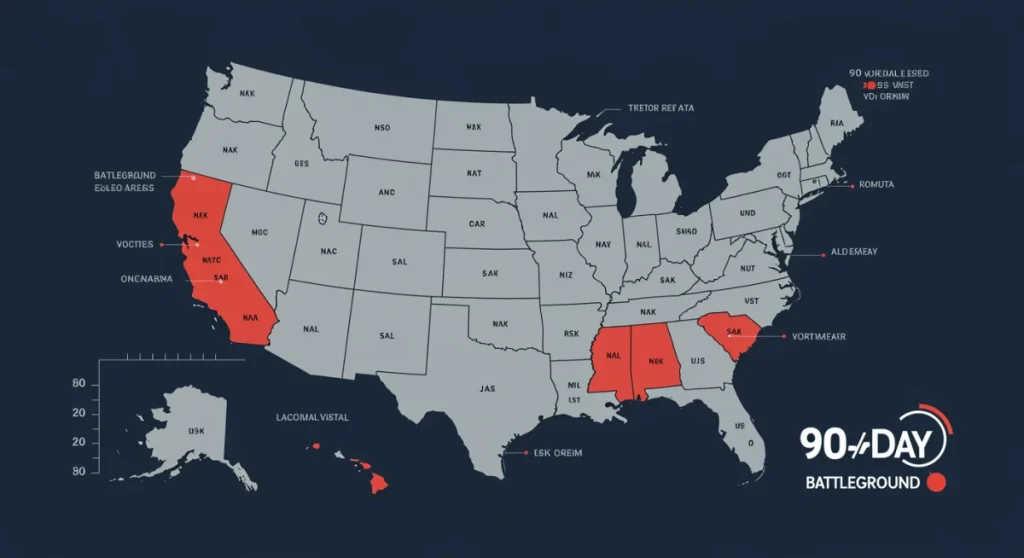
The 2024 Presidential Election is fast approaching, with a 90-day outlook revealing critical dynamics within key battleground states and substantial voter shifts that could determine the outcome, reflecting evolving political landscapes.
As the countdown to the 2024 Presidential Election intensifies, understanding the intricate dynamics within key battleground states and the significant voter shifts becomes paramount. The next 90 days are crucial, as campaigns double down on their efforts to sway undecided voters and solidify their bases, ultimately shaping the nation’s future.
The Shifting Electoral Map: Defining Battleground States
The concept of a battleground state in American presidential elections is not static; it evolves with demographic changes, economic trends, and political realignments. These are the states where neither major party holds a dominant advantage, making them prime targets for campaign spending, candidate visits, and intense media scrutiny. In the context of the 2024 election outlook, identifying these pivotal states is the first step toward understanding the path to the White House.
Historically, states like Ohio and Iowa were considered bellwethers, but recent elections have seen new players emerge, while some traditional swing states have solidified their leanings. The 2024 cycle presents a unique set of circumstances, with both established and newly competitive states vying for attention.
Key States to Watch
Several states consistently appear on the battleground radar, and their electoral votes are often the deciding factor. These states typically exhibit a delicate balance of partisan support, making them highly volatile.
- Arizona: A state experiencing rapid demographic change, with a growing Latino population and an influx of out-of-state residents.
- Georgia: Once a Republican stronghold, it has trended purple in recent cycles, driven by suburban growth and increased minority turnout.
- Michigan: A crucial Rust Belt state, its economic concerns and union influence make it a perennial battleground.
- Pennsylvania: Another Rust Belt giant, its diverse urban, suburban, and rural populations make it highly contested.
The campaigns’ strategies in these states will be finely tuned, addressing local concerns while weaving them into a broader national narrative. The ability to connect with diverse voter segments in these areas will be critical for victory.
In conclusion, the electoral map for 2024 is dynamic, with a core group of battleground states that will receive disproportionate attention. Understanding the unique characteristics and political leanings within each of these states is essential for predicting the election’s outcome.
Voter Shifts and Demographic Trends: A Closer Look
Beyond the geographical boundaries of battleground states, significant voter shifts and demographic trends are constantly reshaping the electorate. These changes are not always immediately apparent but can have profound long-term impacts on election results. Analyzing these shifts offers valuable insights into potential outcomes in the 2024 Presidential Election.
The American electorate is a complex tapestry, with varying priorities, allegiances, and responses to political messaging. Understanding who is voting, how they are voting, and why their preferences are changing is crucial for any campaign strategy.
Emerging Voter Coalitions
Traditional voter blocs are not as monolithic as they once were. Younger voters, suburban women, and specific minority groups are exhibiting evolving political behaviors, creating new potential coalitions and challenging established norms.
- Youth Vote: Often less reliably partisan, younger voters are increasingly motivated by issues such as climate change, student debt, and social justice.
- Suburban Swing: Suburban areas, particularly those around major metropolitan centers, have shown a significant swing in recent elections, often moving away from traditional Republican support.
- Minority Group Dynamics: While generally leaning Democratic, the preferences within various minority groups are nuanced and can shift based on specific policy proposals and cultural appeals.
These demographic shifts necessitate adaptable campaign strategies that can effectively reach and persuade diverse segments of the population. Ignoring these changes could prove detrimental to a candidate’s chances.
The ongoing evolution of the American electorate, driven by demographic changes and shifting priorities, will play a decisive role in the 2024 election. Campaigns must be acutely aware of these trends and tailor their messages accordingly to capture the support of emerging voter coalitions.
Economic Factors and Their Electoral Impact
The economy consistently ranks as a top concern for American voters, and its health often directly influences presidential election outcomes. In the 2024 election outlook, economic factors such as inflation, employment rates, and consumer confidence will undoubtedly weigh heavily on voters’ minds and shape their decisions at the ballot box.
Voters tend to evaluate the incumbent party based on their perceived handling of the economy. A strong economy can bolster a candidate’s chances, while economic instability or hardship can lead to significant discontent and a desire for change.
Inflation and Cost of Living
Persistent inflation, particularly concerning everyday necessities like groceries and fuel, directly impacts household budgets and can generate widespread voter frustration. Candidates who offer credible solutions or demonstrate empathy regarding these struggles are likely to resonate more with the electorate.
Conversely, low unemployment rates and wage growth can create a sense of economic well-being, potentially benefiting the incumbent. However, if wage growth doesn’t keep pace with inflation, the positive impact can be diminished.
Consumer Confidence and Future Outlook
Beyond current economic indicators, voter sentiment about the future economic trajectory is also crucial. Consumer confidence indices, which measure how optimistic or pessimistic people are about the economy, can serve as a powerful barometer of the national mood.
Policies related to economic growth, trade, and taxation will be central to the election debate. Candidates will need to articulate clear economic visions that address both immediate concerns and long-term prosperity. The party perceived as better equipped to manage the economy often gains a significant advantage.
Ultimately, the economic climate will be a dominant theme in the 2024 Presidential Election. Voters will be looking for leadership that can navigate complex economic challenges and improve their financial security, making economic messaging a cornerstone of every campaign.
The Role of Key Issues: Beyond the Economy
While the economy often takes center stage, a multitude of other critical issues will influence voters in the 2024 Presidential Election. These range from healthcare and immigration to social policies and foreign relations, each capable of swaying significant blocs of voters and shaping the overall narrative. Understanding the salience of these issues among different demographics is vital for predicting electoral outcomes.
Campaigns must adeptly navigate these complex topics, articulating clear stances while also demonstrating an understanding of voter concerns. The ability to connect with voters on issues that deeply affect their lives can be a powerful differentiator.
Healthcare and Social Policy
Healthcare access, affordability, and specific social issues continue to be major motivators for voters. Debates over reproductive rights, LGBTQ+ issues, and education policies often galvanize different segments of the electorate, driving turnout and influencing allegiances.
- Healthcare: Discussions around insurance coverage, prescription drug costs, and the future of existing healthcare legislation remain highly relevant.
- Reproductive Rights: Following recent legal developments, this issue is a significant mobilizer for both sides of the political spectrum.
- Education: Parental rights, curriculum content, and school funding are increasingly prominent topics, particularly in suburban areas.
These issues often transcend traditional partisan lines, prompting some voters to cross over based on a candidate’s stance on a particular social or moral question.
Foreign Policy and National Security
Global events and the nation’s role on the international stage can also profoundly impact domestic elections. Voters are concerned about national security, international conflicts, and America’s standing in the world.
Candidates’ approaches to diplomacy, defense spending, and alliances will be scrutinized, especially in a volatile geopolitical landscape. The perception of a candidate’s ability to lead on the global stage can instill confidence or raise doubts among the electorate.
In summary, the 2024 election will be decided not just on economic performance but also on a complex array of social, domestic, and international issues. Campaigns that effectively address these diverse concerns and articulate compelling visions will be better positioned for success.
Campaign Strategies and Digital Engagement
In the modern political landscape, campaign strategies have evolved significantly, placing a strong emphasis on digital engagement alongside traditional outreach. The 90-day sprint to the 2024 Presidential Election will see an intensified focus on micro-targeting, social media narratives, and rapid response, all aimed at maximizing voter turnout and persuasion.
Successful campaigns are those that can effectively integrate various communication channels, delivering consistent messaging while adapting to real-time developments. The digital sphere, in particular, has become indispensable for reaching and mobilizing voters.
Micro-Targeting and Data Analytics
Advanced data analytics allow campaigns to identify specific voter segments and tailor messages to their unique concerns and demographics. This micro-targeting goes beyond broad appeals, focusing on individual-level persuasion.
- Voter Identification: Using data to pinpoint potential supporters and undecided voters.
- Personalized Messaging: Crafting specific advertisements and outreach based on individual voter profiles.
- Resource Allocation: Directing campaign funds and volunteer efforts to the most impactful areas and voter groups.
The effective use of data can provide a significant competitive edge, allowing campaigns to optimize their spending and focus their efforts where they will yield the greatest returns.
Social Media and Narrative Control
Social media platforms are now central to political discourse, allowing candidates to communicate directly with voters, bypass traditional media gatekeepers, and shape their narratives. The speed at which information (and misinformation) spreads online makes narrative control a critical campaign function.
From viral videos to targeted ads, social media strategies aim to engage supporters, counter opposing viewpoints, and influence public opinion. The ability to create compelling, shareable content is essential for digital success.
In conclusion, the final 90 days of the 2024 election will be characterized by sophisticated campaign strategies, heavily reliant on data-driven micro-targeting and pervasive digital engagement. The campaigns that master these tools will be best equipped to navigate the competitive electoral landscape.
The Undecided Voter: A Key to Victory
In any close presidential election, the undecided voter often holds the ultimate power to tip the scales. As the 2024 Presidential Election enters its critical final 90 days, understanding the motivations, concerns, and demographic profiles of these swing voters becomes paramount. Campaigns will dedicate immense resources to persuade this elusive group, recognizing that their choices will likely determine the outcome.
Undecided voters are not a monolithic bloc; they represent a diverse cross-section of the electorate, often characterized by their independent leanings, skepticism toward both major parties, and a greater focus on specific issues rather than ideological alignment.
Who Are the Undecided?
Polls consistently show a segment of the electorate that has not yet committed to a candidate. These voters often:
- Are less partisan: They may identify as independent or express dissatisfaction with both major parties.
- Focus on issues: Their decisions are often driven by specific policy concerns rather than broad party loyalty.
- Are late deciders: Many wait until the final weeks, or even days, to make up their minds, often after considering all available information.
Campaigns employ various tactics to reach these voters, from targeted advertising on television and digital platforms to personalized mailers and grassroots canvassing. The messaging to undecided voters often emphasizes common ground, bipartisan solutions, and a candidate’s ability to deliver tangible results.
Persuasion Strategies
Winning over undecided voters requires a nuanced approach. It’s not about rallying the base, but about addressing specific anxieties and offering compelling reasons to support a particular candidate.
This often involves highlighting a candidate’s moderate positions, emphasizing their experience and competence, and drawing contrasts with opponents that appeal to a broader, less partisan audience. Town halls and direct voter engagement events can be particularly effective in these efforts.
Ultimately, the final 90 days will see an intense battle for the hearts and minds of undecided voters. The campaign that best understands their concerns, addresses their skepticism, and offers a convincing vision for the future will likely secure their crucial support and, potentially, the presidency.
| Key Aspect | Brief Description |
|---|---|
| Battleground States | Pivotal states like AZ, GA, MI, PA where neither party dominates, crucial for electoral victory. |
| Voter Shifts | Demographic changes impacting youth, suburban women, and minority voting patterns. |
| Economic Impact | Inflation, employment, and consumer confidence heavily influence voter sentiment. |
| Undecided Voters | Crucial swing voters, often less partisan and focused on specific issues, targeted heavily by campaigns. |
Frequently Asked Questions About the 2024 Election
Arizona, Georgia, Michigan, and Pennsylvania are consistently highlighted as the most critical battleground states. These states exhibit a fine balance of partisan support and significant demographic shifts, making their electoral votes highly contested and crucial for winning the presidency.
Demographic changes, such as the growth of the Latino population, shifts in suburban voting patterns, and the priorities of younger voters, are significantly reshaping the electorate. These shifts create new voter coalitions and require campaigns to adapt their messaging to reach diverse groups effectively.
Inflation, particularly the cost of living, and employment rates are paramount economic factors. Voters will assess the candidates based on their perceived ability to manage the economy, control prices, and ensure job stability, greatly influencing their decisions at the polls.
Undecided voters are crucial as they often determine the election’s outcome. They are typically less partisan, focus on specific issues, and make late decisions. Campaigns intensify their efforts to persuade this group through targeted messaging and direct engagement, making them a primary focus.
Campaign strategies now heavily rely on advanced digital engagement, including micro-targeting through data analytics and sophisticated social media campaigns. These methods allow for personalized messaging and rapid response, enabling campaigns to efficiently reach and persuade specific voter segments and control narratives.
Conclusion
The 2024 Presidential Election is poised to be a closely contested race, with the final 90 days proving decisive. The focus on key battleground states, the intricate dance of voter shifts, and the pervasive influence of economic and social issues will all converge to shape the electoral landscape. Campaigns’ adept use of data-driven strategies and their ability to connect with undecided voters will ultimately determine who occupies the White House. As the nation watches, every rally, every ad, and every policy debate will play a critical role in this pivotal election.